

IN FOCUS: Ukraine & Moldova Brief
Review of April 2026
Petra Bošková, Anna Gúliková, Igor Píš, Martin Tancer, Martin Lukáč
UKRAINE
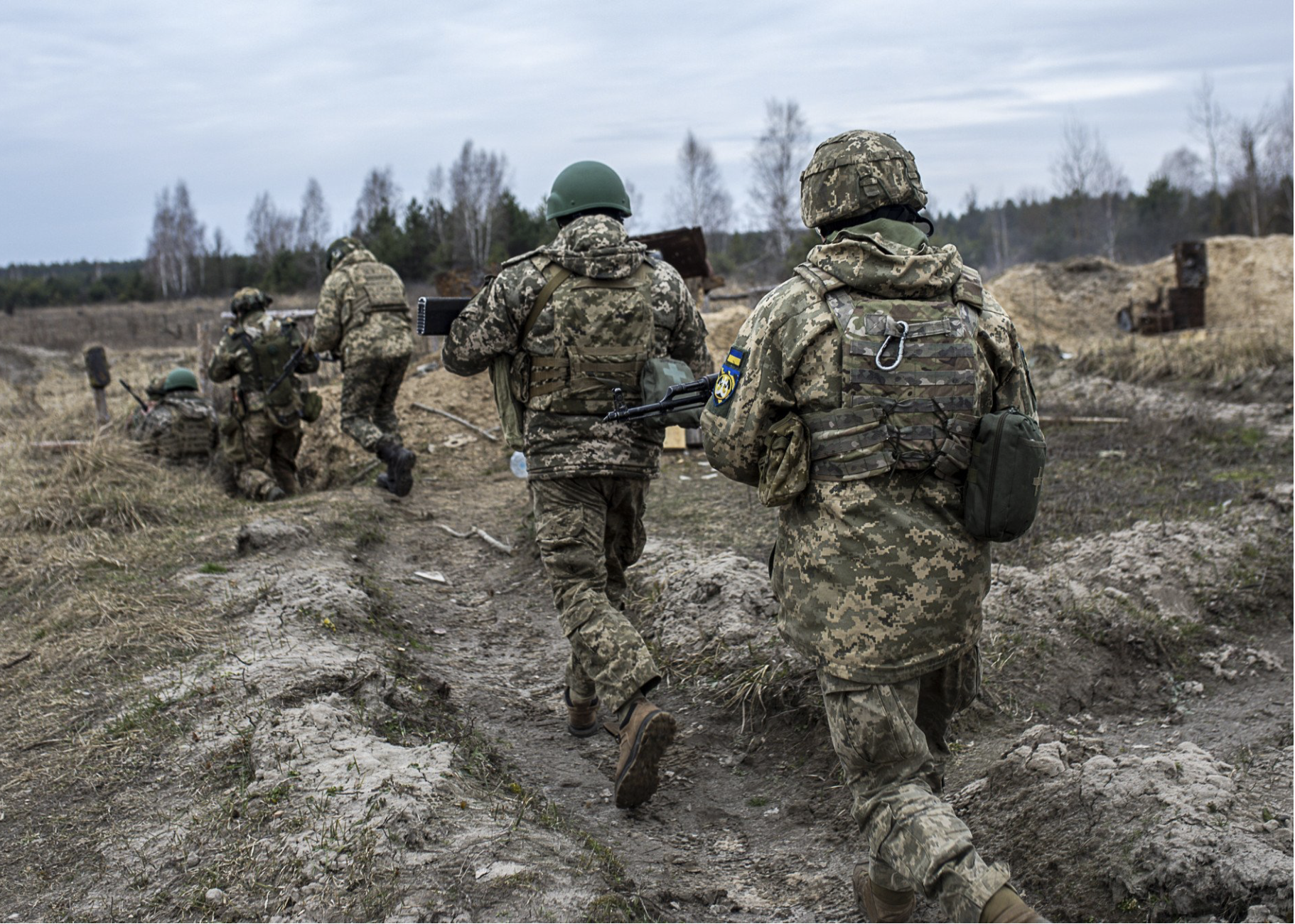
Photo: Shutterstock.com
Potential Danger of Unusual Activities of Belarus Against Ukraine
On May 1, President Zelenskyy informed about unusual activities on multiple sections of the Ukrainian border with Belarus, as Ukraine continues to strengthen its attacks against Russian strategic infrastructure. The Ukrainian President shared a video message, as he normally does, on Telegram, where he acknowledged that they are very cautious about the current situation and its potential development. Zelenskyy was careful about the precise details on the matter but stated that Ukraine was rigorously monitoring “everything and keeping the situation under control”.
Kyiv has made sure that, in the case of necessity, it will react appropriately to any kind of threat from Minsk, which could potentially happen, based on its involvement in the previous years of the Russian war against Ukraine. As it is well known, Ukraine has been fighting for its own sovereignty and territorial integrity for the past 4 years, and Kyiv has made itself heard sternly warning anyone who tries to aggressively act against their state values, needs to understand that they will defend themselves. These “reaffirming” statements follow the potential threat of further involvement of Belarus in the war campaign. So far, Minsk has been playing a key role in Russia’s war against Ukraine, as it provides a practical strategic position for Russian nuclear warheads, and has been threatening Ukraine with them since 2023. Therefore, it is quite apparent that Belarus under Lukashenko possibly means to further solidify its position as Russia’s closest ally.
During April, Zelenskyy on multiple occasions reported that observation of the borders has shown infrastructure in progress, including the establishment of artillery positions towards Ukraine, as well as the construction of roads leading towards Ukraine. Although it was stated by other representatives of the country that the situation is being monitored and the potential actions from those positions are likely to be limited to “minor provocations”, Ukraine’s Armed Forces began the construction of a layered defensive line along the northern border. It is meant to include a new countermeasure against fibre-optic guided FPV drones and prevent Russians from establishing a buffer zone.
Sources:
- Burc Eruygur, Anadolu Ajansi, “Zelenskyy claims unusual activity along Belarus-Ukraine border”, https://www.aa.com.tr/en/eurasia/zelenskyy-claims-unusual-activity-along-belarus-ukraine-border/3925076
- Ivan Khomenko, United24Media, ““We Are Monitoring Everything”: Zelenskyy Signals Unusual Activity from Belarus”, https://united24media.com/war-in-ukraine/we-are-monitoring-everything-zelenskyy-signals-unusual-activity-from-belarus-18423
- Chatham House, “The role of Belarus in Russia’s war against Ukraine”, https://www.chathamhouse.org/events/all/research-event/role-belarus-russias-war-against-ukraine
German Chancellor Says Ukraine Might Have To Secede Some Territories
On April 27, German Chancellor Friedrich Merz publicly expressed the view that Ukraine might have to accept some territorial losses in order to make progress on the way to the EU. Speaking to students in the German town of Marsberg, he also said that the prospect of Ukraine joining the EU in January 2027 or even January 2028 are “not realistic”.
According to Merz, a peace deal with Russia should definitely come together with the European integration of Ukraine and that the possible territorial secessions are a price that has to be paid. He also proposed that Ukraine could receive a kind of “observer status” in the EU, which would allow Ukrainian officials to take part in key EU meetings without having the right to vote. Financial Times also reported, that France and Germany proposed a “symbolic” EU membership for Ukraine without full member rights, which is something the Ukrainian side refuses.
This statement is not that surprising in the current situation, although compared to what European leaders were saying throughout the years, it definitely signifies a move towards a more pragmatic approach. For Ukraine, it is still unimaginable to accept the loss of the occupied territories, but they have not publicly reacted to Merz´s words.
Sources:
-
Jorge Liboreiro, Euronews, “Merz suggests Ukraine’s EU membership may depend on territorial concessions” https://www.euronews.com/my-europe/2026/04/27/merz-suggests-ukraines-eu-membership-may-depend-on-territorial-concessions
-
Interfax-Ukraine, “Merz suggests Ukraine may have to accept territorial loss on path to EU membership”https://en.interfax.com.ua/news/general/1162720.html
Druzhba Pipeline Restored, Slovakia and Hungary Still Dependent on Russian Oil
Between April 21 and 23, 2026, oil flows through the Druzhba pipeline were restored after a temporary disruption that affected supplies to Slovakia and Hungary. What initially appeared to be a technical issue quickly turned into a politically sensitive moment for Central Europe, once again highlighting how closely energy security, war dynamics in Ukraine, and EU politics are interconnected.
On April 21 2026, Kyiv confirmed that repair works on the Ukrainian section of the pipeline had been completed and that transit could resume after 3 months. The following day, on April 22, oil flows restarted through Ukraine, and by April 23, deliveries had reached both Slovakia and Hungary. This sequence of events confirmed the importance of Druzhba as a still-functioning backbone of Central European oil imports, despite ongoing diversification efforts within the European Union.
The disruption itself and the political reactions surrounding it revealed how vulnerable certain EU member states remain to infrastructure-related shocks. Even short interruptions created uncertainty in energy markets and raised questions about supply stability, especially in countries that still depend heavily on Russian oil transported through Druzhba.
The political dimension became particularly visible in Central Europe. Slovak Prime Minister Robert Fico described the restoration of flows on April 23, 2026, as a “fantastic message” for Slovakia’s energy security, despite his previous statements about Ukraine and its alleged efforts to extort Slovakia. At the same time, Hungarian political voices, including Prime Minister-elect Péter Magyar, stressed the need for uninterrupted transit and warned against allowing energy flows to become part of political confrontation in the future. On one hand, there is a clear long-term strategy to reduce dependence on Russian energy through diversification and the energy transition.
On the other hand, the reality on the ground shows that legacy infrastructure continues to play a crucial role, especially for landlocked countries with limited immediate alternatives. As a result, the EU finds itself in a transitional phase where old dependencies still matter, even as new strategies are being developed. The case also demonstrates how energy infrastructure has become part of geopolitical bargaining. What would normally be a technical repair process became embedded in wider political negotiations and diplomatic tensions.
Sources:
- Government of the Slovak Republic. 2026. “Robert Fico: Otvorenie ropovodu Družba je fantastickou správou pre energetickú bezpečnosť Slovenska.” ÚV SR. April 23, 2026. https://www.vlada.gov.sk/tlacove-spravy/robert-fico-otvorenie-ropovodu-druzba-je-fantastickou-spravou-pre-energeticku-bezpecnost-slovenska/
- Gonzales, Jenipher Camino. 2026. “Zelenskyy Says Druzhba Oil Pipeline to EuropeLopatka, Jan. 2026. “Druzhba Oil Flow to Slovakia Resumed Early Thursday, Slovak Ministry Says.” Reuters. April 23, 2026.
-
Ukraine-EU Tensions Over Climate Policy
The implementation of the EU’s Carbon Border Adjustment Mechanism (CBAM) in January 2026 has shown itself to be a major point of economic tensions between Brussels and Kyiv. While intended to prevent “carbon leakage,” the policy places a great burden on Ukraine’s war-torn metallurgy sector, which generated $4.7 billion in export revenue last year.
The financial impact was immediate. With additional duties ranging from $60 to $90 per metric ton, EU customers cancelled all first-quarter orders for 2026, leading to a 60–70% collapse in steel exports. Experts warn the policy could reduce Ukraine’s GDP by 2.1% by 2030. The crisis extends beyond factories, as the steel industry accounts for roughly 30% of the nation’s rail and sea cargo volumes.
Specific companies show the importance of the situation. ArcelorMittal Kryvyi Rih has already shed 3.400 jobs and lost two-thirds of its pre-war production. Meanwhile, Interpipe, which uses cleaner electric arc furnaces, is still forced to pay high “dirty steel” default rates because the war prevents foreign verifiers from certifying their lower emissions.
The EU rejected requests for an exemption for Kyiv. However, many argue that expecting a nation under constant aerial bombardment to decarbonise its energy-intensive plants is unrealistic. While some progress is being made (such as Sweden recently accrediting Ukrainian verification bodies), industry experts are calling for the EU to recognise the situation as force majeure. As one academic noted, in the face of an existential threat, “survival comes first”.
Sources:
- DOMINIC CULVERWELL, KATERYNA DENISOVA, LUCA LÉRY MOFFAT, Kyiv Independent, “Climate policy becomes new front in Ukraine-EU economic tensions”, https://kyivindependent.com/ukraine-caught-between-eu-climate-goals-and-wartime-survival/
- YURIY GRIGORENKO, GMK Centre, “The first few months of CBAM implementation have already had a negative impact on the Ukrainian steel industry”,https://gmk.center/en/posts/the-first-few-months-of-cbam-implementation-have-already-had-a-negative-impact-on-the-ukrainian-steel-industry/#:~:text=The%20European%20Carbon%20Border%20Adjustment,Ukraine’s%20iron%20and%20steel%20sector
MOLDOVA

Photo: Codidianul.md
Moldovan Oligarch Plahotniuc Receives a 19-Year Prison Sentence
Vladimir Plahotniuc, the former leader of the Democratic Party of Moldova, widely considered an oligarchic figure of Moldovan politics, was sentenced to a 19-year prison sentence on April 22, 2026. The sentence comes after Plahotniuc was extradited to Moldova from Greece last autumn, which ended his 6-year-long hiding from Moldovan authorities.
The court sentenced Plahotniuc for his participation in the “theft of the century” – a bank scandal dragging from 2014, when approximately 1 billion US dollars disappeared from Moldovan banks, which at that time equaled 12 percent of Moldovan GDP. Plahotniuc cooperated on the scheme with another fugitive oligarch Ilan Shor, who is currently residing in Moscow and Moldovan authorities are trying to prevent him from interfering in the politics of the country. Plahotniuc has also been sanctioned by the US, the UK and the EU for destabilizing Moldova.
This verdict was hailed by observers as being “one of the most significant rulings ever delivered in Moldova against a person long associated with the period of state capture.” The Kyiv Independent called Plahotniuc even the “former most powerful person” and said that Plahotniuc “de facto controlled the country’s government in the 2010s”. This shows that the verdict is truly one of the biggest breakthroughs in the development of an independent judicial system in Moldova, which is also one of the key prerequisites to joining the European Union.
Sources:
-
Oleg Sukhov, The Kyiv Independent, “Moldova’s once most powerful person sentenced to 19 years in jail” https://kyivindependent.com/moldovas-once-most-powerful-person-sentenced-to-19-years-in-jail/
-
OCCRP, “Moldovan Tycoon Sentenced to 19 Years in Prison for Crimes Including Billion-Dollar Bank Fraud” https://www.occrp.org/en/news/moldovan-tycoon-sentenced-to-19-years-in-prison-for-crimes-including-billion-dollar-bank-fraud
-
RFE/RL, “Moldovan Court Sentences Fugitive Oligarch Plahotniuc To 19 Years In Prison” https://www.rferl.org/a/moldova-vladimir-plahotniuc-fraud-sentence-prison/33738033.html
Moldova and Kazakhstan Expanding Their Bilateral Cooperation on Multiple Levels
In Astana, the Kazakh capital, high representatives of Moldova and Kazakhstan met to discuss common interests in building on bilateral cooperation between the two in the economic and diplomatic sectors. It was made clear that it is in the high interest of both countries to focus on trade and investment cooperation, as the Kazakh side, represented by the country’s Ambassador to Moldova, Almat Aidarbekov, outlined socio-economic and political reforms that are still ongoing under President Kassym-Jomart Tokayev. Kazakhstan’s top priority, according to the statements from this meeting, is to attract foreign investment and ensure commitment to international discussions and bilateral agreements. The Moldovan side, represented by its Deputy Prime Minister and the Minister of Economic Development and Digitalisation, Eugeniu Ozmokescu, expressed straightforward interest in strengthening mutually beneficial support and partnership to highlight economic engagements between countries.
Cooperation between the two has been expanding on the diplomatic level, as well. Chisinau has been quite active in this sector, while trying to push for its accession to the European Union, to prove its own importance on the international platform and to express its interest in building close ties with multiple partners worldwide. Moldova expanded its diplomatic presence in Central Asia with the inauguration of the Honorary Consulate in Almaty. This step was one of the few initiatives Chisinau aimed to develop further economic relations, and the Kazakh tie to the Moldovan market opens the space for Astana to expand trade relations with the EU. Another perspective coming from this move is the Consul who was appointed, Iskandir Karsybekov, who is known for his involvement in collaboration projects with Moldova in the railway infrastructure. As the partnership is growing within the bilateral agreements of Moldova and Kazakhstan, both parties confirmed their commitment to exchange information to ensure the protection of the rights and freedoms of citizens of the two countries. Therefore, this movement is a well-appreciated interaction between these two countries and expresses their will and mutual trust.
Sources:
- Madina Usmanova, Trend News Agency, “Kazakhstan, Moldova discuss expanding economic and investment cooperation”, https://www.trend.az/business/4181680.html
- Tarlapan Octav, Cotidianul.md, “The Republic of Moldova opens an honorary consulate in Almaty”, https://cotidianul.md/en/28353/Republic-of-Moldova-opens-honorary-consulate-in-Almaty/
- Kazinform International News Agency, “Kazakhstan, Moldova expanding consular cooperation”,https://qazinform.com/news/kazakhstan-moldova-expanding-consular-cooperation-dc405e
Tensions Rise as Chisinau Moves to End Tax Exemptions for Transnistria
The Moldovan Parliament has recently advanced a draft law that aims to eliminate tax benefits for economic agents in the Transnistrian region, a move that has sparked tension between Chisinau and Tiraspol. The legislation, which passed its first reading in late March 2026, proposes a unified fiscal regime to be fully implemented across the country by 2030. According to Radu Marian, President of the Committee on Economy, Budget, and Finance, the policy follows the principle of “same country, same taxes” and is intended to reintegrate the national economy while minimising the impact on residents.
However, the separatist authorities in Tiraspol have strongly condemned the move, labelling it as “discriminatory economic pressure”. They warn that the removal of exemptions for VAT duties could lead to a “large-scale humanitarian crisis”, potentially causing production and trade to collapse while violating the human rights of the region’s inhabitants. Tiraspol’s de facto foreign ministry asserts that Chisinau has repeatedly ignored requests for expert dialogue, proceeding with these measures without proper consultation.
The administration in Tiraspol also expressed concerns that these fiscal changes could disrupt the supply of fuel and energy resources to the region and permanently damage the ongoing political settlement process. Describing the situation as a potential “new stage of economic blockade,” they have appealed to international participants in the “5+2” negotiation format (OSCE, Russia, Ukraine + Moldova, and Transnistria) to intervene. While Chisinau maintains that the transition will be gradual, Tiraspol urges the government to abandon its “confrontational approach” and return to a cooperative legal framework.
Sources:
- MARINA GRIDINA, moldovalive, “Tiraspol Accuses Chisinau of “Discriminatory Economic Pressure“, https://moldovalive.md/tiraspol-accuses-chisinau-of-discriminatory-economic-pressure/
Stalled Negotiations in Transnistria, Unresolved Territorial Conflicts are Still a Big Obstacle
On April 16, 2026, another round of negotiations between Moldova and the breakaway region of Transnistria ended without any real progress. The meeting took place on April 16 in Tiraspol and included representatives from both sides. They discussed practical issues such as freedom of movement, infrastructure, and human rights, but once again failed to reach any concrete agreement. This outcome shows how difficult it still is to move forward in resolving this long-standing conflict.
From the Moldovan government’s point of view, the problem lies mainly with the Transnistrian side. Officials in Chișinău presented themselves as willing to cooperate and find solutions, while criticising Tiraspol for not engaging constructively. This fits into Moldova’s broader strategy of showing that it is a reliable and pro-European partner, especially at a time when it is trying to move closer to the European Union. At the same time, international coverage of the talks highlights that both sides continue to blame each other and remain far apart in their positions. The lack of progress is not just about local disagreements, but it is also connected to bigger geopolitical tensions. Moldova is located right next to Ukraine, and the presence of Russian influence in Transnistria makes the situation more complicated.
The failed talks also matter for Moldova’s future in the EU. Even though the country is making efforts to integrate and reform, unresolved territorial conflicts are a serious obstacle. The situation in Transnistria raises questions about Moldova’s full control over its territory and its long-term stability. Overall, the April negotiations show that the conflict remains stuck. Despite ongoing dialogue, there is little real movement toward a solution. For Moldova, this means it will need to keep balancing diplomacy, internal reforms, and cooperation with international partners if it wants to strengthen its position and continue its path toward Europe.
Sources:
- Government of the Republic of Moldova. 2026. “Political Representatives in the Transnistrian Settlement Negotiation Process Holds a Meeting.” April 17, 2026. https://gov.md/en/comunicate-de-presa-bpr/political-representatives-transnistrian-settlement-negotiation-process-hold.
- Tanas, Alexander. 2026. “Moldova, Separatist Transdniestria Make No Progress on Settlement.” April 16, 2026. Reuters. https://www.reuters.com/world/moldova-separatist-transdniestria-make-no-progress-settlement-2026-04-16/
Contact us