

IN FOCUS: Ukraine & Moldova Brief
Review of March 2026
Petra Bošková, Anna Gúliková, Igor Píš, Martin Tancer, Martin Lukáč
UKRAINE
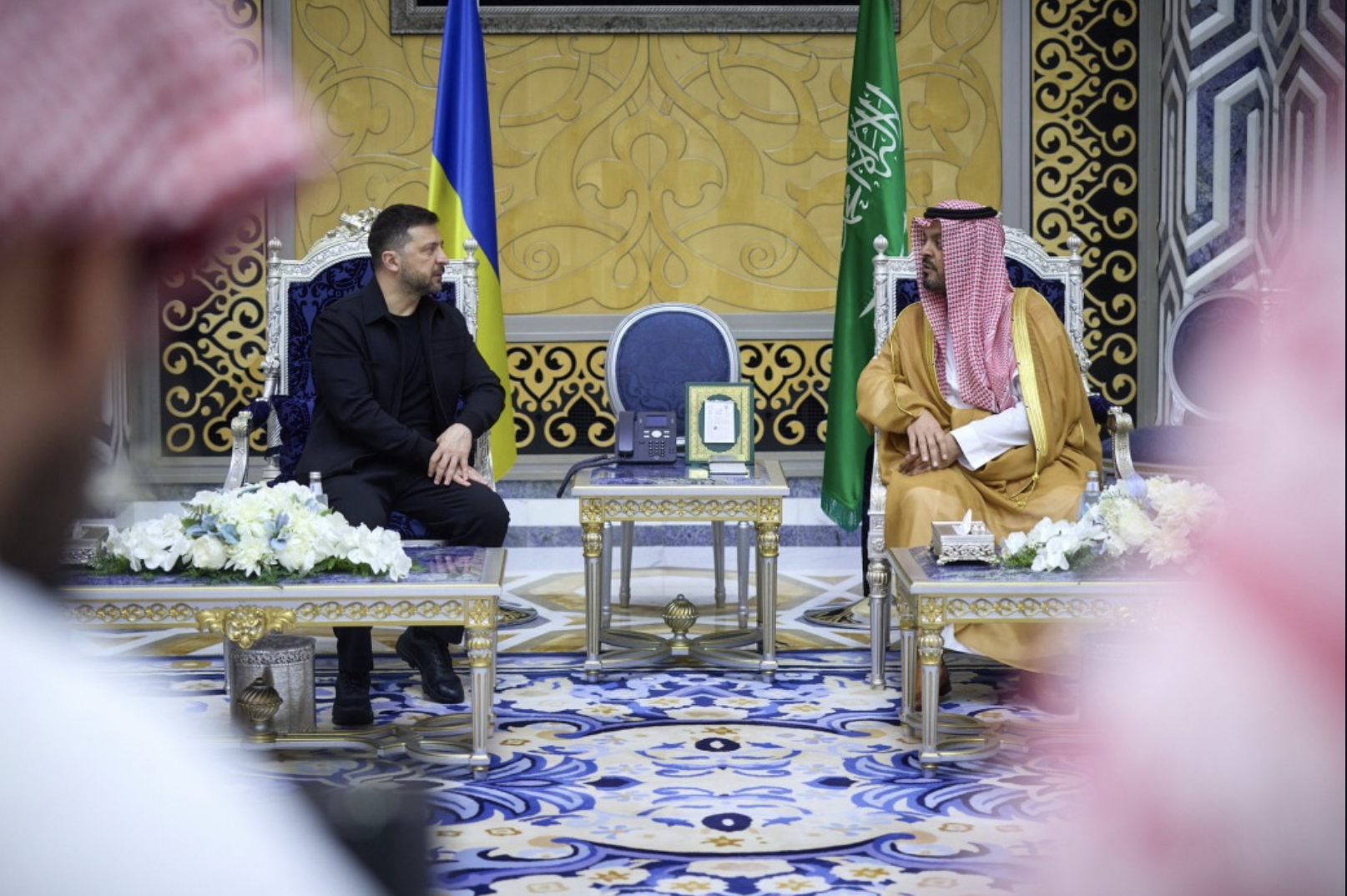
Photo: President of Ukraine.
The Informal Path to EU Membership for Kyiv and Chișinău
The momentum of European integration has recently led the European Union to move forward with technical guidance for Ukraine and Moldova, effectively bypassing a political stalemate. On March 17, 2026, EU officials held two separate informal meetings in Brussels to provide the two candidate nations with the necessary frameworks to continue their reform work across all six negotiating clusters. This step allows both countries to work on the technical requirements of membership even while formal negotiations remain blocked by Hungary.
The current state stems from Hungary’s Prime Minister Viktor Orbán, who has made blocking Ukraine’s accession a main part of his national election campaign. Because the EU uses a “package approach” for these two candidates, the veto against Kyiv has also stopped the formal progress of Chișinău. To prevent the loss of critical time, EU institutions have decided to share technical guidance informally. While guidance for the first three clusters (Fundamentals, Internal Market, and External Relations) was shared in December 2025, the meetings in March covered the final three (Competitiveness and Inclusive Growth, Green Agenda and Sustainable Connectivity, and Resources, Agriculture and Cohesion). The entire accession process consists of 35 individual chapters within these six clusters, all of which must meet strict EU standards. Ukrainian Deputy Prime Minister Taras Kachka claimed that despite the ongoing war with Russia, Ukraine has shown an “extraordinary commitment” to reforms. EU Enlargement Commissioner Marta Kos echoed this sentiment, stating that there “cannot be a safe Europe without a safe, democratic and prosperous Ukraine”.
Simultaneously, Moldova has been recognised as a “top performer” in delivering reforms. Deputy Prime Minister Cristina Gherasimova noted that EU accession is the “only viable path” for Moldova’s future, with the government aiming for full membership by 2030. To support this progress, Commissioner Kos announced a disbursement of approximately 189 million EUR to Moldova under the EU’s Growth Plan.
The rotating presidency of the Council of the EU, currently held by Cyprus, has emphasised that enlargement is a “strategic investment in Europe’s peace and stability” rather than a simple symbolic gesture. The Commission considers it possible for Moldova to finish negotiations by 2027 and Ukraine by 2028. The focus now shifts to whether the 27 member states can reach the unanimity required to formally open the clusters later this year. Until then, the informal technical work ensures that once the political barrier is lifted, the accession process can advance “without further delay”
Sources:
- The New Union Post, “Ukraine and Moldova open all accession chapters – but informally”, https://newunionpost.eu/2026/03/17/ukraine-moldova-eu-informal-negotiation/
- MILENA WÄLDE, Politico, “EU hands Ukraine and Moldova next steps toward membership despite Orbán block”, https://www.politico.eu/article/eu-ukraine-moldova-accession-viktor-orban/
Volodymyr Zelenskyy Tours the Gulf States
Ukrainian President Volodymyr Zelenskyy made an unannounced and quite surprising visit to Jeddah, Saudi Arabia, on March 26 and 27. The main point of the visit was the signing of a historic 10-year strategic defence partnership between the Ukrainian and Saudi defence ministries. This agreement, described by Zelenskyy as a landmark arrangement, focuses heavily on the exchange of military technology and battlefield expertise, particularly in countering aerial threats. In his meeting with the Crown Prince Mohammed bin Salman, Zelenskyy emphasised that Ukraine’s four years of experience defending against Russian drones made in Iran and ballistic missiles is uniquely applicable to the current security challenges in the Middle East. Saudi Arabia and Iran have long had tense relations, as the Saudis are an important US ally in the region.
Zelenskyy confirmed that more than 200 Ukrainian anti-drone specialists are already deployed across the Gulf, including within Saudi Arabia, to provide real-time training and support for intercepting “Shahed” style drones. The 10-year pact also lays the groundwork for joint investment, the co-production of military hardware, and the potential construction of defence factories in both countries. Additionally, the two leaders addressed global energy security and the destabilising influence of the military alliance between Russia and Iran.
However, Saudi Arabia was not the only stop on this diplomatic mission. A similar 10-year deal was signed with Qatar, and another one with the UAE is due to be finalised soon. On March 29, Zelenskyy also paid a visit to Jordan, where he again discussed the situation in the Middle East. This development shows that Ukraine is trying to keep up with the changing geopolitical situation, and it’s trying to actively work against the Iranian regime, which remains one of the strongest allies of Russia.
Sources:
- Official Website of the President of Ukraine, President of Ukraine, “President of Ukraine and Crown Prince of Saudi Arabia Discussed Opportunities to Strengthen Both Countries”https://www.president.gov.ua/en/news/prezident-ukrayini-ta-spadkoyemnij-princ-saudivskoyi-araviyi-103561
-
Gabriel Cortes, CNBC, “Zelenskyy Saudi visit: How Ukraine is trading drone secrets for Gulf support”https://www.cnbc.com/2026/03/27/zelenskyy-saudi-visit-us-troops-middle-east-iran-ukraine-aid-shahed-drones.html
- Martin Fornusek, The Kyiv Independent, “Zelensky arrives in Jordan for important security talks”https://kyivindependent.com/zelensky-arrives-in-jordan-for-important-security-talks/
Zelenskyy Under EU’s Pressure to Scale Back Attacks on Russia’s Energy Sector
Ukraine’s president, Volodymyr Zelenskyy, stated that due to the worldwide oil crisis, a couple of the allies contacted him to lower the intensity of the attacks on the Russian oil infrastructure. In a WhatsApp briefing with journalists, Zelenskyy admitted that there was a suggestion from the Ukrainian partners on how to reduce the long-range strikes on the Russian energy sector, as the military confrontation in the Middle East between the USA and Iran continues. However, these signals were answered with a straightforward right to reciprocate, which means that Kyiv’s offensive attacks are only a strategy to force Moscow to abolish its own strikes on Ukraine. Ergo, if Russia stops, Ukraine stops.
Over the last couple of months, Ukraine has become quite effective at targeting some of Russian core energy facilities, including the key oil terminal at the port of Ust-Luga just outside St Petersburg. The attack might have knocked out up to 60% of the full capacity of this port. This has been happening in the background of Tehran’s closure of the Strait of Hormuz, the main fuel route. That is why the world economy is struggling, and multiple Ukrainian allies are pushing for limitations on the attacks against energy infrastructure in Russia. Although it may seem that Kyiv does not take into consideration its partners, Russia spent the past winter targeting the Ukrainian energy sector to undermine citizens’ support for resilience.
Furthermore, Slovakia and Hungary have been set on disregarding Ukrainian interests in the matter of the Druzhba pipeline, which got damaged during a Russian drone strike in late January of this year. Both Prime Ministers Fico and Orban shared fake narratives that Kyiv is lying about the actual damage and is only blocking Russian oil for its own gain in the conflict. Slovak Prime Minister repeatedly blamed Zelenskyy for the situation, stating that Slovakia will not vote for any pro-Ukrainian processes, unless the pipeline is fixed. Combined with alleged discouragement from targeting Russian energy infrastructure from Ukrainian partners, the Middle Eastern conflict is directly threatening the development of the Russian war in Ukraine for Kyiv.
Sources:
- The Guardian, “Ukraine war briefing: allies asked Kyiv about reducing attacks on Russian energy sector, Zelenskyy says”, https://www.theguardian.com/world/2026/mar/31/ukraine-war-briefing-allies-asked-kyiv-about-reducing-attacks-on-russian-energy-sector-zelenskyy-says
- Vitaly Shevchenko, BBC News, “Zelensky says allies asked him to scale back attacks on Russian energy”, https://www.bbc.com/news/articles/c0e7lrxrelwo
- Ivanna Kostina and Anastazia Protz, Ukrainska Pravda, “Slovak PM says EU can forget about Slovakia’s support for Ukraine’s fast-track accession”, https://www.pravda.com.ua/eng/news/2026/03/30/8027883/
Ukraine and Moldova Deepen Transport Integration
On March 6, 2026, Ukraine approved the allocation of approximately 718 million UAH (approx. 14,3 million EUR) to strengthen transport connectivity in the Odesa region and along its border with Moldova. The funding is aimed at developing alternative road routes and repairing critical infrastructure damaged by Russian strikes, particularly in strategically important areas near river crossings and border checkpoints.
The initiative reflects a broader wartime shift in Ukrainian infrastructure policy. With traditional logistics routes repeatedly targeted, Kyiv is prioritising redundancy and resilience
in transport networks, especially those linking the country to EU markets via Moldova and the Danube ports. Planned projects include the construction of alternative road connections and new cross-border links, reducing reliance on vulnerable chokepoints and Soviet-era infrastructure.
At the same time, Ukraine and Moldova are advancing their longer-term objective of integration into the European transport system. In mid-March, representatives from both countries participated in a joint capacity-building initiative in Chișinău focused on railway safety and interoperability, drawing on the experience of the Baltic states.
The discussions centred on the adoption of EU regulatory frameworks and technical standards, including harmonisation measures that would allow rail systems to function seamlessly across borders.
A key reference point was the Rail Baltica project, which illustrates how large-scale infrastructure development can be combined with regulatory reform to accelerate integration into the EU transport market.
For Ukraine and Moldova, similar reforms are essential, given the legacy of incompatible railway gauges and outdated systems that continue to hinder connectivity with Europe. Together, these developments highlight a dual-track approach to transport policy. In the short term, both countries are focused on ensuring operational continuity under wartime conditions, investing in alternative routes and rapid infrastructure repairs.
In the longer term, they are aligning their transport sectors with EU standards, using technical reforms and institutional cooperation as tools of integration.
Sources:
- Cabinet of Ministers of Ukraine. 2026. “Government Allocates UAH 718 Million to Ensure Transport Connectivity in Odesa Region and with Moldova.” Government Portal, March 6, 2026. https://www.kmu.gov.ua/en/news/uriad-vydilyv-718-mln-na-zabezpechennia-transportnoho-spoluchennia-v-odeskii-oblasti-ta-z-moldovoiu.
- Transport Community. 2026. “Moldova, Ukraine Learn from Baltics Experience in Railway Projects, Safety and Interoperability.” Transport Community, March 18, 2026. https://www.transport-community.org/news/moldova-ukraine-learn-from-baltics-experience-in-railway-projects-safety-and-interoperability/.
MOLDOVA
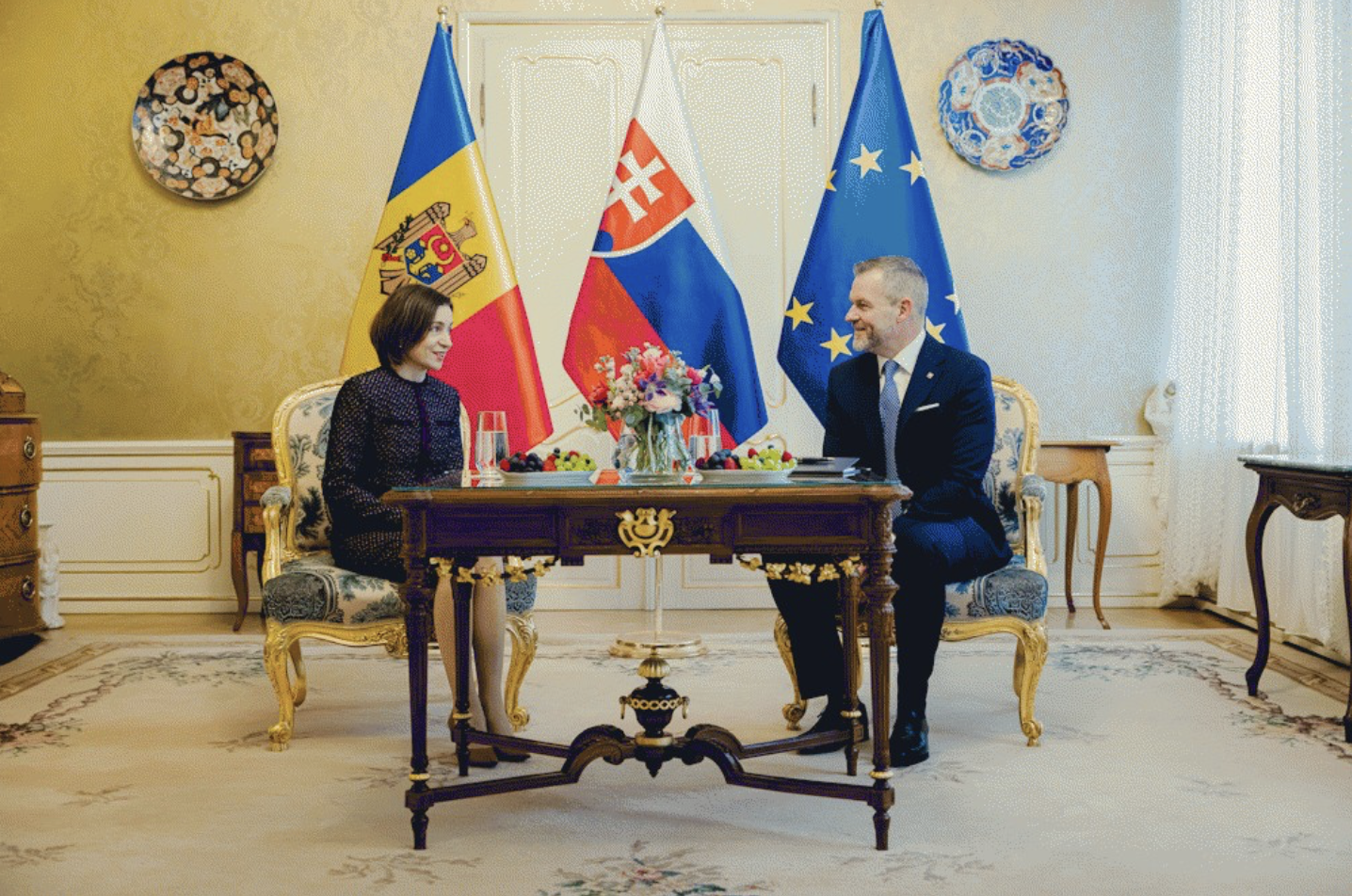
Photo: President of the Slovak Republic.
Moldova Declares Energy Emergency After Key Power Line Got Disrupted
On March 24, 2026, Moldova declared a state of emergency in the energy sector after a major power line supplying electricity from Romania was knocked out of operation. The disruption was not caused by a direct attack on Moldovan territory but resulted from Russian strikes on Ukrainian infrastructure, once again demonstrating how the war in Ukraine produces other spillover effects across borders.
The affected high-voltage line, which runs through southern Ukraine, is a critical component of Moldova’s electricity system. It enables imports from Romania and plays a central role in the country’s efforts to reduce dependence on Russian-controlled energy sources.
Its temporary shutdown created an immediate supply gap, forcing authorities in Chișinău to act quickly in order to stabilise the grid and prevent potential blackouts. Repair efforts were complicated by the security situation on the ground. Ukrainian crews faced delays due to unexploded ordnance and debris from drone strikes, highlighting the operational risks tied to infrastructure maintenance in active war zones.
Chișinău therefore justified the emergency measures as necessary to streamline procurement, secure alternative electricity supplies, and manage consumption if needed. At the same time, the situation has intensified domestic political debates. While the pro-European leadership framed the crisis as a direct consequence of Russian aggression, opposition voices questioned both the scale of the response and the government’s preparedness.
More broadly, the episode underscores Moldova’s persistent structural vulnerability. Despite notable progress in diversifying energy sources since 2022, the country remains dependent on infrastructure that is physically routed through Ukraine. As a result, its energy security is closely tied to developments on the battlefield, leaving it exposed to indirect shocks beyond its control.
Sources:
- Tanas, Alexander. 2026. “Moldovan Parliament Backs Energy State of Emergency After Power Line Knocked Out.” Reuters, March 24, 2026. https://www.reuters.com/business/energy/moldovan-parliament-backs-energy-state-emergency-after-power-line-put-out-action-2026-03-24/.
- The Guardian. 2026. “Ukraine War Briefing: Moldova Declares Emergency After Russian Attack Cuts Key Power Line.” The Guardian, March 25, 2026. https://www.theguardian.com/world/2026/mar/25/ukraine-war-briefing-moldova-declares-em ergency-after-russian-attack-cuts-key-power-line.
- UA.NEWS. 2026. “Moldova Has Declared a State of Emergency in the Energy Sector Due to Russian Attacks on Ukraine.” UA.NEWS, March 24, 2026. https://ua.news/en/al
Transnistria’s Possible Reintegration to Moldova as a Result of the Geopolitical Situation
Over the course of the past few years, Moldova has been on its path towards EU accession, but if we take into account the separatist region of Transnistria, it has not been prosperous, but quite the opposite. Transnistria is in the middle of a great economic crisis and will most likely have to cut its budget after the 2025 crisis, which was stated by the authorities in its de facto capital, Tiraspol. The separatist government is now trying to implement the presented framework onto the real economic situation, which is currently dependent on the interruptions of natural gas supplies, stable access to foreign payments, a steady exchange rate and no additional external shocks or escalation of sanctions.
The greatest threat to the stabilisation of the economy is the potential loss of the gas supply. That was the reason behind the 2025 crisis, as well. A dramatic downturn came in January 2025, when the region lost its free direct gas supplies from Russia, because of the war in Ukraine, and back then, the government in Chisinau provided Transnistria with the necessary energy supply. Since the creation of the sovereign Moldovan Republic, Russia has been attempting to destabilise the democratic regime, while using the separatist region of Transnistria as leverage. Before the full-scale invasion in 2022, there had been some kind of agreement between the Moldovan and Russian governments about the rotation of Russian Armed Forces in Transnistria, but after the war broke out, Ukraine completely closed its borders with Transnistria.
The EU might advise Chisinau to try to fully and peacefully reintegrate the separatist region of Transnistria, as a leaked document suggests, which has come to the public’s attention. Moldova is closing in on its admission to the EU, and it is becoming more apparent that the previous plan, which was that Moldova would join and then Transnistria would later, is not in the interest of the EU anymore. Brussels is most likely currently operating with a scenario where Chisinau would resolve this issue as soon as possible and take over the Transnistrian region. The document is allegedly not suggesting that Transnistria should have a special status within the political structure of the country, which was discussed before. Moldova would therefore, de iure and de facto, become one sole subject of international law and the territory of Transnistria should constitute an integral part of the Republic of Moldova.
Sources:
- Iulian Ernst, IntelliNews, “Moldova’s separatist Transnistria faces second year of economic collapse”, https://www.intellinews.com/moldova-s-separatist-transnistria-faces-second-year-of-economic-collapse-434696/
- Regis Gente, Foundation Robert Schuman, “Transnistria: the Achilles heel of Moldova’s European future?”, https://www.robert-schuman.eu/en/european-issues/825-transnistria-the-achilles-heel-of-moldova-s-european-future
- Vladimir Solovyov, Carnegie Russia Eurasia Centre, “Moldova Floats a New Approach to Its Transnistria Conundrum”, https://carnegieendowment.org/russia-eurasia/politika/2026/03/moldova-transnistria-new-plan
Moldovan President Visits Bratislava
On March 26, 2026, Moldovan President Maia Sandu conducted her first official visit to Bratislava marking the first time a Moldovan president visited Slovakia in the 33-year diplomatic history between the two countries. At the invitation of Slovak President Peter Pellegrini, the visit focused on accelerating Moldova’s integration into the European Union and deepening economic ties. During their meeting at the Presidential Palace, Pellegrini reaffirmed Slovakia’s support for Moldova’s EU accession path, offering expertise from Slovakia’s own integration history to help Moldova with the reform process. The leaders emphasised that a stable, European Moldova is a strategic necessity for the security of the continent’s eastern flank. Pellegrini also underscored the importance of Moldova in Slovak development aid.
The visit brought several concrete bilateral achievements, most notably the signing of a comprehensive social security agreement. This pact ensures that Moldovan citizens working in Slovakia—primarily in the automotive and logistics sectors—can have their work periods recognised for pension and social benefit purposes. Additionally, the two presidents inaugurated the first-ever Slovak-Moldovan Business Forum, which brought together over 50 companies to explore partnerships in renewable energy, digital technology, and food processing. Sandu’s message to investors was clear: Moldova has successfully ended its dependence on Russian gas and is actively fighting corrupt networks to create a safe, transparent business environment. The day concluded with a ceremony at the Gate of Freedom monument in Devín, where Sandu and Pellegrini paid tribute to victims of communism.
Sources:
- Bogdan Nigai, Moldova 1, “Maia Sandu in Bratislava: Ukraine’s resistance keeps Russia away from our borders”https://moldova1.md/p/72071
- Office of the President of the Slovak Republic, Prezident.sk, “Prezident deklaroval podporu Slovenska v úsilí Moldavska stať sa členom Únie” https://www.prezident.sk/article/prezident-deklaroval-podporu-slovenska-v-usili-moldavska-stat-sa-clenom-unie/
Contact us