

Strategic Analysis Caucasus Brief
Review of May 2026
Tomáš Baranec
Armenia
Shutterstock.com
Armenia’s Western pivot
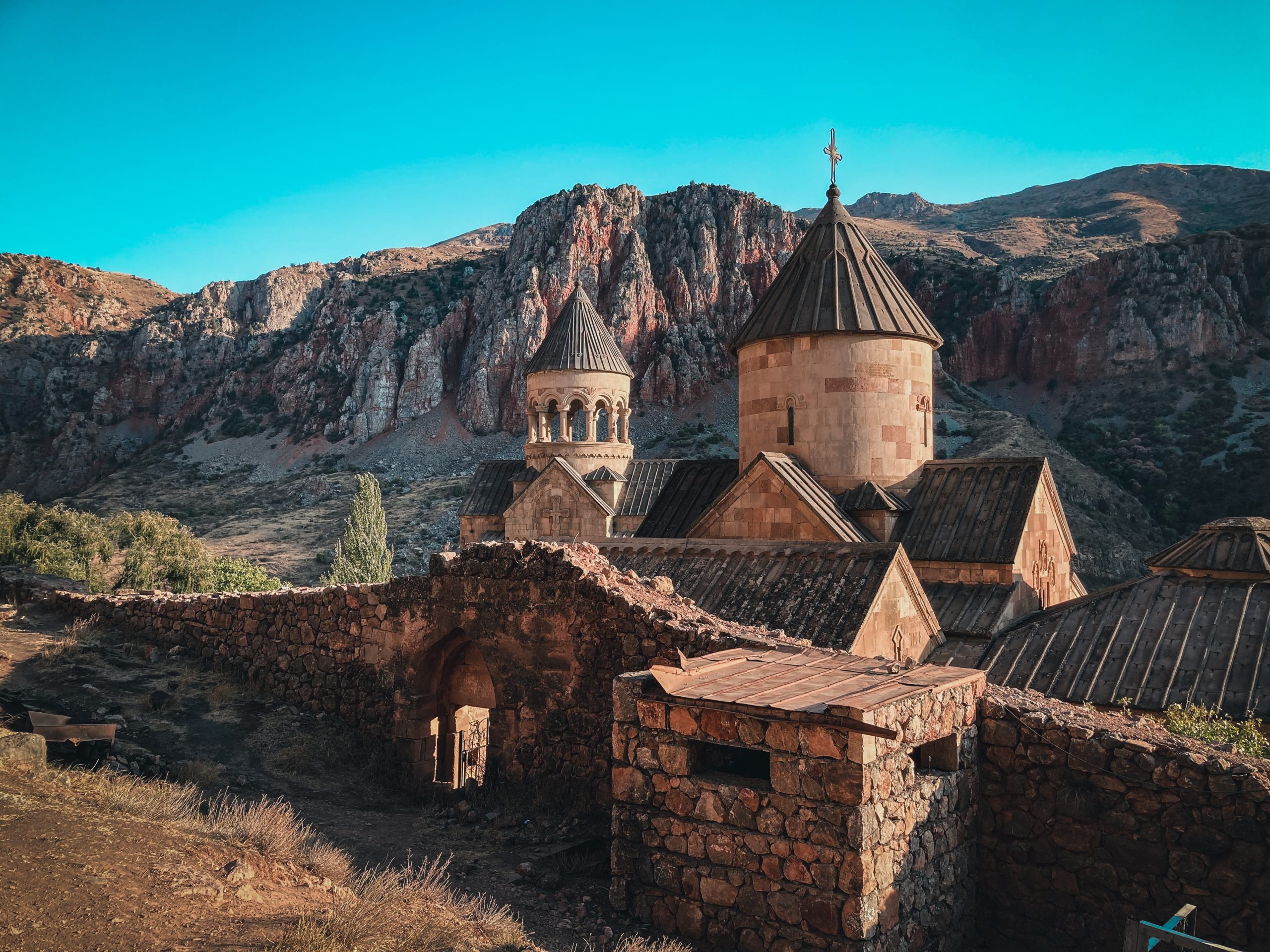
On May 4, Armenia hosted the 8th European Political Community (EPC) Summit, attended by 50 world leaders and numerous international organisations. As the OC Media wrote, Armenia was the first Caucasian country to host the summit since its inception in 2022 and marks the largest international conference held in Armenia.
Discussions focused on “strengthening democratic resilience, advancing connectivity, and reinforcing economic and energy security, while addressing evolving security dynamics and regional challenges”. The attendants included Canadian Prime Minister Mark Carney and UK Prime Minister Keir Starmer. Starmer’s visit marks the first time a sitting UK Prime Minister has visited Armenia, and several other countries have seen their leaders pay their first official visits to the country.
Ukrainian President Volodymyr Zelenskyi also attended — his first visit to Armenia and the first time a Ukrainian President has visited Armenia since 2002. Armenia’s Prime Minister Nikol Pashinyan, in his opening remarks, touched upon the peace process between Armenia and Azerbaijan, noting that the summit marked Aliyev’s first participation in an event taking place in Armenia, “albeit online”. “But hopefully I will have the opportunity to visit Azerbaijan in 2028 for the EPC 10th Summit”, Pashinyan said, adding that the two countries “reciprocally supported” each other’s candidacy to host EPC summits.
In parallel to the opening sentiment of the EPC, a group of people, including Nagorno-Karabakh Armenians, held a protest demanding the release of 19 Armenian prisoners held in Azerbaijan and the preservation of Armenian heritage in Nagorno-Karabakh.
Meanwhile, the first-ever bilateral EU-Armenia Summit took place on May 4–5, 2026, in Yerevan. The two sides signed a new connectivity partnership focused on transport, energy and digital links. Furthermore, on May 5, Pashinyan and French President Emmanuel Macron signed a joint strategic partnership declaration. Macron’s state visit coincided with his participation in the European Political Community summit.
According to the declaration, the two countries agreed to elevate bilateral relations to the level of a strategic partnership based on sovereignty, equality, territorial integrity, democratic values, human rights and the rule of law. Under the agreement, Armenia and France pledged to expand political dialogue at all levels and hold regular consultations between their foreign ministries.
A major section of the declaration focuses on security and defence cooperation. The two countries agreed to deepen cooperation in defence, military education, military-technical and military-technological fields on a long-term basis.
Macron has admitted endorsing Pashinyan ahead of the June 7 elections but insisted that this does not amount to the kind of foreign election meddling that the European Union accuses Russia of resorting to. “You should distinguish between an interference that manipulates information, disrupts the democratic life of a country in a covert way and openly taking a political position,” Macron said, answering a question from a reporter.
Sources:
-
BARSEGHYAN Arshalyus, OC Media, „Armenia hosts European Political Community summit“, https://oc-media.org/armenia-hosts-european-political-community-summit/
-
France 24, EU, „Armenia sign new partnership deals at first bilateral summit“, https://www.france24.com/en/tv-shows/business/20260505-eu-armenia-sign-new-partnership-deals-at-first-bilateral-summit
-
Asbarez, „As Armenia and France Sign Strategic Partnership Accord, Macron Denies Meddling in Elections“, https://asbarez.com/as-armenia-and-france-sign-strategic-partnership-accord-macron-denies-meddling-in-elections/
Kremlin increases sanctions pressure on Armenia ahead of elections
Russia’s leading online retailers appear to have stopped sales of Armenian-made products, stoking speculation about Moscow’s retaliation against the Armenian government’s pro-Western foreign policy, wrote Azatutyun.am. Some Armenian entrepreneurs using the Wildberries and Ozon online marketplaces were the first to report the disruption on May 5 in the morning. Both Russian firms later confirmed it, citing new customs rules and procedures introduced in Russia late last month. “In order to comply with the new requirements, additional documents necessary within the updated procedures have been requested from sellers,” Wildberries said in a statement.
The company said its representatives in Armenia have met with over 50 local exporters to discuss “possible solutions” to the problem. While Armenian exporters complain they cannot export their products, buyers confirm they face no obstacles when purchasing goods. It turns out that it is possible to buy EAEU goods but not to sell Armenian goods, according to the Armenian Mirror Spectator. Armenia last year exported almost 3 billion USD worth of goods to Russia, its leading trading partner. It is not known what percentage of them was sold through Wildberries and Ozon.
Additionally, on May 23, Russia’s consumer protection watchdog Rospotrebnadzor suspended the sale of alcoholic beverages produced by three Armenian companies. In a statement, Rospotrebnadzor said the restrictions apply to brandy and wine products manufactured by Vedi-Alco, Abovyan Brandy Factory and Shahnazaryan Wine-Brandy House. The ban specifically covers Getap Vernashen semi-sweet red wine, dry white wine produced by Vedi-Alco, and a five-star brandy made by Shahnazaryan Wine-Brandy House. The agency claimed that the products manufactured by the listed companies do not comply with mandatory requirements.
On May 26, the Russian pro-government media outlet Kommersant reported that Moscow has sent Armenia a letter warning it could cut off the tax-free supply of gas, petroleum products, and uncut diamonds if Yerevan proceeds with its EU accession efforts. The alleged letter was sent by Russian Energy Minister Sergei Tsivilyov to the Armenian Ministry of Territorial Administration and Infrastructure, which told the Armenian state-run outlet Armenpress on May 27 that it had not received such a letter. On the same day, Kremlin spokesperson Dmitry Peskov said he had no information about the alleged cancellation threat and instead said it was a “commercial issue” with the Russian state-owned energy company Gazprom.
Under a 2013 agreement, Russia began supplying gas, petroleum products, and uncut diamonds without export duties, an agreement which the alleged letter said would be ended. Moreover, Armenia would be required to pay compensation, or “recognise unpaid amounts as its state debt to Russia”. It is unclear whether the wording meant that Armenia would have to pay export duties on all such goods it imported from Russia since 2013, which would likely be a significant sum.
Sources:
-
GHALECHIAN Narine, Ayatutyun.am, „Online Sales Of Armenian Goods Halted In Russia“, https://www.azatutyun.am/a/33747236.html
-
VANYAN Marut, Armenian Mirror Spectator, „Wildberries and OZON Suspend Sales to Armenian Trading Companies“, https://mirrorspectator.com/2026/05/05/wildberries-and-ozon-suspend-sales-to-armenian-trading-companies/
-
ArmenPress, „Russia bans sales of brandy and wines produced by three Armenian companies“, https://armenpress.am/en/article/1251008
-
OSTILLER Nate, OC Media, „Russia reportedly threatens to end tax-free gas exports to Armenia if EU path continues“, https://oc-media.org/russia-reportedly-threatens-to-end-tax-free-gas-exports-to-armenia-if-eu-path-continues/
Russia’s alleged interference in Armenian elections
Two leaked documents point to an alleged systematic effort by the Kremlin to undermine Armenian Prime Minister Nikol Pashinyan ahead of parliamentary elections. Independent Swedish media outlet Blankspot wrote that it has obtained, through a trusted source, a Russian document titled “Programme for Work in the ‘Anti-Pashinyan’ Direction for 2026.”
According to Blankspot, the document states that a central goal is to frame the election as a vote of confidence against Prime Minister Nikol Pashinyan personally. It also describes efforts to limit the influence of the sitting Armenian government ahead of the June 7 parliamentary elections. Another objective is to prevent Pashinyan’s “political image” from changing or being “modernised” before the vote.
However, the document does not specify which opposition party Russia prefers over Pashinyan’s Civil Contract party. Instead, it describes the tools that are to be used to influence public opinion. Among the proposals is a plan to triple the reach of Russia-aligned narratives on social media compared to autumn 2025 — from 1 million views per day to as many as 3 million. According to the document, the number of opinion makers in the Russia-aligned network is to be expanded from 15 to approximately 40.
It also describes so-called “false flag” campaigns on social media, targeted comment campaigns against campaign workers from the ruling party, and the establishment of dedicated “stringer groups” to produce exclusive content during the election campaign.
Blankspot wrote that it has verified the authenticity and origin of the document, but it is not possible to determine to what extent the strategy has actually been implemented or how central it is to Russian influence efforts ahead of the election. The outlet reported that the document originated from materials obtained „after a person operating within the Russian intelligence services was hacked by a third party before March 2026“.
Another set of leaked documents obtained by Russian opposition figure Mikhail Khodorkovsky’s Dossier Centre allegedly shows a detailed Russian plan to oust Pashinyan through an operation built around their primary candidate, Russian–Armenian tycoon Samvel Karapetyan. As Khodorkovsky writes on his Substack, “Karapetyan met a list of specific requirements: he was not connected to the discredited old opposition, the Karabakh clan, or Pashinyan’s group”.
At the same time, however, Karapetyan had strong ties with Russia, including being listed in Russian databases from 2006 as working for the “IC FSB”, or Information Centre of the FSB, a designation typically used for informants or foreigners operating under FSB control. While the operation planned around Karapetyan was detailed — including a TV channel and a legal defence committee to deal with his anticipated arrest — Kremlin consultant Gleb Kuznetsov, the head of the expert council at the Expert Institute for Social Studies (EISI), an institute closely tied to the Russian Presidential Administration, soon realised that Karapetyan’s clear Russian ties were in fact a liability, including preventing him by law from holding the post of Prime Minister of Armenia.
Therefore, according to the leaked documents, a second track was formed, centring on former Armenian Human Rights Defender Arman Tatoyan, who has arguably been the most popular person to hold the position. Tatoyan registered his political initiative, Wings of Unity, as a political party by mid-April 2026. The Dossier Centre found that a third Russian document was created outlining a post-election coalition between Karapetyan and Tatoyan. That same day, Tatoyan responded to the allegations, calling the financial figures cited by the Dossier Centre as being “fabricated, completely exaggerated”.
“These are facts, objective facts. The information about the sources of funding is completely false. All our actions comply with the law: they are reflected in tax and bank statements, as well as in all other relevant records. The Wings of Unity party has no funding from any external source, especially not from Russia”, Tatoyan wrote on Facebook. He concluded by stating that they would “sue the dubious source” and would go after anyone else who toyed with his “authority and good reputation”.
Karapetyan has not responded to the allegations as of the time of publication.
Sources:
-
Blankspot, „Confidential document reveals: Russia seeks to influence Armenia’s election“, https://blankspot.se/confidential-document-reveals-russia-seeks-to-influence-armenias-election/
-
KUENNING Xandie, OSTILLER Nate, OC Media, „Leaked documents show Russian plans to unseat Pashinyan, ties between Karapetyan and Putin“, https://oc-media.org/leaked-documents-show-russian-plans-to-unseat-pashinyan-ties-between-karapetyan-and-putin/
Photo: Shutterstock.com
Putin hints at a divorce between Russia and Armenia
On May 11, Russian President Vladimir Putin stated that Armenia needs to decide on EU or EAEU membership “for a mutually beneficial divorce”. “We will support everything that benefits the Armenian people. We have had a special relationship with the Armenian people for centuries. If a particular decision benefits the Armenian people, please, we will not oppose it,” Putin said, answering journalists’ questions.
At the same time, the Russian leader emphasised the need to keep several important circumstances in mind. “For example, our trade turnover with Armenia has decreased now; last year, it was much higher than the year before, but it will still be 7 billion USD by 2026. Given the country’s GDP of 29 billion USD, this is a significant figure. And Armenia receives significant advantages within the Eurasian Economic Union.” “This concerns agriculture, this concerns the processing industry, this concerns customs and other duties, and so on and so forth. This concerns the migration sphere,” he said.
Putin noted that it would be right to determine the relationship between both Armenian citizens and Russia, as the main economic partner, as soon as possible.
“For example, holding a referendum. It’s not our business, but, in principle, it would be quite logical to hold a referendum and ask Armenian citizens what their choice would be in accordance with this, and we would draw the appropriate conclusions and pursue a gentle, intelligent, and mutually beneficial divorce,” the Russian president said.
Armenian Prime Minister Nikol Pashinyan has rejected Putin’s offer of “a gentle, intelligent, and mutually beneficial divorce” in relation to Armenia pursuing deepening ties with the EU. Pashinyan, instead, suggested that his government “is guided in its interstate relations by an interstate logic” and not a „marriage“. “We are a full member of the Eurasian Economic Union (EAEU), and as long as we are a member of the EAEU, we fully participate in all decision-making”, Pashinyan said in a Monday press briefing.
Pashinyan said he had communicated Armenia’s stance to Putin regarding the choice between the two blocs. “We will hold a referendum at the moment when there is an objective need for it. My assessment is that there is simply no such objective necessity. We treat our EAEU partners and our participation in the EAEU with great respect,” Pashinyan said. Pashinyan further reiterated his government’s stance of a “balanced foreign policy” and said there was no intention of “harming Russia’s interests”.
Sources:
- Arka.am, „Putin: Armenia needs to decide on EU or EAEU membership for a mutually beneficial divorce”, https://arka.am/en/news/politics/putin-armenia-needs-to-decide-on-eu-or-eaeu-membership-for-a-mutually-beneficial-divorce/
- BARSEGHYAN Arshalys, OC Media, „Pashinyan rejects Putin’s ‘divorce’ offer“, https://oc-media.org/pashinyan-rejects-putins-divorce-offer/
Turkey opens bilateral trade with Armenia after decades of closure
Turkey and Armenia have taken one of their most significant practical steps toward economic rapprochement in decades after Ankara removed long-standing restrictions preventing direct bilateral trade documentation, opening a new phase in efforts to rebuild ties between the longtime regional rivals, reported The Middle East Observer.
The measure allows goods traded between the two countries to be officially documented as Turkish or Armenian imports and exports without requiring indirect customs designation through intermediary states such as Georgia. While the shared land border remained officially closed after the decision and most shipments were still expected to transit through third countries, the decision substantially reduced administrative barriers while formalising commercial flows that had long operated through indirect channels.
The distinction between trade facilitation and full border reopening nevertheless remains critical. Turkish officials have emphasised that technical work concerning the physical opening of the border is still underway. Earlier negotiations examined practical transport measures, including the reopening of the Alican–Margara border crossing and the potential restoration of the historic Akyaka–Akhurik railway connection linking the two countries.
Until such infrastructure becomes operational, the latest move is best understood as a breakthrough in customs and trade documentation rather than a full reopening of direct overland commerce, wrote The Middle East Observer.
On May 24, Armenian Prime Minister Nikol Pashinyan announced that Turkey and Armenia will open the Akhalkalaki–Kars railway between Georgia and Turkey for Armenian exports and imports. He added that, despite the concession agreement with Russia for the management of Armenia’s railways, the Armenian government will soon begin renovating the Gyumri–Akhurik–Akyaka and the Yeraskh junction railways. “Today, Armenia has a railway connection with Russia via the territories of Georgia and Azerbaijan, and further with China via the territories of Russia and Kazakhstan. Now, via Georgia and Turkey, it also has a connection to the EU,” Pashinyan stated.
Ankara’s special representative for the normalisation process with Armenia, Serdar Kilic, said on the same day that the opening of the Akhalkalaki-Kars railway line to Armenia’s imports and exports marks a new step in trade relations between the two neighbouring countries. “I hope this new step, which will also improve quadruple cooperation among Turkey, Armenia, Azerbaijan and Georgia and make a significant contribution to regional peace and stability, will be beneficial for all these countries,” Kilic said.
In 1993, Turkey unilaterally severed diplomatic relations with Armenia and closed its shared land border in solidarity with Azerbaijan during the First Nagorno-Karabakh War. The border has remained closed since then, including for rail cargo transit
Sources:
- Meobserver.org, „Turkey and Armenia Move Toward Direct Trade in Major Step for South Caucasus Normalization“, https://meobserver.org/trade/2026/05/16/turkey-and-armenia-move-toward-direct-trade-in-major-step-for-south-caucasus-normalization/
- KURT Seyit, AA, „Türkiye says opening of Akhalkalaki-Kars railway to Armenia marks new step in normalisation “, https://www.aa.com.tr/en/turkiye/turkiye-says-opening-of-akhalkalaki-kars-railway-to-armenia-marks-new-step-in-normalization/3947402
- BARSEGHYAN Arshalyus, OC Media, „Turkish rail routes open for Armenian cargo“, https://oc-media.org/turkish-rail-routes-open-for-armenian-cargo/
Azerbaijan
Shutterstock.com
Baku has entered a new cycle of disputes with Brussels and Paris – but continues to deepen energy cooperation
A diplomatic storm has erupted after the EU Parliament adopted a multi-party resolution on Armenia on April 30 that contained clauses on Nagorno-Karabakh, followed by a vote by the Azerbaijani Parliament to cut ties with the body and the summoning of the EU’s Ambassador to Azerbaijan, Marijana Kujundžić.
As the OC Media reported, while the majority of the resolution pertained to “supporting democratic resilience in Armenia”, Azerbaijan took issue with the sections that called for the right of return for Nagorno-Karabakh Armenians who fled en masse in 2023 and the release of Armenian prisoners held by Azerbaijan. Drawing particular concern over the two sections above, the Azerbaijani Parliament said that „at the core of the European Parliament’s activities lies a decisive rejection of the norms and principles of international law and the concept of justice“. “This body has consistently shown disregard for the 30-year occupation of our lands by Armenia, the destruction of hundreds of our cities and villages, our historical, religious, and cultural monuments, ethnic cleansing, and the human rights of more than 1 million refugees and internally displaced persons“, the parliament added.
In the statement, the parliament claimed that “the European Parliament, where democratic values have collapsed, corruption and bribery have taken deep root, and which serves lobbying groups and various circles of interest, has turned into a structure where Azerbaijanophobic and Islamophobic thinking is consistently expressed”.
Later, on May 4, Azerbaijani President Ilham Aliyev accused the European Parliament of sabotaging the peace process between Azerbaijan and Armenia. Addressing the 8th European Political Community (EPC) summit in Yerevan via video link, Aliyev said the European Parliament had adopted 14 resolutions over the past five years containing offensive language directed at Baku. “This body, instead of supporting the peace process, is effectively engaged in sabotaging it. From May 2021 to April 30, 2026, the European Parliament adopted 14 resolutions replete with offensive language against Azerbaijan. Just imagine — 14 resolutions in five years – a kind of obsession. And the latest one was adopted just four days ago,” Aliyev stated.
At the same time, a brief mention of Nagorno-Karabakh and the destruction of Armenian churches in the region by French Foreign Minister Jean-Noël Barrot has also triggered outrage in Azerbaijan. During a session in the French Senate on May 7, Barrot was asked by French MP Étienne Blanc about Nagorno-Karabakh, particularly concerning reports that „Azerbaijan is destroying an ancestral cultural and religious heritage there“, as well as the fate of the 19 Nagorno-Karabakh Armenian prisoners held in Azerbaijan. „What is France’s diplomatic stance?“ Blanc asked Barrot. In response, Barrot said, „We are very committed to defending the interests of Christians in the East whenever their freedom of worship or their heritage is threatened“.
Azerbaijan took particular issue with Barrot’s response, as well as the usage of the term „Nagorno-Karabakh“ in lieu of „Karabakh“. “At a time when conditions for lasting peace have been created in the region following the just war waged by Azerbaijan on its sovereign territories within the framework of the norms and principles of international law, we strongly condemn such provocative statements by the French side, which question Azerbaijan’s sovereignty over its territories and cast doubt on the protection of cultural and religious heritage”, Azerbaijani Foreign Ministry spokesperson Aykhan Hajizada said.
On a parallel diplomatic track, Aliyev met with Giorgia Meloni, the President of the Council of Ministers of Italy, on May 4. Later the same day, Aliyev and Meloni delivered press statements following their talks. Aliyev stated that the visit would further deepen bilateral ties, recalling that Azerbaijan and Italy had signed strategic partnership declarations in 2014 and 2020, which continue to guide cooperation. He emphasised that political relations are at a high level, while trade ties remain strong, with Italy being Azerbaijan’s top trading partner and bilateral turnover reaching approximately 12 billion USD.
In her statement, Meloni described energy as a cornerstone of bilateral relations, noting that Azerbaijan’s oil and gas supplies have played a “decisive role” in Italy’s energy security, particularly following Russia’s war against Ukraine. She stressed the need to deepen cooperation not only in supply volumes but also in industrial partnerships across multiple sectors. She also highlighted Azerbaijan’s role as a key hub between Europe and Asia, adding that Italy is ready to serve as a gateway to the European market.
Sources:
-
OSTILLER Nate, OC Media, „Azerbaijan severs ties with EU Parliament over Nagorno-Karabakh resolution“, https://oc-media.org/azerbaijan-severs-ties-with-eu-parliament-over-nagorno-karabakh-resolution/
-
TESLOVA Elena, AA, „Azerbaijan’s president accuses European Parliament of sabotaging peace process with Armenia“, https://www.aa.com.tr/en/eurasia/azerbaijan-s-president-accuses-european-parliament-of-sabotaging-peace-process-with-armenia/3926391
-
OSTILLER Nate, OC Media, „France’s mention of destruction of churches in Nagorno-Karabakh triggers condemnation from Baku“, https://oc-media.org/frances-mention-of-destruction-of-churches-in-nagorno-karabakh-triggers-condemnation-from-baku/
-
Caucasus Watch, „Azerbaijan And Italy Forge Deeper Strategic Partnership As Aliyev And Meloni Expand Energy And Security Ties In Baku“, https://caucasuswatch.de/en/news/azerbaijan-and-italy-forge-deeper-strategic-partnership-as-aliyev-and-meloni-expand-energy-and-security-ties-in-baku.html
Continuous repressions in Azerbaijan
Ali Karimli, the imprisoned chairman of the Azerbaijan Popular Front Party (APFP), was denied permission to attend the funeral of his father, Amirhuseyn Karimov, who passed away on May 9. While the elder Karimov was buried in the village of Azadkend in the Saatli region, his son remained in custody. Notably, in the past, some imprisoned opposition politicians and journalists were temporarily released to attend the funerals of their relatives, erites Obyektiv Media.
Karimli has been in detention since November 29, 2025, alongside APFP praesidium member Mammad Ibrahim. Both face serious charges under Article 278.1 of the Criminal Code, relating to alleged attempts to forcibly overthrow the constitutional order— a charge that carries the possibility of life imprisonment. The defence team and the APFP have dismissed these allegations as politically motivated fabrications.
Meanwhile, Azerbaijan has placed a travel ban on Dilruba Amanova, the mother of journalist Aytaj Ahmadova (Tapdig), who was one of 12 journalists detained in 2024 as part of an ongoing crackdown against independent media and civil society at large. Amanova was first informed of the travel ban by the State Border Service on April 30, when she attempted to fly from Baku to Berlin to visit her other daughter. At the time, she was told the ban had been imposed by Azerbaijan’s Interior Ministry.
„When I gave my passport [to the border control officer] for checking, he asked me to look at the camera, and at that moment his service phone rang, and someone shouted at him why the ’XX ’ to pass the border?. I understood that ’XX ’ is me and they will not allow me to leave Azerbaijan“, Amanova told the OC Media.
According to Amanova, she has never been interrogated regarding any criminal case and does not know why the Interior Ministry imposed the travel ban. She has suggested, however, that the ban stems from her daughter’s journalistic work. „I’m followed on the street by various people whenever I leave the house. I don’t know what I did wrong? I was forced to quit my job in 2015, when Aytaj was taken to the police station as part of the Meydan TV case. The authorities don’t allow us to live in our homeland and are doing everything they can to make us suffer“.
Azerbaijan’s Supreme Court also rejected the appeal of political scientist and the OC Media editor Bahruz Samadov, who was previously sentenced to 15 years in prison on treason charges. After the hearing, Samadov shouted slogans such as “Freedom!”, “Stop the illegal arrests!”, and “Stop the repression!” The defence insisted on a full acquittal, arguing that the charges were insufficiently substantiated. The lawyers also demanded that Samadov’s transfer to the Umbaki maximum security prison, where he was sent in October 2025 for a one-year term, be overturned.
According to his lawyer, Zibeyda Sadigova, the political scientist has serious health issues. In his final statement, Samadov disclosed a serious eye condition and stated that confinement in a confined space had negatively impacted his condition, including his rapidly deteriorating vision. His defence also claims that he was repeatedly subjected to pressure in custody, including being placed in solitary confinement.
Samadov’s name has previously been mentioned in international human rights documents. For example, in March 2026, at the 61st session of the UN Human Rights Council, a declaration on political repression and human rights violations in Azerbaijan was presented. In the document, prepared by the UN Institute of Human Rights, Samadov was mentioned among examples of pressure on academics, journalists, and civil society representatives. The authors of the declaration also noted the systematic persecution of independent media and the use of torture against detainees.
Sources:
-
Obyektiv Media, „Azerbaijani Opposition Leader Denied Permission to Attend Father’s Funeral“, https://www.obyektiv.media/post/azerbaijani-opposition-leader-denied-permission-to-attend-father-s-funeral
-
FARHADOVA Aytan, OC Media, „Azerbaijan imposes travel ban on mother of jailed journalist“, https://oc-media.org/azerbaijan-imposes-travel-ban-on-mother-of-jailed-journalist/
-
New Dosh, “Stop the repression.” Azerbaijan’s Supreme Court upheld the sentence of political scientist Bahruz Samadov, https://newdosh.media/en/news/samadov-ostanetsa-v-zaklucenii-verhovnyj-sud-azerbajdzana-otklonil-apellaciu
Georgia
Shutterstock.com
New Georgian Patriarch Shio III enthroned
Shio III was enthroned as Patriarch of the Georgian Orthodox Church on May 12, a day after his election, during a special church ceremony at Svetitskhoveli Cathedral in Mtskheta. The enthronement date, May 12, coincided with St. Andrew the First-Called Day, a public holiday that, according to Christian tradition, marks the arrival in Georgia of St. Andrew, regarded as the first to preach Christianity in the country in the first century A.D.
Senior Georgian Dream officials, including President Mikheil Kavelashvili, Prime Minister Irakli Kobakhidze, Speaker of the Parliament Shalva Papuashvili, and Georgian Dream founder and Honorary Chairman Bidzina Ivanishvili, attended the ceremony inside the cathedral.
Metropolitan Shio (Mujiri) has been elected Catholicos-Patriarch of the Georgian Orthodox Church, succeeding the late Ilia II, who passed away in March at the age of 93 after nearly five decades leading one of Georgia’s most trusted institutions, and who had named Mujiri as his Locum Tenens in 2017. Mujiri, 57, received 22 votes, more than half of Synod’s support required to make him a patriarch in the first round. Next came Metropolitan Iobi (Akiashvili) of Ruisi and Urbnisi diocese with 9 votes, while Metropolitan Grigol (Berbichashvili) of Photi and Khobi diocese secured 7 votes.
While Shio has yet to articulate a vision for following or departing from Ilia II’s governing style and is perceived by some critics as an even harder-line successor to his predecessor, the succession is nonetheless widely seen as marking a new era in the life of the Church. Emerging from the long shadow of a singular, dominant patriarch, the Holy Synod, the Church’s governing body, is expected to reclaim influence and authority, steering the institution toward a more collegial, pluralistic rule, wrote civil.ge.
Prior to the election, Archbishop Zenon Iarajuli of the Georgian Orthodox Church said Metropolitan Shio Mujiri will be “dangerous“ as patriarch if he wins the election. He also described Mujiri as a preferred candidate for both Russia’s and Georgia’s authorities, prompting harsh reactions from pro-government media and figures. Mujiri himself said in 2017, responding to a question regarding his alleged links with Moscow, that it was „gossip and slander“, noted OC Media.
New Catholicos-Patriarch of Georgia Shio III used his first public sermon to call for stronger legislation in response to the demographic crisis, against what he described as “gender ideology”, and in defence of family values. His remarks focused on both the threat of population decline and issues, including abortion and the protection of family values. According to the Patriarch, the state should strengthen legal mechanisms that would “protect the family from harmful gender theories and ideology”. He said some voices in society have called for abandoning such legislation. The Church, however, holds the opposite position. According to him, this approach should “grow stronger and become more firmly established”.
Shio III said he sees policies aimed at protecting the family as the foundation of the country’s “survival, reproduction and God’s grace”.
Sources:
- Civil.ge, „Shio III Enthroned as Patriarch of Georgian Orthodox Church“, https://civil.ge/archives/733919
- Civil.ge, „Metropolitan Shio (Mujiri) Becomes New Patriarch of Georgian Orthodox Church“, https://civil.ge/archives/733754
- Gvadzabia Mikheil, OC Media, „Senior Georgian bishop calls leading patriarchal candidate Mujiri ‘dangerous’ and preferred by Russia“, https://oc-media.org/senior-georgian-bishop-calls-leading-patriarchal-candidate-mujiri-dangerous-and-preferred-by-russia/
- JAM News, „‘You cannot build happiness on abortion’: New Georgian patriarch’s first sermon on family and demographics“, https://jam-news.net/you-cannot-build-happiness-on-abortion-new-georgian-patriarchs-first-sermon-on-family-and-demographics/
Georgian counterintelligence continues operations targeting collaborators of foreign intelligence services
After Georgian counterintelligence began paying attention to the activities of foreign intelligence services on Georgian territory in April 2026, in May, it detained three more people for espionage. Giorgi Udzilauri, who until recently headed the public relations department of the Investigative Service of the Ministry of Finance of Georgia, was detained on espionage charges on May 5. He previously worked for the Cartu Group, owned by Bidzina Ivanishvili.
The arrest of a suspect in the collection of information for foreign intelligence services was, as Maghradze noted, the result of “several months of counterintelligence activities.” The official acted “against the interests of the country” by exploiting his current official position, as well as his previous positions and personal connections in various agencies.
The information transmitted to the foreign intelligence service included classified data related to current political and economic processes in Georgia, the situation in law enforcement agencies and security structures, and information about ethnic and religious minorities.
Mahradze also stated that the detainee, on the instructions of a representative of the foreign intelligence service, worked to create information platforms, attract media representatives, and use this network to obtain intelligence, including on countries in the region.
Pro-government Rustavi 2 later informed that Udzulauri was allegedly spying on behalf of one of the European countries. Later on March 8, former head of SSSG Mamuka Mdinaradze warned Western countries that Georgian counterintelligence is well aware of their activities in Georgia and will not tolerate them. On May 30, SSSG said it arrested a Georgian citizen, later identified as Gulbaat Rtskhiladze, head of a Kremlin-affiliated non-governmental organisation, on allegations of spying for the intelligence services of two countries. The countries allegedly involved have not been officially named.
First Deputy Head of the SSSG, Lasha Maghradze, said the suspect “had for years systematically carried out the collection and transmission of intelligence-related information to the special services of foreign countries, for the purpose of obtaining material benefit and pursuing the interests of a foreign state.”
On the same day, SSSG announced the arrest of another Georgian citizen, later identified as Irakli Chikhladze, on allegations of spying for a foreign country’s intelligence service. While the agency had not immediately disclosed the individual’s identity, pro-government Rustavi 2 said the SSSG confirmed that he was Irakli Chikhladze, whom the channel identified as the “founder and head of the Caucasian Centre for Civil Hearings.” The country allegedly involved has not been named.
Lasha Maghradze, the First Deputy Head of the SSSG, said, “The detainee had highly organised, conspiratorial, and systematic contacts with a representative of a foreign intelligence service. Meetings were arranged via encrypted two-way communication and held at various locations, with strict adherence to pre-agreed conspiracy [security] protocols. The transfer of information was carried out both through face-to-face contact and electronic means, using various encryption methods.” He added that the transmitted intelligence-related information concerned “political and economic processes in Georgia and the region, including neighbouring countries, as well as the situation within law enforcement agencies and security structures.”
Sources:
-
Caucasian Knot, „A high-ranking government official has been detained in Georgia in connection with an espionage case“, https://www.eng.kavkaz-uzel.eu/articles/75008
-
Georgia Today, „Rustavi 2: Man arrested on espionage charges identified as Giorgi Udzilauri“, https://georgiatoday.ge/rustavi-2-man-arrested-on-espionage-charges-identified-as-giorgi-udzilauri/
-
1tv.ge, „State Minister Mdinaradze urges European countries to halt unauthorised intelligence operations or face further disclosures“, https://1tv.ge/lang/en/news/state-minister-mdinaradze-urges-european-countries-to-halt-unauthorised-intelligence-operations-or-face-further-disclosures/
-
Civil.ge, „Georgia Arrests Kremlin-Linked NGO Head on Allegations of Spying for Two Foreign Countries“, https://civil.ge/archives/736327
-
Civil.ge, „SSSG Arrests Second Georgian in One Day on Spying Allegations“, https://civil.ge/archives/736351
Several high-ranking US officials visited Georgia
U.S. Deputy Assistant Secretary Sonata Coulter visited Tbilisi on May 7, holding meetings with Georgian Dream officials and opposition figures. The trip came amid the Georgian ruling party’s attempts to reset relations with Washington amid ongoing uncertainty in bilateral ties. Coulter, who oversees Russia, the Caucasus, and European Security and Political Affairs, arrived in Georgia following reports from Georgian officials that a State Department visit was expected in May, amid hopes to “deepen” communication between the Georgian and American sides. She headed to Tbilisi from Armenia, where she also met with local officials and the EU diplomats, Civil.ge reported.
On May 7, Coulter met the Georgian Prime Minister Irakli Kobachidze and Minister of Foreign Affairs Maka Botchorishvili. “Prime Minister reaffirmed the readiness of the Georgian government to reset bilateral relations, to renew the strategic partnership from a clean slate with a specific roadmap focused on tangible results,” the GD government press office reported on May 7, adding: “Special emphasis was placed on the importance of connectivity and Georgia’s role in the Middle Corridor.”
On May 8, Botchorishvili held another meeting with Coulter, the Georgian Foreign Ministry said. “Discussions focused on Georgia-United States relations and the prospects for further cooperation,” the ministry said, and emphasised “the United States’ steadfast support for Georgia’s sovereignty and territorial integrity.” “The parties also discussed future steps and reaffirmed their readiness to further strengthen bilateral relations,” the press release added.
The US official also met with Georgian Economy Minister Mariam Kvrivishvili, during which, according to the Economy Ministry, the parties “discussed the prospects of cooperation” between Georgia and the US. On May 8, Coulter met with representatives of the Georgian opposition, including leaders of the Opposition Alliance, which unites nine parties, as well as representatives of the Lelo/Strong Georgia coalition and ex-PM Giorgi Gakharia’s For Georgia party. Acting US Ambassador Alan Purcell also attended the meeting.
The US State Department representatives visited Georgia from May 24 to 29 to meet with Georgian government officials, political parties, the business community, and Georgian faith leaders, the US Embassy told Civil.ge on May 25. The delegation included Charles Yockey, Special Assistant to the US Secretary of State, and Peter Andreoli, Director of the Office for Russian and Caucasian Affairs at the US State Department, who previously visited Georgia in March.
The Georgian Prime Minister has met with a delegation on May 25 at the Government Administration building. The meeting was also attended by Maka Botchorishvili. “The meeting focused on the importance of resetting USA–Georgia relations and establishing a strategic partnership based on a concrete roadmap”, the Georgian government administration said in a press release, adding that “special emphasis was placed on Georgia’s role as a trustworthy and reliable partner in the region”. The government administration also noted that Kobakhidze had reaffirmed the government’s “readiness to renew bilateral relations from a clean slate, based on mutual respect”.
Relations between Tbilisi and Washington have remained strained since November 2024, when the United States under President Joe Biden suspended the strategic partnership with Georgia and sanctioned Georgian Dream founder and Honorary Chairman Bidzina Ivanishvili a month later. Washington under President Donald Trump has remained largely silent toward Tbilisi and is yet to reverse Biden-era decisions despite Georgian Dream’s claims of “shared values” and stated efforts to reset relations “from a clean slate.”
Sources:
-
Civil.ge, „US Deputy Assistant Secretary Visits Tbilisi, Meets Georgian Dream Officials, Opposition“, https://civil.ge/archives/733517
-
Civil.ge, „US State Department Representatives Visit Georgia“, https://civil.ge/archives/735741
-
KUENNING Xandie, OC Media, „Kobkahdize meets with US State Department delegation, again“, https://oc-media.org/kobkahdize-meets-with-us-state-department-delegation-again/
Photo: Shutterstock.com
Diplomacy between Tbilisi and Kyiv back on the table
After years of tense relations, there have been signs of a diplomatic reset between the Georgian government and Kyiv. Georgian Prime Minister Irakli Kobakhidze met Ukrainian President Volodymyr Zelensky at the 8th summit of the European Political Community on May 4 in Yerevan. According to the Georgian government, the meeting took place at Ukraine’s initiative. The talks focused on bilateral relations. A separate meeting was also held at the level of foreign ministers. The discussions covered a broader range of issues.
According to Ukrainian Foreign Minister Andrii Sybiha, the talks addressed both bilateral relations and regional and international developments. This included issues of European integration and the European Union’s role in global politics. He said particular attention was paid to the prospects for deepening trade and economic cooperation. The sides also agreed to continue communication in the future.
On May 6, Georgian Foreign Minister Maka Botchorishvili and her Ukrainian counterpart, Andrii Sybiha, spoke on the phone. Tbilisi reported the conversation was initiated by Kyiv and focused on the “importance of a dialogue,” while Sybiha said the parties agreed on “mutual interest in normalising” relations.
On May 15, Botchorishvili and Sybiha met in Moldova. Commenting on the meeting on social media, Sybiha described it as a “direct follow-up” to the “recent dialogue” between Georgian Prime Minister Irakli Kobakhidze and Ukrainian President Volodymyr Zelenskyi on May 4. In its turn, the Georgian Foreign Ministry noted that “the discussion focused on Georgia’s consistent political and humanitarian support for Ukraine”. “The meeting represented a further step following the recent communications between representatives of the governments of Georgia and Ukraine”, the statement read.
However, as the OC Media noted, the statement also included apparent criticism of Kyiv. While noting that the Georgian side underscored “the existing challenges in Georgia–Ukraine relations”, the ministry referred to what it called “steps taken by the Ukrainian authorities in recent years and positions that continue to hinder the normalisation of bilateral relations”.
Relations between Tbilisi and Kyiv have been strained in recent years. What began as unease in Tbilisi over Kyiv’s appointment of Georgian opposition figures, including former President Mikheil Saakashvili, to positions in the Ukrainian government has since widened into a broader rift, deepened by the Georgian government’s controversial stance toward Russia’s full-scale invasion of Ukraine. Ukraine appointed an ambassador to Georgia in January 2026, nearly four years after recalling its diplomat over Tbilisi’s stance following Russia’s full-scale invasion.
Sources:
-
JAM News, „Georgian PM Kobakhidze meets Volodymyr Zelensky in Yerevan“, https://jam-news.net/irakli-kobakhidze-meets-zelensky-in-yerevan/
-
Civil.ge, „Botchorishvili, Sybiha Hold Phone Call, Discuss ‘Dialogue’, ‘Normalisation’ Between Tbilisi and Kyiv“, https://civil.ge/archives/733397
-
GVADZABIA Mikheil, OC Media, „Georgian and Ukrainian foreign ministers meet again in latest sign of warming ties“, https://oc-media.org/georgian-and-ukrainian-foreign-ministers-meet-again-in-latest-sign-of-warming-ties/
Georgia did not join the creation of a war crimes tribunal against Russia
On May 15, in Chisinau, Moldova, the Committee of Ministers of the Council of Europe (CoE) adopted a decision to establish a Steering Committee for a Special Tribunal for the Crime of Aggression against Ukraine. Georgia was not among the more than 30 countries that joined the initiative, according to Caucasus Watch.
Foreign Minister Maka Bochorishvili said that such a decision would create “additional risks” for the country. “The attitude of some member states, including the EU member states, towards Georgia certainly does not give us the opportunity and luxury to make decisions that will create additional risks and threats for our country and may expose Georgia to increased risks or challenges.”
She also added: “The attitude that we see today from a number of member states really needs to be reconsidered. There needs to be clarity about the attitude towards Georgia and its positions, because we have a very big responsibility before our society, first of all, in terms of maintaining security, peace and stability in the country.”
Sources:
- Caucasus Watch, “Georgia did not join the creation of tribunal against Russia“, https://caucasuswatch.de/en/news/georgia-did-not-join-the-creation-of-tribunal-against-russia.html
Contact us