

Strategic Analysis Balkan Brief
Review of April 2026
Petra Bošková, Henrieta Vengrínová, Ema Valachová, Dominika Dragúňová, Terézia Hlačinová, Ján Jakub Kolár
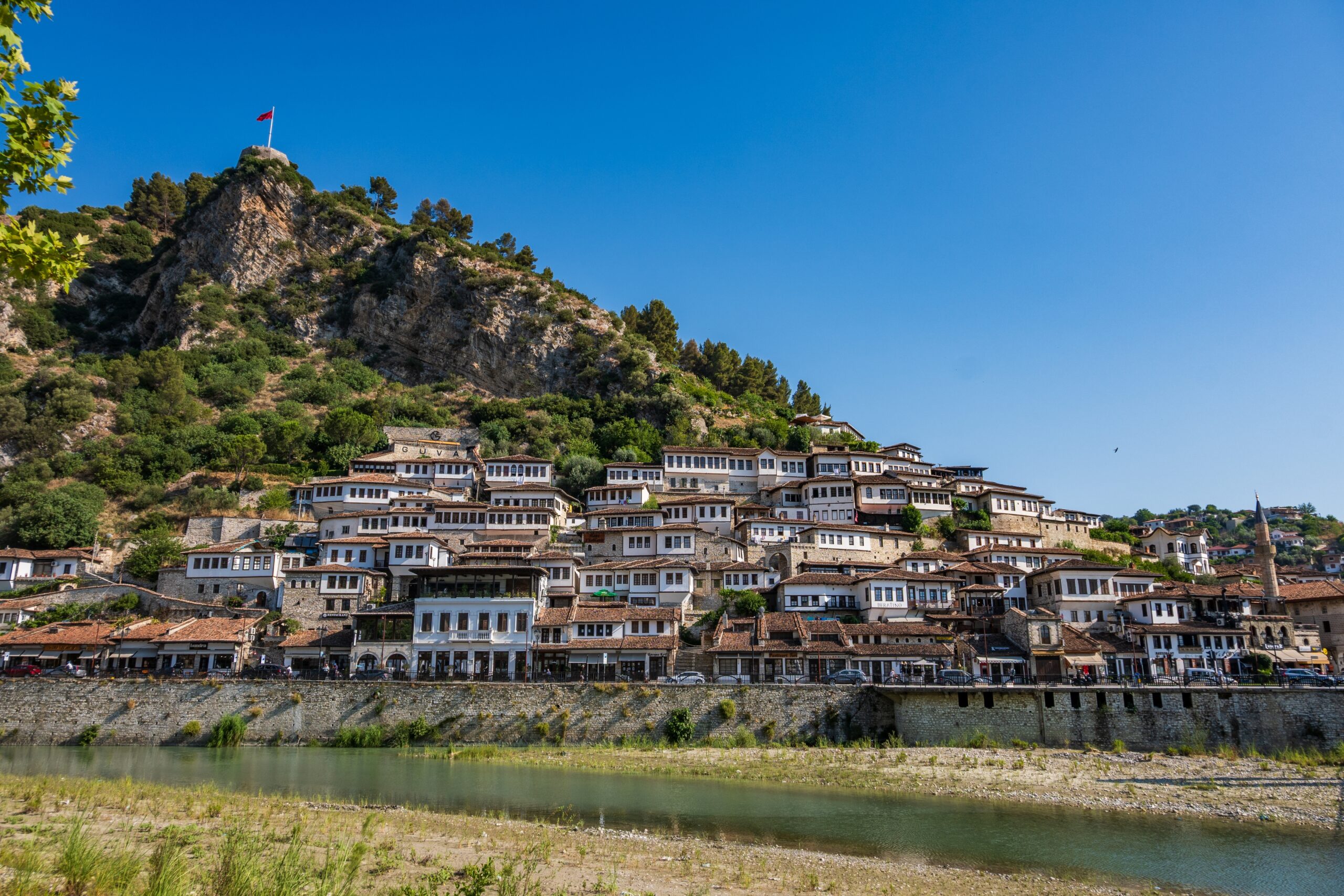
Photo: Shutterstock.com
Albania
The Balluku Case as a Catalyst for Nationwide Resistance
The political crisis in Albania culminated on Friday, April 17, 2026, at 19:00, with a massive protest rally in Tirana, representing a significant escalation of tension between the executive branch and the opposition bloc. This mobilisation, coordinated by the Democratic Party (PD) under the leadership of Sali Berisha in cooperation with extra-parliamentary platforms such as “Shqipëria Bëhet”, was a direct response to a deepening institutional deficit and controversial decisions by the legislature.
In connection with this situation, Sali Berisha issued strong warnings regarding political stability, claiming that the government’s actions would prevent lasting peace and stability in the country. The opposition leader further alleged links between the ruling administration and criminal networks while emphasising that the opposition remains “stronger and more determined than ever” in its mission.
The primary catalyst for the protest was the parliamentary obstruction of procedural actions by the Special Structure against Corruption and Organised Crime (SPAK). The ruling Socialist majority rejected the request to lift the parliamentary immunity of the former Deputy Prime Minister and Minister of Infrastructure and Energy, Belinda Balluku, effectively paralysing investigations into extensive corruption schemes within the infrastructure sector. The opposition interpreted this as a definitive erosion of the rule of law and the transformation of the state apparatus into a tool for protecting political elites from criminal liability.
The gathering in front of the Prime Minister’s office transformed from a proclaimed peaceful protest into a violent confrontation after militant factions of demonstrators initiated attacks on government buildings using improvised projectiles and Molotov cocktails. This necessitated a repressive intervention by security forces using riot control measures, including water cannons and chemical irritants. Beyond the immediate Balluku case, the organisers’ demands resonated with systemic grievances regarding the integrity of the electoral process, allegations of clientelism, and the failure of Edi Rama’s cabinet to address the adverse demographic trends caused by mass emigration.
The international community and diplomatic missions in the country identified this incident as a symptom of deep societal polarisation that threatens Albania’s European Union accession ambitions. The opposition’s demand for the establishment of a technical government and early elections signals a persistent stalemate in the Albanian political system, where the absence of consensual dialogue continues to destabilise the state’s internal political integrity.
Sources:
- Albania Daily News, Opposition Calls Nationwide Protest Demanding Prime Minister’s Resignation, https://albaniandailynews.com/news/opposition-calls-nationwide-protest-demanding-prime-minister-s-resignation
- S. Embassy in Albania, DEMONSTRATION ALERT: U.S. EMBASSY TIRANA, ALBANIA FRIDAY, APRIL 17, 2026, AT 19:00, https://al.usembassy.gov/demonstration-alert-u-s-embassy-tirana-albania-friday-april-17-2026-at-1900/#:~:text=Thank%20you!,%2C%202026%2C%20at%2019%3A00&text=Event%3A%20A%20domestic%20political%20demonstration,may%20expand%20to%20nearby%20areas.
- Balkan Web, Rama’s resignation demanded/ Speeches return, from Molotov cocktails to marches – what is expected to happen at the opposition protest, https://www.balkanweb.com/en/Rama%27s-resignation-is-demanded–speeches-from-the-Molotovs-are-back–what-is-expected-to-happen-in-the-opposition-protest/#gsc.tab=0Marija Stojanović,
- European Western Balkans, Protests won’t alter political balance, but show systemic problems with Albania’s democracy, https://europeanwesternbalkans.com/2026/04/01/protests-will-not-alter-political-balance-but-show-systemic-problems-with-albanias-democracy/
Bosnia and Herzegovina
The Failure of Judicial Cooperation in Bosnia and Herzegovina
On the path to European integration, Bosnia and Herzegovina (BiH) continues to face the process of coming to terms with the past. This is hampered by deep political reluctance and dysfunctional legal cooperation with neighbouring Serbia. Despite decades of international oversight, a pattern of impunity persists for high-level commanders involved in the 1992 ethnic cleansing of the Kalinovik region. Although the Government of BiH and the Council of Ministers frequently frame judicial reforms as essential for EU alignment, victims´ associations and legal analysts point to a systematic failure in bilateral cooperation with Serbia, which has enabled key suspects to evade justice.
The core of the controversary is centred on the actions of two primary actors: Boško Govedarica (the wartime police chief of Kalinovik) and Grujo Lalović (head of the local Crisis Staff). The presentation of evidence at the International Criminal Tribunal for the former Yugoslavia (ICTY) and the Court of BiH confirms their undeniable roles of the accused in orchestrating the detention, interrogation and subsequent murder of approximately 120 Bosniak civilians. Nevertheless, the pursuit of justice has encountered significant obstacles in the political and legal domains:
- Jurisdictional Gridlock: In 2024, the Court of BiH transferred the case against Govedarica and Lalović to Serbia, where both suspects currently live. In a move mirroring the political manoeuvring seen in other regional security reforms, the Serbian Prosecutor´s Office declined to take responsibility for the case. This followed the return to Sarajevo, leaving the suspects in a state of permanent legal uncertainty.
- Command Accountability: While ten lower-ranking officials or high-profile leaders, such as Ratko Mladić, have been convicted, the middle-tier commanders who directly signed orders for the “security-related” setting fire to the villages of Daganj, Bojici, Hotovlje and Kutine, remain untouched.
The shift of judicial responsibilities from state-level institutions to regional neighbours has sparked accusations of political interference. The opposition and the civil society in BiH argue that the security sector remains beholden to ethno-political interests rather than the rule of law. The use of “security reasons” as a justification for the 1992 crimes (a term cited during the trial of Ratko Bundalo) remains as a haunting historical precedent for modern legislative loopholes that allow officials to bypass transparency. Survivors, represented by the Istina-Kalinovik ’92 Association, argue that the National Security Agency and the Prosecutor’s Office have failed to create a robust mechanism to prevent suspects from utilising dual citizenship as a strategic shield to escape legal accountability.
And while the ruling coalitions in BiH insist that their legal frameworks are being harmonised with the EU acquis, the European Commission’s assessments frequently highlight that regional cooperation in war times remains “ineffective.” The Kalinovik case serves as a primary example of how legislative gaps allow the security sector to protect its own, creating what victims call “a culture of untouchables”.
Sources:
- Salma Melez, 2026, Implicated, Yet Untouched: Serbs Evade Justice for 1992 Bosnia War Crime, Balkan Insight, https://balkaninsight.com/2026/04/16/implicated-yet-untouched-serbs-evade-justice-for-1992-bosnia-war-crime/btj/
Photo: Shutterstock.com
Montenegro
Montenegro Files Weapons Charges Against Former President’s Brother
An investigation involving the family of former Montenegrin president Milo Đukanović has intensified after prosecutors filed charges against his brother, Aleksandar “Aco” Đukanović, over alleged illegal possession of weapons and explosive materials.
Authorities detained the businessman in late February following coordinated police searches at properties in Podgorica and Nikšić. During the operation, officers reportedly discovered firearms, ammunition, ballistic equipment, and other security-related items, some of which investigators claim were not registered in accordance with national regulations.
After his arrest, the court initially ordered pre-trial detention, citing concerns that he could leave the country. He was later transferred to house arrest after posting a substantial bail amount and surrendering his travel documents.
Defence lawyers rejected accusations that the weapons were tied to criminal activity. According to attorney Nikola Martinović, several of the confiscated rifles allegedly belonged to former president Milo Đukanović or were inherited from the family’s late father. The lawyer also argued that some items carried personal inscriptions connected to the former head of state rather than to his client.
The case has attracted significant public attention in Montenegro because of the long-standing political influence of the Đukanović family. Milo Đukanović dominated the country’s political scene for decades, serving multiple terms as both Prime Minister and President while overseeing Montenegro’s path toward independence and NATO membership.
Sources:
- Predrag Milic, Balkan Insight, “Montenegro Indicts Ex-President Djukanovic’s Brother on Weapons Charges”, https://balkaninsight.com/2026/04/03/montenegro-indicts-ex-president-djukanovics-brother-on-weapons-charges/bi/
Kosovo
Third Elections in Less than 16 Months and What it Means for Kosovo
After the Parliament’s inability to elect a new President, the acting President and Speaker of Parliament, Albulena Haxhiu, dissolved it. Upcoming elections have to be held on June 7. Therefore, Kosovo is heading to its third general election in the last 16 months.
This political deadlock escalated on April 28, when the ultimatum from the Constitutional Court expired. The former President’s, Vjosa Osmani, mandate ended at the beginning of April. Ever since that, the ruling party Vetevendosje and the opposition have not been able to agree on a candidate that would be acceptable for both sides.
Another election means deeper political instability for Kosovo. After months of a dysfunctional political environment, legislative work has been frozen, leaving international agreements unratified and draft laws unapproved.
Moreover, every election costs Kosovo approximately eight million EUR, which means a significant financial burden for such a small state. Endangered is also a country’s economic growth since the deteriorating political situation is not perceived positively in the eyes of foreign investors.
Analysts agree that the outcome of the forthcoming elections is unlikely to be decisive, as results are expected to mirror previous ones. What will prove critical, however, is the period in the weeks following the vote. Without meaningful compromise, Kosovo risks remaining trapped in a cycle of institutional deadlock and recurring political crises.
Sources:
- Gentiana Paçarizi, Kosovo 2.0, “What comes after the elections?“, https://kosovotwopointzero.com/en/cka-pas-zgjedhjeve
- Perparim Isufi, Balkan Insight, “Kosovo Awaits Election Date as Ex-President Mulls Political Comeback“, https://balkaninsight.com/2026/04/29/kosovo-awaits-election-date-as-ex-president-mulls-political-comeback/bi/
- Gazeta Express, “Zeka: Political crisis is endangering foreign investments in Kosovo“, https://www.gazetaexpress.com/en/The-political-crisis-is-endangering-foreign-investments-in-Kosovo./
- European Western Balkans, European Western Balkans, “New elections expected to yield similar results, some decline for Kurti anticipated”, https://europeanwesternbalkans.com/2026/04/29/new-elections-expected-to-yield-similar-results-some-decline-for-kurti-anticipated/

Photo: Shutterstock.com
Serbia
Serbian–Hungarian Relations Under Pressure? TurkStream Pipeline Incident Raises Questions After Hungary’s Election Shift
The outcome of the recent elections in Hungary, held on April 12 2026, is beginning to impact regional dynamics, particularly relations with Serbia. The end of Viktor Orbán’s 16-year rule marks a significant political shift with potential implications beyond the domestic level.
Just one day after being declared the election winner, the Hungarian Prime Minister-designate Péter Magyar signalled a notable shift in tone toward Serbia. In his address to the press, he openly distanced himself from Serbian President Aleksandar Vučić, alluding to the existence of a “common godfather” underpinning the previously close relationship between Budapest and Belgrade. His remarks were made in the context of an alleged attempt to sabotage the TurkStream pipeline near the Serbian–Hungarian border.
The incident in question occurred just one week prior to Hungary’s elections. On April 5, Serbia’s Military Security Agency (VBA), followed by President Vučić, announced that explosives had been discovered near critical gas infrastructure in northern Serbia. Authorities also indicated that they possessed intelligence regarding a potential perpetrator. In response, Orbán described the pipeline as a “strategic lifeline,” convened a Defence Council session, and personally visited the border area alongside Foreign Minister Péter Szijjártó.
Despite the seriousness of the alleged threat, the circumstances surrounding the incident have raised questions. The timing, shortly before the elections; and the location, on the territory of a key Orbán ally, prompted scrutiny among observers. Additional scepticism emerged following earlier warnings by Hungarian security experts about the possibility of pre-election false-flag operations targeting national interests. Notably, security analyst Péter Boda had outlined a scenario closely resembling the reported discovery of explosives near critical infrastructure.
Magyar stated that his incoming government would investigate “who the political clients and perpetrators of that crime against the state were,” while also expressing concern that the incident may have been politically instrumentalised.
In response, Vučić rejected any Hungarian investigative role on Serbian territory, stating that “he [Magyar] has no authority whatsoever to conduct investigations here.” The Serbian President dismissed Magyar’s suggestions of staging, adding that the investigation’s conclusions would prove to his Hungarian counterpart that “he [Magyar] was mistaken when he believed the ramblings of tabloids and others claiming that something had been staged somewhere.” Additionally, responding to Magyar’s suggestive “common godfather” remarks, Vučić rejected such characterisations, emphasising that his cooperation with Orbán was grounded strictly in their “shared commitment to freedom.” Commenting on the Hungarian election outcome, Vučić underscored his personal loyalty to Orbán, stating that he knows who his friend is and does not abandon his allies “in good times or in bad.” He further praised Orbán’s conduct following the vote, noting that the outgoing Prime Minister is a renowned gentleman who “lost and immediately came out, extended his hand, and congratulated,” contrasting this with what Vučić described as the behaviour of “great democrats” who, in his view, fail to do so.
Overall, the recent developments point to a period of recalibration in Serbian–Hungarian relations, as political transitions in Budapest begin to test the durability of previously close bilateral alignments.
Sources:
- EWB (2026) “First frictions between Magyar and Vučić in post-election public statements”, European Western Balkans. Online: https://europeanwesternbalkans.com/2026/04/14/first-frictions-betweenmagyar-and-vucic-in-post-election-public-statements/
- EWB (2026) “Serbian authorities: The search could last days or months”, European Western Balkans. Online: https://europeanwesternbalkans.com/2026/04/06/serbian-authorities-the-search-could-lastdays-or-months/
- Katarina Baletić (2026) “Hungary’s Orban Visits Military Near Border as Serbia Denies Explosives Find Staged”, Balkan Insight. Online: https://balkaninsight.com/2026/04/06/hungarys-orban-visitsmilitary-near-border-as-serbia-denies-explosives-find-staged/bi/
- Marija Stojanović (2026) “Suspicious timing suggests a false flag operation on the Serbian-Hungarian border”, European Western Balkans. Online: https://europeanwesternbalkans.com/2026/04/07/suspicious-timing-suggests-a-false-flag-operation-onthe-serbian-hungarian-border/
North Macedonia
Structural Obstacles Beyond Constitutional Change
North Macedonia’s path toward EU membership is increasingly shaped by structural risks rather than technical reforms. Recent developments suggest that political concessions, rule-of-law concerns, and weak regional cooperation are converging to slow the country’s European integration.
First, constitutional change alone is unlikely to unlock accession progress. Even if North Macedonia amends its Constitution to include the Bulgarian minority, bilateral conditionality remains embedded in the EU negotiating framework. This allows Bulgaria to raise objections throughout negotiations, not just at the start. The result is an imbalance: constitutional changes are difficult to reverse, while political vetoes remain flexible. This reduces predictability and weakens incentives for reforms.
Second, recent developments raise concerns about rule-of-law resilience. The resignation of a prominent prosecutor citing political pressure highlights ongoing challenges in safeguarding prosecutorial independence. Such developments risk undermining anti-corruption efforts, a key requirement for European Union accession, and contributing to growing reform fatigue.
Third, regional cooperation gaps are emerging in the fight against organised crime. Both Serbia and North Macedonia currently lack liaison prosecutors at Eurojust, limiting cross-border investigations and slowing evidence sharing. Experts warn that these institutional gaps create opportunities for organised crime networks operating across the Western Balkans.
Together, these trends create a structural triangle of risk: bilateral political leverage, weakening rule-of-law institutions, and limited regional cooperation. Without addressing these interconnected challenges, North Macedonia’s EU accession process may remain formally open but practically stalled.
Sources:
- MARKOVIĆ, Stefan. Why constitutional change alone leaves bilateral conditionality intact in North Macedonia’s EU accession. European Western Balkans [online]. https://europeanwesternbalkans.com/2026/01/20/why-constitutional-change-alone-leaves-bilateral-conditionality-intact-in-north-macedonias-eu-accession/
- TESTORIDES, Konstantin. Prominent North Macedonia Prosecutor Resigns Citing Political Pressure. Balkan Insight [online]. https://balkaninsight.com/2026/04/02/prominent-north-macedonia-prosecutor-resigns-citing-political-pressure/bi/
- STANKOVIC, Milica a Sinisa JAKOV MARUSIC. Serbia and North Macedonia’s Empty Eurojust Desks: A Gift to Organised Crime. Balkan Insight [online]. https://balkaninsight.com/2026/04/09/serbia-and-north-macedonias-empty-eurojust-desks-a-gift-to-organised-crime/bi/
Contact us