

IN FOCUS: Ukraine & Moldova Brief
Review of July 2026
Petra Bošková, Anna Gúliková, Igor Píš, Martin Tancer
UKRAINE
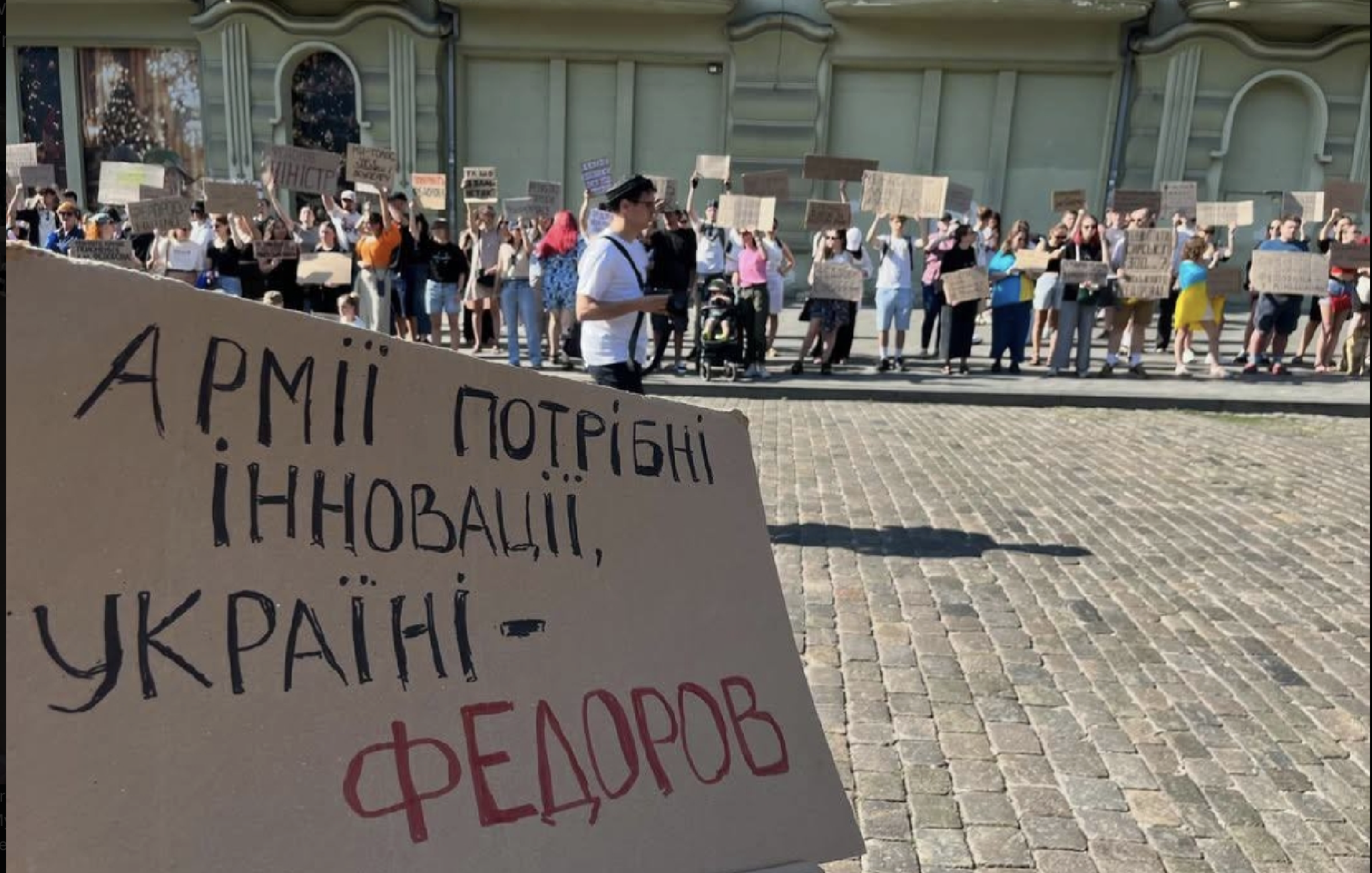
Photo: Shutterstock.com
Ukrainian Military Capabilities Impact the Iranian Conflict
For the past couple of months, Ukraine has been intensifying its retaliatory attacks mainly on the Russian energy infrastructure to strike painful blows on the state’s economy. At the same time, Moscow has been focusing on strengthening its ties with their non-Western allies and has been supporting multiple conflicts against the West, as is the Iranian side in the US-led campaign against Tehran’s ayatollah regime. The logic behind this strategy has become clear; if Kyiv’s allies’ attention, mainly the attention of the President of the United States, is focused elsewhere, their intentions to supply and further support Ukraine will significantly decrease. And the Kremlin is not mistaken.
Researchers and military personnel have been pointing out for quite some time that this lasting situation will be disastrous for the development of the conflict in Ukraine. What shows, as of today, the greatest consequences for Ukraine and globally is the impact of this conflict on oil. However, Ukraine’s determination and continuous attacks have been influencing the Iranian efforts against the US and Israel, just as well. The main struggle between Kyiv and one of Russia’s allies came as Ukrainian forces struck Iranian ships in the Caspian Sea. While representatives of Tehran strongly protested these violations against so-called commercial vessels, Ukrainian President Zelenskyy stated that strikes conducted by his country’s army were against vessels that carried military cargo shipments, including Iran and a warship.
As Russia has long been using Shahed drones designed by Iranians, it would be an appropriate military target for their attack. The continuous cooperation between Russia and Iran has been beneficial both ways; ergo, Ukrainian strikes hitting ships travelling between these two countries work quite in favour of the US campaign in the Middle East, possibly in future, compelling President Trump to continue with logistics and material support for Ukrainian efforts to fight off Russia. Zelenskyy also warned about Moscow sharing satellite information with Tehran, which helps Iranians with targeting US military facilities in the Middle East. The correlation between Russian satellites gathering information about the region and Iranian attacks can be seen, as the two countries have close ties in multiple sectors. Therefore, Ukraine’s representatives further warn, mostly the United States, about this ‘friendship’, because it can be just as hurtful to Washington as it is to Kyiv.
Sources:
- James Horncastle, The Conversation, “Ukraine is countering the impact of the war in Iran by attacking Russian energy facilities”, https://theconversation.com/ukraine-is-countering-the-impact-of-the-war-in-iran-by-attacking-russian-energy-facilities-280204
- Azhar Sukri, CNBC, “Ukraine strikes Iranian vessels in Caspian Sea, Tehran accuses Kyiv of ‘hostile and criminal act’”, https://www.cnbc.com/2026/07/26/ukraine-strikes-iranian-vessels-tehran-accuses-kyiv-of-hostile-act.html
- Babak Kamiar, EuroNews, “Ukraine strikes Russian Iran-bound cargo as Iran war widens”, https://www.euronews.com/2026/07/26/ukraine-strikes-russian-iran-bound-cargo-as-iran-war-widens
Volodymyr Zelenskyy Dismisses Popular Defence Minister Fedorov
Defence Minister of Ukraine Mykhailo Fedorov was dismissed by President Volodymyr Zelenskyy on July 15 amid larger changes in the government, which also included the resignation of PM Yulia Svyrydenko. However, it was Fedorov’s dismissal that attracted the most media attention.
Zelenskyy officially said that Fedorov was dismissed as part of the government reshuffling, that he failed to deliver a mobilisation reform, and that he had a conflicted relationship with Ukrainian Army Chief Olexandr Syrsky. It did not take long for the Ukrainian public to react to this event, and already on the next day protests in Kyiv and other big cities demanded the return of Fedorov and the end of Syrsky. He is seen by many as very successful in stopping the advance of the Russian army in the last months. The Ukrainians have also recently started a big campaign of hitting targets deep on Russian territory, which also helped the popularity of Fedorov.
As Euromaidan Press puts it, the true reason for Fedorov´s early end was his popularity, which reached higher numbers than those of Zelensky himself. However, his conflict with Syrsky also led to the general being replaced in the position of Chief Commander of the Army by Mykhailo Drapaty. The fate of Fedorov remains to be seen – he rejected Zelenskyy’s offers for another position in the government, stating that he “wants his job back”.
Sources:
- Krzysztof Nieczypor, Ośrodek Studiów Wschodnich, “Zełenski vs Fedorow. Dymisja ministra obrony Ukrainy”https://www.osw.waw.pl/pl/publikacje/analizy/2026-07-16/zelenski-vs-fedorow-dymisja-ministra-obrony-ukrainy
- Peeter Helme, Euromaidan Press, “The Syrskyi feud was not it: why Ukraine really dropped its drone-war minister”, https://euromaidanpress.com/2026/07/16/why-ukraine-dropped-fedorov-drone-war-minister/
- Paul Adams, Jaroslav Lukiv, BBC, “Ukraine’s ousted defence minister insists on being reinstated“, https://www.bbc.com/news/articles/ce97nm53pgxo
Ukraine and Moldova Open Cluster 6 on External Relations
The summer of 2026 has marked a historic acceleration in the EU’s enlargement process. On July 14, the EU officially opened accession negotiations for Cluster 6, which focuses on External Relations, with both Ukraine and Moldova. This significant step comes just one month after both nations opened Cluster 1, the “Fundamentals” cluster, in June 2026.
Cluster 6 is a core thematic grouping that aligns candidate countries with the EU’s international, trade, and defence policies. It comprises two distinct negotiating chapters: Chapter 30, covering common commercial policy, humanitarian aid, and development cooperation; and Chapter 31, focusing on foreign, security, and defence policy.
European Commissioner for Enlargement Marta Kos highlighted the unique strengths each candidate brings to this cluster: Ukraine’s military experience and innovation capacities, and Moldova’s successful efforts in countering hybrid threats. Thomas Byrne, Ireland’s Minister of State for European Affairs, emphasised that in the current geopolitical climate, enlargement is no longer just an economic endeavour but a strategic investment in peace, security, and stability for the entire continent.
Moldova has set a bold target to sign its EU Accession Treaty by 2028. Igor Grosu, Speaker of the Moldovan Parliament, underscored that achieving this goal requires intense parliamentary diplomacy to convince every EU member state that Moldova is ready. He noted that the authorities are working to maintain relations not only with current European governments but also with opposition parties to ensure stable support across electoral cycles.
Grosu also pointed out that the benefits of integration are already becoming tangible for Moldovan citizens through reduced roaming tariffs and lower costs for cross-border bank transfers. However, he acknowledged that the reform of the judiciary and the ongoing evaluation of judges and prosecutors remain the most critical conditions for final accession.
While Ukraine has shown remarkable commitment to moving forward as quickly as possible, its path is met with procedural complexities. Leading up to the July meetings, the Ukrainian authorities, including President Volodymyr Zelenskyy, expressed hope that all remaining negotiating clusters could be opened simultaneously.
However, EU diplomats cautioned that a “lack of time” for the necessary negotiations and approvals made opening all clusters by mid-July unlikely. They stressed that the accession process remains strictly merit-based, requiring detailed discussions on conditions with each of the current member states. While Clusters 2 (Internal Market) and 6 were viewed as the least problematic, the logistical requirement of securing unanimous agreement on negotiating positions for every single cluster remains a challenge.
Despite these hurdles, the momentum is undeniable. Moldova’s Parliament is scheduled to hold an extraordinary session in early August to adopt the laws necessary to meet EU deadlines. Both nations are looking toward the European Commission’s upcoming evaluation reports, which will determine the pace for opening the remaining four clusters.
As the EU Presidency transitions to Ireland, the focus remains on bringing these “reliable partners” closer to the Union. For Ukraine and Moldova, the successful opening of Cluster 6 serves as a testament to their resilience and their continued alignment with European standards in the face of ongoing regional security challenges.
Sources:
-
EUROPEAN WESTERN BALKANS, “Ukraine and Moldova open Cluster 6 on external relations with the EU”, https://europeanwesternbalkans.com/2026/07/14/ukraine-and-moldova-open-cluster-6-on-external-relations-with-the-eu/
- DUMITRU PETRULEAC, Moldova1, “Moldova aims to sign the EU Accession Treaty in 2028. Grosu: “We must convince every member state we deserve it””, https://moldova1.md/p/82165/moldova-aims-to-sign-the-eu-accession-treaty-in-2028-grosu–we-must-convince-every-member-state-we-deserve-it-#:~:text=%E2%80%9CThe%20Republic%20of%20Moldova%20needs%20the%20European,represent%20additional%20arguments%20in%20faTETY
- NA VYSOTSKA and STANISLAV POHORILOV, Ukrainska Pravda “EU may not open all negotiating clusters for Ukraine in July due to lack of time”, https://www.pravda.com.ua/eng/news/2026/06/17/8039777/#:~:text=Background%3A%20On%2017%20June%2C%20the%20Working%20Party,five%20remaining%20clusters%20in%20Ukraine’ s%20accession%20negotiations.
- EU NEIGHBOURS EAST, Euronews, “Enlargement: EU and Moldova start negotiations on external relations policies”, https://euneighbourseast.eu/news/latest-news/enlargement-eu-and-moldova-start-negotiations-on-external-relations-policies/
MOLDOVA
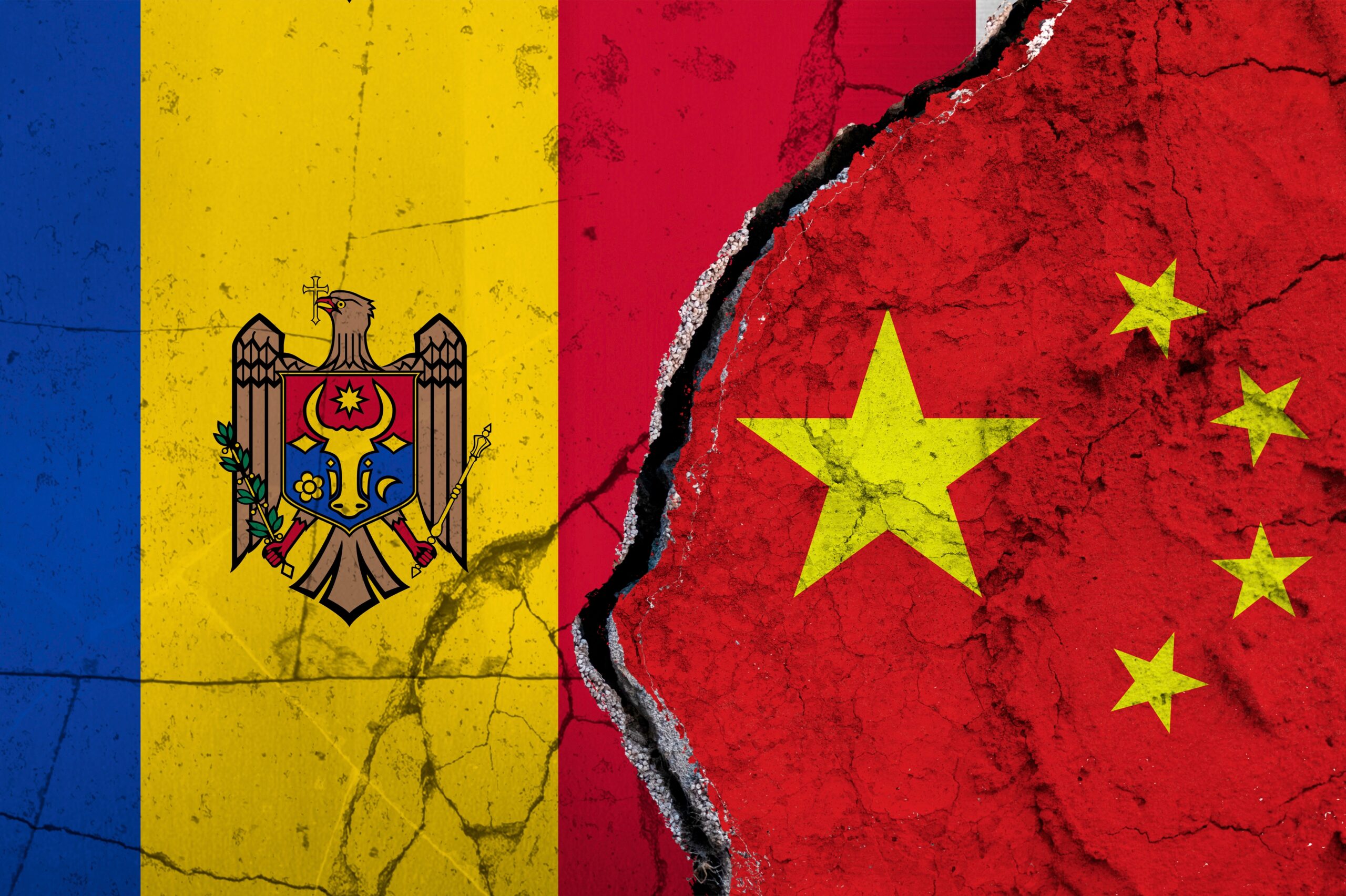
Photo: www. shutterstock.com
Moldova Foreign Investment Ties with Turkey, China and Azerbaijan
As Chisinau continues its push toward European integration, it is simultaneously working to diversify its economic partnerships beyond the EU – with Turkey, China and Azerbaijan all emerging as active partners in recent weeks. This diversification suggests that Moldova’s development strategy does not rely on Brussels alone but also seeks to draw investment and expertise from a broader circle of international partners.
Moldova’s parliamentary commission for foreign policy has approved the negotiation of a new cooperation protocol with Ankara, which is to replace the 2015 agreement expiring upcoming November. The new framework, implemented through the Turkish Cooperation and Coordination Agency (TIKA), will run for over five years with the possibility of automatic extension and will cover priority areas, such as economic development, agriculture and the agri-food industry, infrastructure, energy, environmental protection and the societal sector. It should strengthen institutional capacities and support small and medium-sized enterprises in Moldova, building on an already extensive bilateral legal framework between Chisinau and Ankara.
Yutong, one of China’s largest manufacturers of buses, coaches, trucks and special-purpose vehicles, is exploring investment opportunities in Moldova, including the possible local assembly of vehicles for the Moldovan market. Moldova’s ambassador in Beijing at the meeting with Yutong representatives positioned Moldova not only as a sales market, but also as a destination for production and assembly investment. Such a move could create jobs, develop industrial skills and increase revenues through taxes and duties. The company states it would analyse Moldova’s investment offer, as Chisinau seeks to further integrate into international production chains.
Azerbaijan’s cooperation with Moldova is meanwhile expanding specifically in the agriculture sector. Ministers of agriculture of both respective countries met, building on discussions from the previous intergovernmental meeting in 2025. The two sides emphasised food security, climate adaptation, innovative technologies and boosting international competitiveness of agricultural products, while also discussing cooperation, trade expansion and exchange programmes in agricultural research.
All in all, these developments show Moldova pursuing a multi-directional investment strategy – pairing its EU accession track with parallel economic partnerships that bring in development financing, industrial investment and agricultural cooperation.
Sources:
- MoldPress, “New development projects in Moldova with Turkey’s support; negotiation of cooperation protocol approved”, https://www.moldpres.md/eng/politics/new-development-projects-in-moldova-with-turkey-s-support-negotiation-of-cooperation-protocol-approved
- MoldPress, “Chinese company Yutong explores investment opportunities in Moldova”, https://www.moldpres.md/eng/economy/chinese-company-yutong-explores-investment-opportunities-in-moldova
- Fatima Bagirova, Report, “Azerbaijan and Moldova expand cooperation in agriculture”, https://report.az/en/aic/azerbaijan-and-moldova-expand-cooperation-in-agriculture
Moldovan PM Surprisingly Steps Down
On July 3, Moldovan Prime Minister Alexandru Munteanu, an independent politician with backing from Moldova´s ruling PAS party, announced his intention to resign from his position. President Maia Sandu accepted his resignation soon thereafter. Munteanu was PM of Moldova for only eight months.
This move was described as somewhat surprising, as there was no significant publicly known pressure on Munteanu to step down. He explained his move without significant details, stating just that he “could no longer carry out his mandate in accordance with his principles and convictions”. Analysts have, however, linked his resignation to one of the biggest scandals of the PAS government so far – the current affair concerning inflated salaries and alleged nepotism in Moldova´s national aviation agency MoldATSA.
President Sandu stressed that the European integration process of Moldova is not endangered. PAS still has a majority of seats in the Parliament and a new PM was already approved. It is Vasile Tofan, a businessman with a similar profile to Munteanu. He pledged to continue with opening negotiation clusters with the EU and reforming the national economy. Polish commentator Kamil Całus from the Centre for Eastern Studies thinks that Tofan has a difficult job to do – pushing through the difficult reforms while at the same time avoiding damage to the already weakened popularity of PAS and Sandu.
Sources:
- Kamil Całus, Centre for Eastern Studies, “Change of government in Moldova: policy continuity and new challenges”. https://www.osw.waw.pl/en/publikacje/analyses/2026-07-23/change-government-moldova-policy-continuity-and-new-challenges
-
Nathan Rennolds, Euronews, “Moldovan prime minister Alexandru Munteanu resigns after eight months in office”.https://www.euronews.com/my-europe/2026/07/03/moldovan-prime-minister-alexandru-munteanu-resigns-after-eight-months-in-office
- Alexander Tanas, Reuters, “Moldova approves new government led by Vasile Tofan”. https://www.reuters.com/world/moldova-approves-new-government-led-by-vasile-tofan-2026-07-21/
Contact us