

Strategic Analysis Balkan Brief
Review of September 2026
Petra Hoštáková, Henrieta Vengrínová, Igor Píš, Dominika Dragúňová, Terézia Hlačinová

Photo: Shutterstock.com
Albania
Administrative-Territorial Reform in Albania: Reducing the Number of Municipalities
The return of Albanian members of parliament to their seats after the summer break has been accompanied by intense political and social debate. The main item on the agenda of the new session became the administrative-territorial reform promoted by the ruling majority, the Socialist Party of Albania led by Prime Minister Edi Rama. The proposed plan envisages a radical reorganisation of local Government and a reduction in the number of municipalities from 61 to 46, which means the abolition or merging of 15 current self-governing units.
The reform proposal is accompanied by mass civic protests in front of the parliament building in Tirana. Residents of the affected regions express strong disagreement with the abolition or merging of their municipalities, pointing out that the changes are being prepared without their consent. Demonstrators, together with the opposition, claim that this is a political redrawing of the map that will not improve services, but rather distance public administration from citizens, deepen the depopulation of rural areas, and threaten local autonomy.
The official justification for the administrative-territorial reform is significant demographic change. The results of the census (Census 2023) showed a drop in Albania’s population to approximately 2.4 million and significant internal migration to major centres. In 1989, during the transitional period when communist power in Albania was gradually declining, Albania recorded its population peak of 3,182,417 inhabitants. This figure has decreased over the years to the aforementioned 2,402,113 inhabitants.
The goal of the commission’s nine-month mandate is to create economically viable and modern municipalities capable of meeting the strict standards of the European Union within the framework of accession negotiations. The new administrative map is scheduled to enter into force before the local elections in 2027.
The OSCE Ambassador to Albania, Michel Tarran, also commented on the reform process. The representative of the international organisation emphasised that the OSCE does not take a stance or impose any specific administrative model, meaning that determining the number of municipalities is exclusively an internal matter for Albania. However, he firmly warned that no final decision should be made without extensive consultations at both the local and national levels. According to him, it is crucial that the voice of citizens and local community councils carries real weight before any final version is adopted.
Sources:
- RTSH, Territorial reform, OSCE ambassador: No decision should be made without national-level consultation, https://rtsh.al/rti/en/territorial-reform-osce-ambassador-no-decision-should-be-made-without-national-level-consultation/
- Komisioni i Posaçëm për Reformën Administrativo-Territoriale në Republikën e Shqipërisë, Për një Qeverisje Vendore më të fortë, https://reformaterritoriale.parlament.al/
- INSTAT, 100 years of Albanian Census, https://storymaps.arcgis.com/stories/ddfc94859beb43de914c0237a5e82b40
- Nen Si, Euronews.Albania, MPs Return to Parliament Tomorrow, Protest to Be Held Outside, https://euronews.al/en/mps-return-to-parliament-tomorrow-protest-to-be-held-outside/
Bosnia and Herzegovina
Bosnia’s Court Moves to Block Funding for Secessionist Lobbying
On September 25, 2026, the Constitutional Court of Bosnia and Herzegovina moved to block the use of public funds by Republika Srpska for lobbying activities that conflict with the country’s constitutional order. The decision centres on a controversial agreement with Canadian lobbying firm Dickens & Madson Canada Inc.
The case highlights ongoing tensions between Republika Srpska’s leadership and Bosnia and Herzegovina’s state institutions, particularly over the limits of the entity’s autonomy and its efforts to advance political objectives abroad.
Beyond the specific agreement, the ruling raises important questions about the accountability of public spending and the extent to which regional authorities can pursue their own international agendas. Its implementation could become another test of the strength of Bosnia and Herzegovina’s constitutional institutions amid persistent political divisions.
The outcome may also shape the broader debate over the balance of power between the central state and Republika Srpska, as disagreements over constitutional authority continue to challenge the country’s political stability.
Sources:
- Dragana Erjavec, BalkanInsight, “Bosnia Court Blocks Republika Srpska From Funding Secessionist Lobbying”, https://balkaninsight.com/2026/09/25/bosnia-court-blocks-republika-srpska-from-funding-secessionist-lobbying/bi/
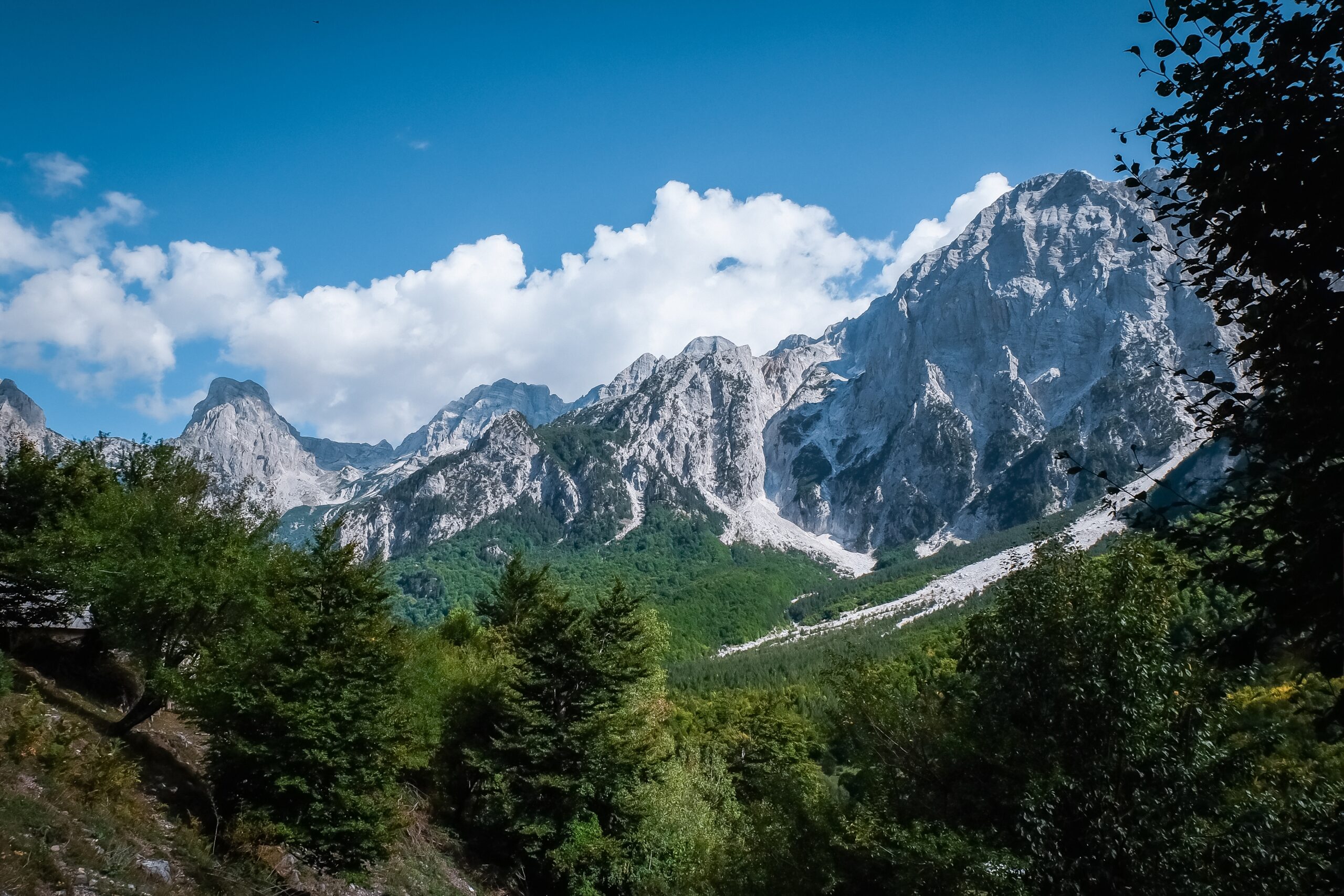
Photo: Shutterstock.com
Montenegro
From the Front-runner to the Test Case for EU Enlargement
Montenegro is now at an important stage in its process of joining the European Union. On August 24, the country unanimously approved constitutional changes. This has strengthened the Government’s belief that Montenegro could finish its EU accession negotiations by the end of 2026. It also shows that there is broad political support in the country for joining the EU.
The EU is increasingly seeing Montenegro as more than just another candidate country. It could become an example of how the EU enlargement process can work faster and more effectively. According to the European Western Balkans, EU member states are considering a faster plan that would allow Montenegro to close the remaining negotiating chapters by the end of 2026. The EU may also start preparing the first draft of an Accession Treaty as early as September. This suggests that the process is moving from political promises towards concrete steps towards membership.
However, this faster progress also brings some challenges. There are concerns about growing hybrid influence in the region, and some bilateral issues between Montenegro and Croatia are still unresolved. This shows that Montenegro’s path to EU membership is not completely problem-free. Montenegro’s political connection to the EU is also becoming stronger through the Europe Now! movement joining the European People’s Party. However, political support alone is not enough. Montenegro still needs to continue making important reforms.
Montenegro therefore faces two main challenges. First, it must continue its reforms and keep making progress towards EU membership. Second, the EU must show that it is still able and willing to enlarge, even at a time of growing political and geopolitical pressure.
Sources:
- „EU Plans to Accelerate Montenegro’s Accession Talks”. European Western Balkans, 24. srpen 2026, https://europeanwesternbalkans.com/2026/08/24/eu-plans-to-accelerate-montenegros-accession-talks/.
- „Ivanović: Constitutional Amendments Reaffirm Montenegro’s European Path”. Government of Montenegro, http://www.gov.me/en/article/ivanovic-constitutional-amendments-reaffirm-montenegros-european-path-negotiations-to-be-completed-by-the-end-of-2026.
„Montenegro’s Ruling Europe Now! Links up with EPP”. Euronews, 30. červen 2026,https://www.euronews.com/my-europe/2026/06/30/epp-hails-stronger-future-as-it-welcomes-montenegros-ruling-europe-now-membership.
Kosovo
KLA Leaders Convicted for War Crimes. Society in Kosovo Disagrees
The Kosovo war crimes tribunal in The Hague sentenced four former Kosovo Liberation Army (KLA) leaders for committing war crimes. The tribunal found Hashim Thaçi, Kadri Veseli, Rexhep Selimi and Jakup Krasniqi guilty of detention without due process of at least 85 persons; cruel treatment of at least 49; torture of at least 303 persons and murder of 96 persons. The Hague though dismissed the charges of crimes against humanity for all four men.
Former leaders of the KLA were accused of targeting opponents of the KLA, including people with links to Yugoslavian or Serbian authorities, political or military oppositional forces or ethnic minorities such as Serbs or Roma people.
Thaçi and Krasniqi were sentenced to 25 years in prison, while Veseli and Selimi got 18 and 13 years respectively. Since these four men are closely linked to the liberation process in Kosovo, the shock of their conviction could be seen in the streets almost immediately. Even before the verdict, municipalities, including the capital Prishtina, installed a “Waiting Clock” with a countdown to 10:00 on September 16. Thousands of citizens gathered to watch the decision live. After the tribunal’s announcement, the slogan „Not in my name“ began to circulate on social media.
Kosovo politicians did not remain silent either. The prime minister, Albin Kurti, described the verdict as an unacceptable injustice and a great punishment. A similar opinion was expressed by the acting president Albulena Haxhiu and the second biggest political party Democratic Party of Kosovo.
In general, many locals perceive the Kosovo war crimes tribunal as biased and part of a longer injustice. The latest decision even deepened the distrust. According to Dafina Halili and Gentiana Paçarizi: „For a part of Kosovo’s Albanian population, the focus of proceedings on former Albanian members of the KLA creates the impression that a special mechanism was established to seek accountability from only one side of the war, while many of the crimes committed by Serbian forces remain unpunished.“
Sources:
- Xhorxhina Bami and Hamdi Firat Buyuk, Balkan Insight, Hague Court Convicts Kosovo Liberation Army Leaders of War Crimes, https://balkaninsight.com/2026/09/16/hague-court-convicts-kosovo-liberation-army-leaders-of-war-crimes/btj/
- Dafina Halili and Gentiana Paçarizi, Kosovo 2.0, Former KLA leaders found guilty of war crimes, https://kosovotwopointzero.com/en/former-kla-leaders-found-guilty-of-war-crimes
- Bekim Shehu, DW, Shock in Kosovo as Hague convicts former President Thaçi, https://www.dw.com/en/reactions-from-kosovo-to-conviction-of-former-president-hashim-thaci-found-guilty-of-war-crimes/a-79294916
Photo: Shutterstock.com
Serbia
Vučić’s Strategic Resignation in Serbia
On September 27, 2026, Aleksandar Vučić resigned as President of Serbia. This represents a calculated manoeuvre to maintain his 14-year grip on national political power. Facing a constitutional ban on seeking a third presidential term and rising public discontent, Vučić opted to step down eight months early to lead the ruling Serbian Progressive Party (SNS) in snap parliamentary elections.
The resignation follows over a year of mass anti-corruption demonstrations triggered by the Novi Sad railway station roof collapse in November 2024, which killed 16 people. What began as student-led grief transformed into a political opposition movement represented by the Student List, posing the SNS’s most serious electoral challenge since taking power in 2012.
By stepping down, Vučić seeks to position himself as the SNS candidate for prime minister in the October 25 parliamentary vote while attempting to dodge accusations of abusing presidential authority for party campaigning. Crucially, separating the parliamentary election from the subsequent presidential contest, managed by interim president Ana Brnabić, is designed to divide opposition turnout and weaken student mobilisation.
Because Serbia’s constitution assigns executive power primarily to the prime minister, returning to the premiership allows Vučić to retain control over state decision-making. Despite official framing as a step toward political neutrality, intensive pre-election campaigning and state media dominance signal an aggressive bid to safeguard his regime against mounting public distrust. Ultimately, Vučić’s move reflects a tactical restructuring to preserve authority amidst unprecedented domestic instability.
Sources:
- The Guardian, “Serbia’s populist president Aleksandar Vučić resigns to run for prime minister”, https://www.theguardian.com/world/2026/sep/27/serbia-president-aleksandar-vucic-resigns-run-prime-minister
- VICKY WONG, BBC, “Embattled Serbian president resigns, paving way for early elections”, https://www.bbc.com/news/articles/ckpq0g7z5pjjo
- JAN NOWINOWSKI, OSW, “Serbia’s President Vučić resigns: a one-man show”,https://www.osw.waw.pl/en/publikacje/analyses/2026-09-28/serbias-president-vucic-resigns-a-one-man-show
North Macedonia
North Macedonia Faces Calls for Full Audit of Independence Day Celebrations
North Macedonia’s opposition Social Democratic Union (SDSM) is demanding a comprehensive investigation into the financing and organisation of the country’s Independence Day celebrations, arguing that the current anti-corruption inquiry addresses only part of the controversy.
The events, held over more than a month to mark the anniversary of independence on September 8, reportedly cost approximately 5.5 million EUR. The State Anti-Corruption Commission is examining a potential conflict of interest involving composer and producer Nikolche Micevski, who helped assess the programme proposed by the event organiser Stardust before also participating in the celebrations as a performer and music arranger.
However, SDSM maintains that scrutiny should extend beyond Micevski’s role. The opposition wants prosecutors to examine the contracts, payment records, decision-making process and legal basis for the allocation of public-related funds.
Particular attention has been directed towards the 4.9 million EUR reportedly provided by the state-owned State Lottery from its undistributed profits. SDSM is questioning whether the necessary approvals were obtained and which authorities authorised the transfer. It has also called for closer examination of Stardust’s contract, the reported involvement of Avalon production and arrangements surrounding French DJ David Guetta’s performance in Skopje.
The Government has defended the financing model, stating that the celebrations were funded through the State Lottery and contributions from companies, rather than direct allocations from the state budget. Prime Minister Hristijan Mickoski has also rejected the opposition’s criticism, describing it as politically motivated and defending the events as an opportunity to promote the country internationally.
The controversy highlights broader questions about transparency, public accountability and the oversight of large-scale government-supported events. While the anti-corruption inquiry continues, the opposition insists that only a broader examination of the expenditure can establish whether public funds were managed appropriately.
Sources:
- Sinisa Jakov Marusic, BalkanInsight, “North Macedonia Opposition Urges Deeper Probe into Independence Day Spending”, https://balkaninsight.com/2026/09/16/north-macedonia-opposition-urges-deeper-probe-into-independence-day-spending/bi/
Contact us