

IN FOCUS: Ukraine & Moldova Brief
Review of October 2026
Petra Hoštáková, Anna Gúliková, Martin Tancer, Igor Píš
UKRAINE
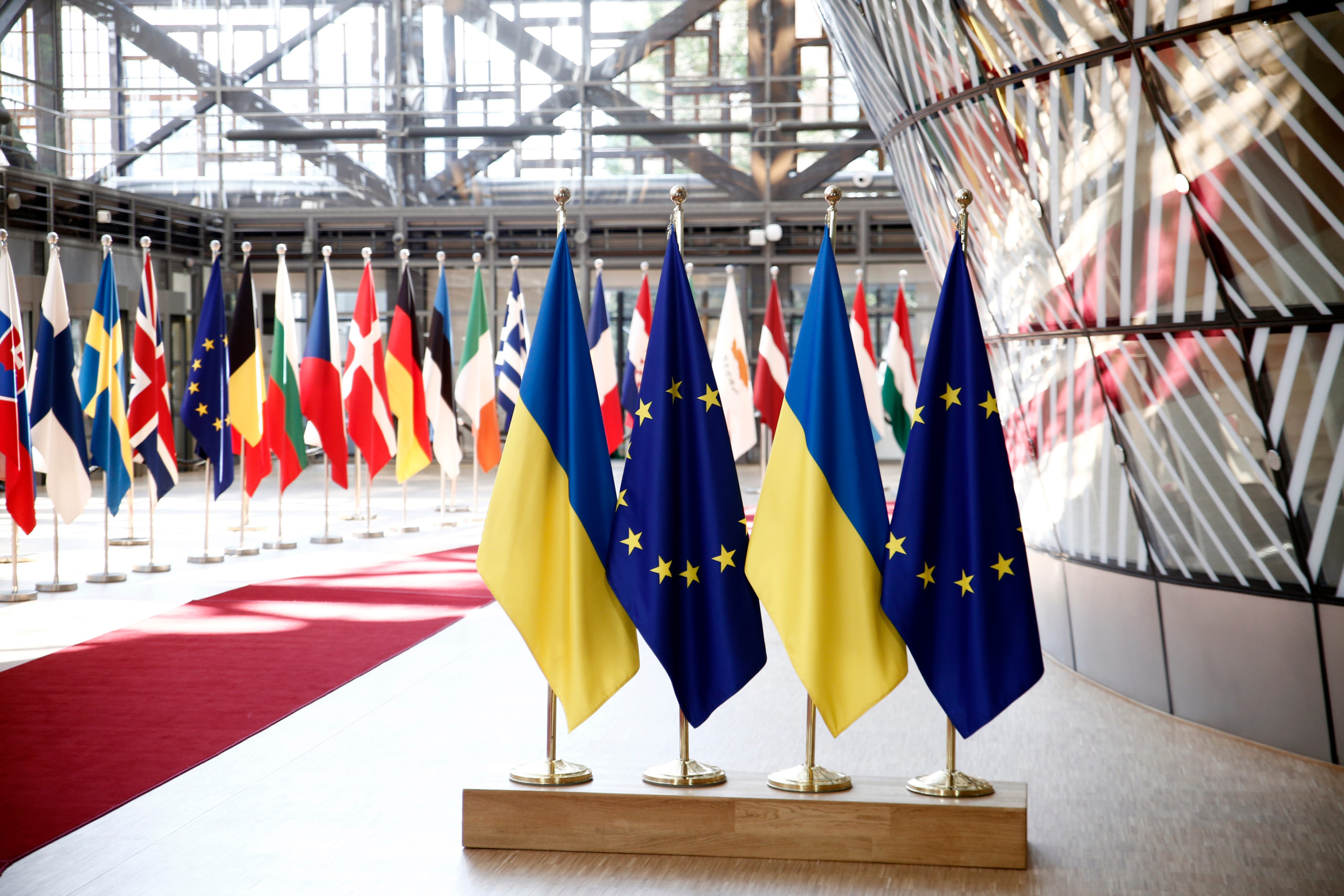
Photo: Shutterstock.com
Ukraine EU Enlargement Report 2026
Ukraine’s path toward European Union integration has reached major negotiation milestones following the conclusion of bilateral screening in September 2025. Accession negotiations formally opened across multiple thematic clusters in 2026: Cluster 1 (Fundamentals) on June 15, Cluster 6 (External Relations) on July 14, and both Cluster 2 (Internal Market) and Cluster 3 (Competitiveness and Inclusive Growth) on October 13. The European Commission has assessed all remaining clusters as ready to be opened. To structure alignment efforts, Ukraine adopted its National Programme for the Adoption of the Acquis (NPAA) in April 2026.
Domestically, key governance frameworks were updated, including Public Administration Reform (PAR) and Public Financial Management (PFM) strategies for 2026–2030. A law passed in October 2026 restored competitive, merit-based civil service recruitment. Specialised anti-corruption bodies, such as the National Anti-Corruption Bureau (NABU), Special Anti-Corruption Prosecutor’s Office (SAPO), and High Anti-Corruption Court (HACC), demonstrated ongoing operational track records through high-profile investigations. However, the European Commission highlighted concerns regarding a legislative slowdown and external pressure on anti-corruption agencies, urging urgent structural reform.
In terms of market and security integration, Ukraine officially entered the EU’s “Roam Like at Home” area on January 1, 2026. Ukraine maintains a 99% alignment rate with the EU’s Common Foreign and Security Policy and expanded defence cooperation by signing a Strategic Defence Industrial Partnership and launching the EU-Ukraine Drone Alliance. Supported by financial instruments including the Ukraine Facility and the Ukraine Support Loan, Ukraine continues to advance its EU integration agenda while maintaining institutional resilience during Russia’s ongoing war of aggression.
Sources:
- European Commission (DG ENEST), “Ukraine 2026 Report”, https://enlargement.ec.europa.eu/document/download/c817ca8c-4ddf-405d-896a-40becd42924a_en?filename=ukraine-report-2026.pdf
Cyberattacks on Alert Systems and Media Draw Retaliation, Raising the Stakes of the Information War
During the past week, users of Ukraine’s widely used Air Raid Alert app received red-level warnings across the country, along with fabricated notifications of radiation, chemical attacks and street fighting in Kyiv, including the warning of an imminent nuclear threat. The government had to temporarily disable the app, stating it had been compromised, while the Air Force stressed there was “no radiation threat” and that military command was unaffected, since the app operates separately from defence communications. Some of the messages written in Russian alerted many users that they were not genuine.
Within hours, Russia reported a similar incident, as its Ministry of Emergencies said hackers had accessed its own app and sent false alerts to 33 of the country’s 89 regions. Alerts claimed that nuclear warheads mounted on P1-Sun drones were launched at all regions of the Russian Federation. President Volodymyr Zelenskyy later confirmed that Ukraine had hacked back Russian app as their response, and a Kyiv-based hacking community claimed responsibility. The BBC noted that the informal language of the alerts would suggest hacktivist groups rather than a formal direction by either government.
The pattern widened in the following days, when The Kyiv Independent reported a suspected Russian cyberattack on its newsletter service. Subscribers received emails falsely claiming that Zelenskyy had launched a nuclear warhead at Kyiv to prove his loyalty to the Russian President. Coincidentally, this exact alert was written in Russian as well. The media’s chief editor stated that such attacks only aim to spread mistrust towards their subscribers.
The consequences of this information war for the wider conflict remain uncertain. The immediate effect was limited, as it did not cause widespread panic on either side; however, it is most likely that these hacks will continue. Such attacks target the informational layer of civilian protection, where trust matters just as much as technical availability. Some Ukrainians already said they have disabled the app, and if the situation repeats itself more often in the future, the risk of eroding confidence in genuine alerts may drop, causing an additional possibility of loss of people’s lives.
Sources:
- Amna Nawaz and Maria Ramirez Uribe, PBS News, “WATCH: Zelenskyy confirms Ukraine hacked back after Russia’s cyberattack of its emergency alert system”, https://www.pbs.org/newshour/world/watch-zelenskyy-confirms-ukraine-hacked-back-after-russias-cyberattack-of-its-emergency-alert-system
- Daryna Antoniuk, The Record, “Ukrainian news outlet Kyiv Independent hit by suspected Russian cyberattack”, https://therecord.media/ukraine-kyiv-independent-cyberattack
- Alba Morgade, BBC News, “Fake nuclear warnings issued after Ukrainian and Russian air alert apps hacked”, https://www.bbc.com/news/articles/c51kdy1ew7zvo
- Cedric Grousset, DigWatch, “Ukraine and Russia report cyberattacks on emergency apps”, https://dig.watch/updates/russia-ukraine-report-cyberattacks-emergency-apps
Operation Vivaldi Ends After Biggest Ukrainian Gains Since 2023
On October 14, the Ukrainian Army announced the end of phase four of Operation Vivaldi. Conducted primarily by Ukraine’s Third Army Corps under the command of Andriy Biletsky, the operation aimed to disrupt Russian efforts to advance toward the strategically important cities of Sloviansk and Kramatorsk, which form the backbone of Ukraine’s eastern defences.
Unlike previous large-scale offensives that relied heavily on armoured breakthroughs, Operation Vivaldi has been characterised by the extensive use of drones, electronic warfare, and precision strikes against Russian logistics networks. According to military analysts, Ukrainian forces spent months preparing the battlefield by targeting Russian artillery positions, air-defence systems, supply routes, and drone operators before launching ground assaults. This strategy enabled Ukrainian troops to establish local aerial superiority and degrade Russia’s ability to respond effectively.
The offensive achieved significant territorial gains. Ukrainian commanders stated that dozens of settlements were liberated and hundreds of square kilometres of territory were retaken north of Lyman, which effectively stopped Russian plans to continue their advance across the remaining Ukrainian-controlled parts of Donetsk Oblast. Some reports suggest that Russian formations were forced to withdraw from previously advantageous positions, slowing Moscow’s efforts to conquer Kramatorsk and Sloviansk.
Military observers have described Operation Vivaldi as one of Ukraine’s most successful offensives since 2023. Beyond the territorial gains, it demonstrated how modern battlefield technologies, particularly drones and networked intelligence, can enable manoeuvre warfare even in heavily contested environments. While the long-term impact of the operation remains uncertain, it has provided Ukraine with an important battlefield success and challenged perceptions that the front line had become permanently static.
Sources:
- Reuters, “Ukraine Says It Frees More Territory in Donetsk Region Counteroffensive”
https://www.reuters.com/business/aerospace-defense/ukraine-says-it-frees-more-territory-donetsk-region-counteroffensive-2026-10-14/ - Robert G. Rose, Modern War Institute, “An Overture to Victory: Operation Vivaldi and Ukraine’s Path to Battlefield Decision”
https://mwi.westpoint.edu/an-overture-to-victory-operation-vivaldi-and-ukraines-path-to-battlefield-decision/ - The Conversation, “Operation Vivaldi: Success of Ukraine’s Counteroffensive Shows It Has Learned to Manoeuvre on a Drone-Filled Battlefield”
https://theconversation.com/operation-vivaldi-success-of-ukraines-counteroffensive-shows-it-has-learned-to-manoeuvre-on-a-drone-filled-battlefield-294197
MOLDOVA
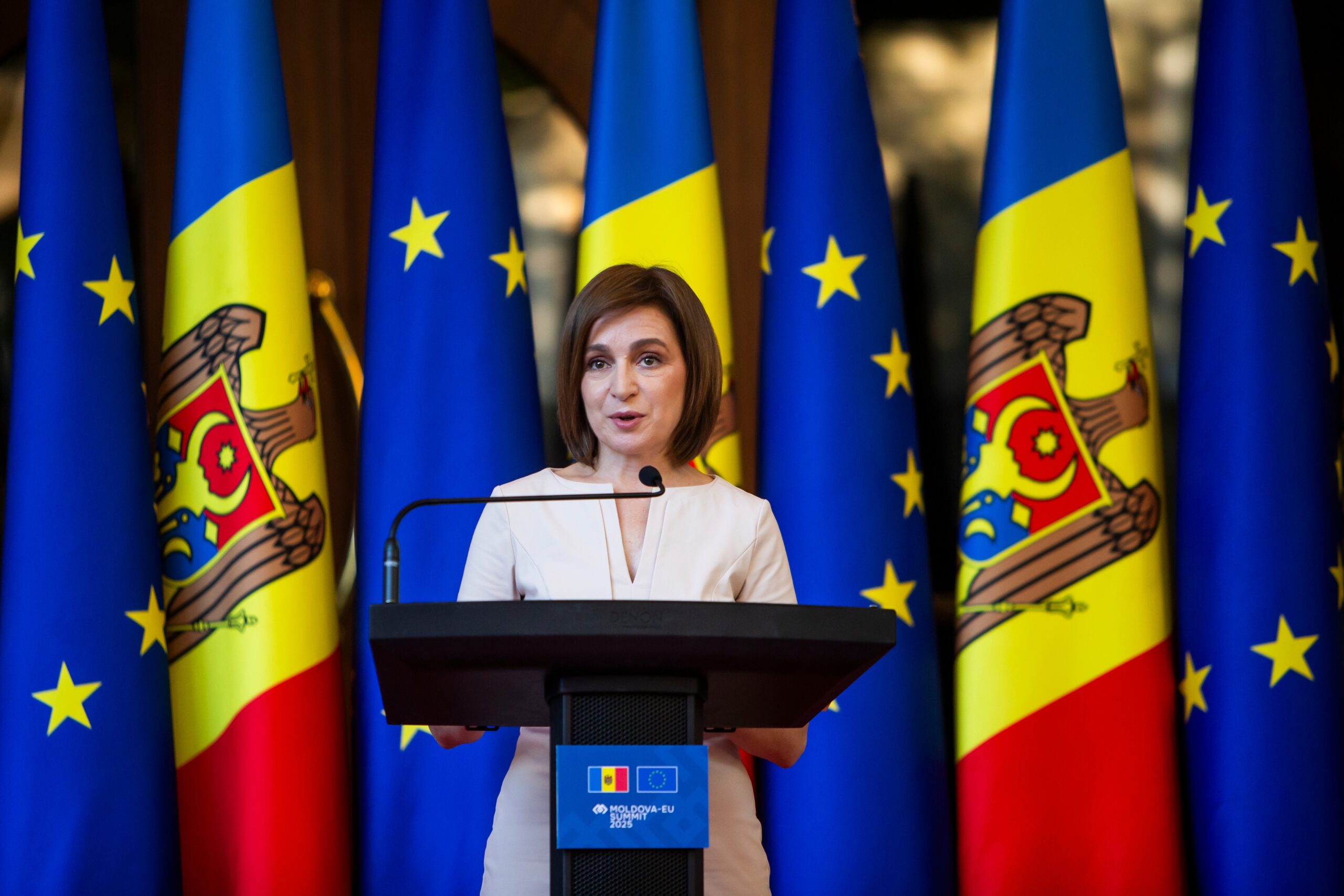
Photo: www. shutterstock.com
Moldova Weighs Visas for Russian and Belarusian Citizens as Part of Its EU Alignment
Moldova is preparing to end visa-free entry for Russian and Belarusian citizens. Prime Minister Vasile Tofan stated that Chisinau intends to align visa policy with EU rules. This would mean requiring visas from nationals of countries that the EU already screens. He specifically mentioned that they are not ready to name a specific date, however, if the European Union were to oblige Moldova to certain regulations, he expressed that they would have to decide.
The move is framed as an accession obligation, as harmonising visa policy with Schengen standards is one of the conditions of Moldova’s membership negotiations. The European Commission report says that Moldova must still align its visa regime for 11 states, including Russia and Belarus, whose citizens are currently able to enter without a visa. Moldova is not the only one; as an example, Montenegro introduced visas for citizens of Belarus, China, Russia, Saudi Arabia and Turkey on November 1, citing EU alignment, while Albania has ended visa-free entry for Belarusians and Bosnia and Herzegovina is gradually adjusting its rules.
Finland’s example shows the direction of travel inside the EU. In October, the Foreign Minister Elina Valtonen urged the bloc to stop issuing Schengen visas to Russians for non-essential travel, including tourism, underlining that Helsinki has applied national restrictions since 2022. She also asked the Commission for a reform of the Visa Code so that binding visa restrictions can be imposed quickly, and so the Commission proposal is to be expected in January. This suggests that the Moldovan visa regime would follow the position of the EU’s most security-minded members rather than just run ahead of it.
For integration, such a step would be both practical and symbolic, showing that Chisinau is converging with Schengen rules as accession talks advance. Its timing certainly seems tied to Brussels, so the January Commission proposal and the pace of the other candidates may prove decisive. Until a date is announced, the plan remains a signal of intent rather than a policy.
Sources:
- Olga Rozgon, UNN, “Moldova plans to introduce a visa regime for citizens of Russia, Belarus and China as part of European integration”, https://unn.ua/en/news/moldova-plans-to-introduce-a-visa-regime-for-citizens-of-russia-belarus-and-china-as-part-of-european-integration
- Zahra Mammadova, TodayPress, “Moldova may introduce visa requirements for Russian and Belarusian citizens”, https://todaypress.tv/en/world/moldova-may-introduce-visa-requirements-for-russian-and-belarusian-citizens
- Nicoleta Borodin, Moldova1, “Finland urges EU to tighten visa rules for Russian citizens”, https://moldova1.md/p/87649/finland-urges-eu-to-tighten-visa-rules-for-russian-citizens
- Naša Niva, “Moldova may introduce visas for Belarusians”, https://nashaniva.com/en/408633#google_vignette
New Power Line Between Moldova and the EU With Interesting Name
Moldova and Romania are preparing to build a new high-voltage electricity transmission line called the “Trump Liberty Line,” a major infrastructure project designed to strengthen regional energy security and deepen Moldova’s integration with the European energy market. The project has attracted international attention due to both its strategic importance and its name, which recognises support from the administration of Donald Trump.
The new power line will operate at 400 kV and extend for approximately 190 kilometres, including around 70 kilometres in Moldova and 120 kilometres in Romania. The project is supported by a $130 million investment from the US Government and involves cooperation between the US Embassy in Chisinau, Moldelectrica, the Moldovan Ministry of Energy, and the American engineering company Black & Veatch. A joint working group has already been established to coordinate preparations for construction.
The line aims to improve Moldova’s energy resilience by increasing its capacity to import electricity from the European market through Romania. Not so long ago, Moldova heavily relied on energy produced by a power station in Transnistria, but after the start of the war in Ukraine, it hastily looked to find new sources. As a candidate for membership in the European Union, Moldova has sought closer integration with European energy networks and a reduced dependence on traditional supply routes.
Once completed, the Trump Liberty Line will become the third 400 kV interconnection between Moldova and Romania. It is also one of several other projects in Eastern Europe which should be named after the current US President – apart from a transport corridor between Armenia and Azerbaijan, there is also a planned US military base in Poland and a public park in Bucharest. As Balkan Insight puts it, governments in this region want to highlight their ties with the US administration, so that they keep American presence on their territory.
Sources:
- Marian Chiriac, Balkan Insight, “Moldova Speeds Up Construction of Trump-Named Power Line”
https://balkaninsight.com/2026/10/07/moldova-speeds-up-construction-of-trump-named-power-line/bi - NEWS, “The New Line Between Moldova and Romania Will Be Called the Trump Liberty Line” https://ua.news/en/world/novu-liniiu-mizh-moldovoiu-ta-rumuniieiu-nazvut-trump-liberty-line
Moldova EU Enlargement Report 2026
The 2026 Enlargement Report highlights breakthroughs in Moldova’s accession path, marking a rapid transition from technical preparation to active negotiation. Following the completion of the bilateral screening of the EU acquis in September 2025, the Commission assessed all six negotiating clusters as ready to open. In 2026, accession talks accelerated significantly: Cluster 1 (Fundamentals) was formally opened in June, Cluster 6 (External Relations) in July, and Clusters 2 (Internal Market) and 3 (Competitiveness and Inclusive Growth) in October 2026. Moldova has set a strategic goal to conclude negotiations by 2028 and achieve EU membership by 2030.
Political commitment remains firm, anchored in the constitution and reinforced by the September 2025 parliamentary elections. High-level engagement was underscored by the second EU-Moldova Summit in Brussels in June 2026. Integration is supported by the EU’s €1.9 billion Growth Plan for Moldova under the Reform and Growth Facility. Demonstrating steady reform delivery across economic governance and energy, Moldova unlocked regular financial instalments of €189 million in March 2026 and €157 million in October 2026. Practical benefits for citizens expanded as Moldova joined the EU’s “Roam Like at Home” area and the Creative Europe programme on January 1, 2026.
These milestones have been achieved against severe external pressure. Moldova faces persistent hybrid threats, foreign interference, and security risks stemming from Russia’s war against Ukraine, including doubled airspace violations compared to 2025. In response, authorities have strengthened democratic resilience, law enforcement coordination, and cybersecurity while advancing fundamental reforms. Key domestic steps include extraordinary integrity vetting of judges and prosecutors, public administration reforms, and new legislation on public participation. Moldova’s steady alignment with the EU common foreign and security policy (reaching 91%) highlights its deepening alignment with Union standards.
Sources:
- European Commission (DG ENEST), “Moldova 2026 Report”, https://enlargement.ec.europa.eu/document/download/d8e3aa52-536e-420e-9639-8c1752321ac9_en?filename=moldova-report-2026.pdf
Contact us