

IN FOCUS: Ukraine & Moldova Brief
Review of September 2026
Petra Hoštáková, Anna Gúliková, Martin Tancer
UKRAINE
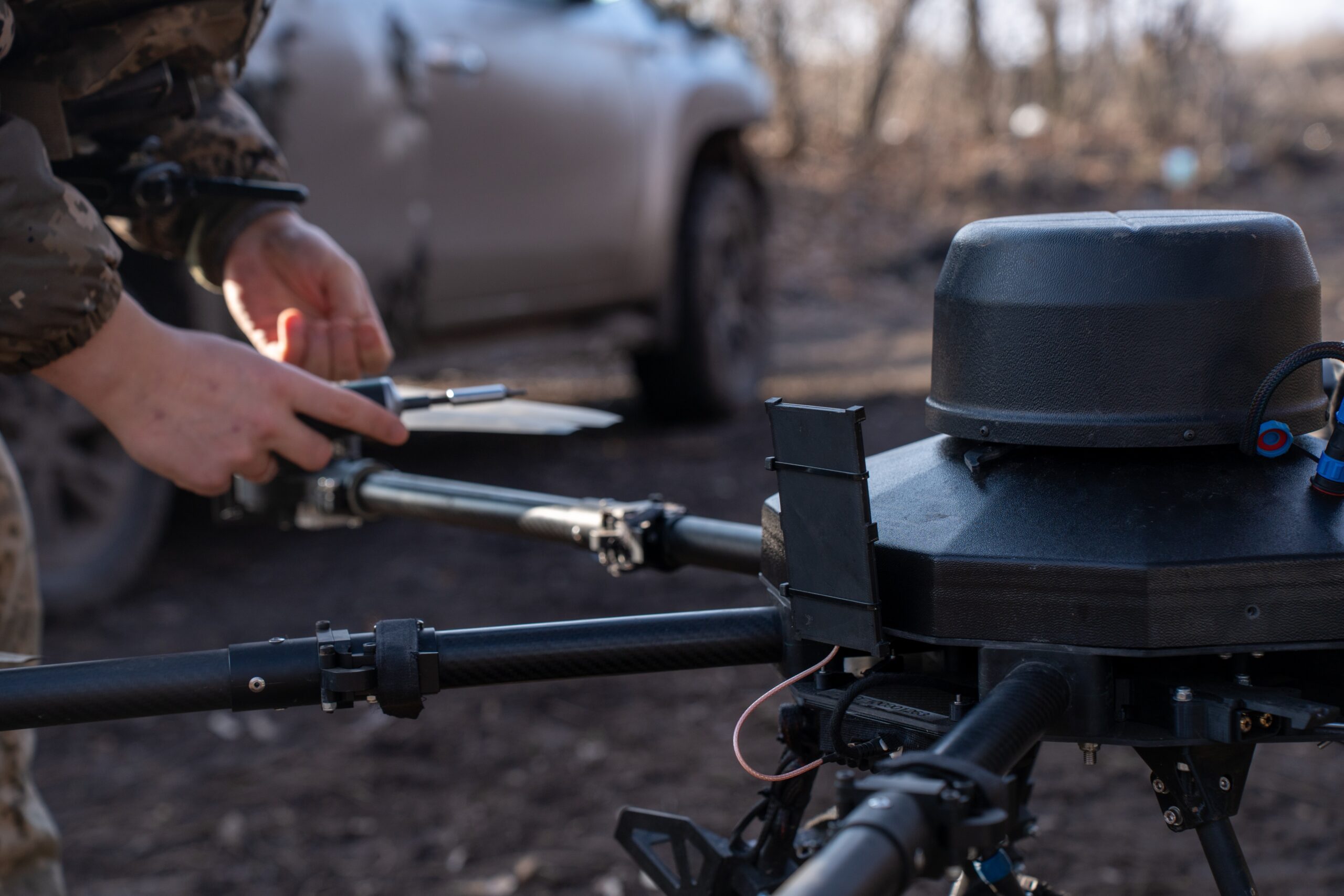
Photo: Shutterstock.com
Strategies of Washington and Kyiv Diverge as Oil Becomes the Point of Friction
Over the course of the past couple of weeks, there have been widening gaps between how Washington and Kyiv define success in the war. For Ukraine, the long-range drone campaign against Russian refineries is its most effective lever: the International Energy Agency estimates that Kyiv hit a Russian refinery roughly every three days during the first eight months of this year. Ukrainian President Zelenskyy stated that his country must answer Russian attacks on its energy sector, oil refiners first, while avoiding civilian targets. However, Washington increasingly sees the same strikes as a liability. In mid-September, Donald Trump publicly said that Zelenskyy ought to stop attacking diesel fuel refineries in Russia, after US diesel prices topped a record at $6 per gallon. Russia had already banned diesel exports in July, while the war on Iran has curtailed shipments through the Strait of Hormuz, leaving the global market tight. With Americans voting in midterm elections in the beginning of November, fuel prices have become a domestic political issue.
This marks a change from the Biden era, when restraint on Ukrainian deep strikes was largely framed around the risk of escalation with Moscow. Today the main driver is economic; pump prices, voters and market stability. Analysts note that successive US administrations have tried to shape not only how much support Ukraine receives but also how it is used, and that the two countries now prioritise different effects: pressure on Russia versus stability in global energy markets.
Each side therefore undermines the other, even if unintentionally. Kyiv’s strikes raise costs for the average American consumer, while US pressure threatens to blunt Ukraine’s most effective tool just as Russia prepares winter attacks on its energy network. Zelenskyy has also made an official statement that Putin will escalate closer to the midterms and that he has warned US negotiators accordingly, describing the Kremlin’s aim as pushing Ukraine into “chaos” and driving residents out of Kyiv while Ukraine seeks additional funding. Whether Trump’s economic priorities and Kyiv’s survival strategy can be reconciled before the vote remains uncertain.
Sources:
- David J. Galbreath, The Conversation, “US attempts to control Ukraine’s attacks on Russia reflect a fundamental strategic disconnect”, https://theconversation.com/us-attempts-to-control-ukraines-attacks-on-russia-reflect-a-fundamental-strategic-disconnect-292756
- The Guardian, “Ukraine war briefing: Kyiv to increase oil refinery attacks because of Moscow’s winter strategy, Zelenskyy says”, https://www.theguardian.com/world/2026/oct/04/ukraine-war-briefing-kyiv-to-increase-oil-refinery-attacks-because-of-moscows-winter-strategy-zelenskyy-says
- Kanyshai Butun, Anadolu Ajansi, “Putin to escalate attacks on Ukraine as US midterm elections approach, Zelenskyy says”, https://www.aa.com.tr/en/world/putin-to-escalate-attacks-on-ukraine-as-us-midterm-elections-approach-zelenskyy-says/4076626
Did a Plane with Zelenskyy on Board Nearly Get Hit by a Russian Drone?
Ukrainian President Volodymyr Zelenskyy and Norwegian Prime Minister Jonas Gahr Støre disclosed that official flights carrying the Ukrainian leader faced dangerous aerial threats and drones targeting them during recent travel across Europe.
The incidents occurred around the trip to Norway in September 2026. Prior to arriving in Oslo, Zelenskyy’s plane experienced a near-collision with a drone while taking off from Moldova. Norwegian Prime Minister Støre first talked about the event, confirming a significant drone threat in Moldovan airspace that delayed the presidential aircraft, commenting that this is “the reality in which he (Zelenskyy) lives.”
In a subsequent interview with CBS News, President Zelenskyy revealed that the aerial targeting was not an isolated event. His plane encountered Russian drones in Moldovan airspace twice—both on the journey to Oslo and during the return flight through Chișinău. He stated that Russia directly targeted Moldovan airspace because of his presidential flight’s presence. Ukrainian officials consider these incursions part of a deliberate intimidation tactic aimed at high-level leadership and visiting foreign representatives. Although Zelenskyy mostly used the Polish airport of Rzeszów for his travels, it seems that due to recent conflicts in relations with Poland, he might have opted for Chișinău instead.
These aerial risks extended beyond presidential flights. During the same period, drone strikes disrupted ground transport in Ukraine, including an attack on a passenger train carrying international dignitaries near the Polish border. Similar drone incursions and airspace violations were also reported along Ukraine’s borders with Romania and during an official presidential visit to Ireland, emphasising the persistent safety hazards.
Sources:
- Meduza, “Norway’s prime minister says Zelenskyy’s plane nearly collided with drone en route from Moldova to Oslo”,https://meduza.io/en/news/2026/09/10/norway-s-prime-minister-says-zelensky-s-plane-nearly-collided-with-drone-en-route-from-moldova-to-oslo
MOLDOVA
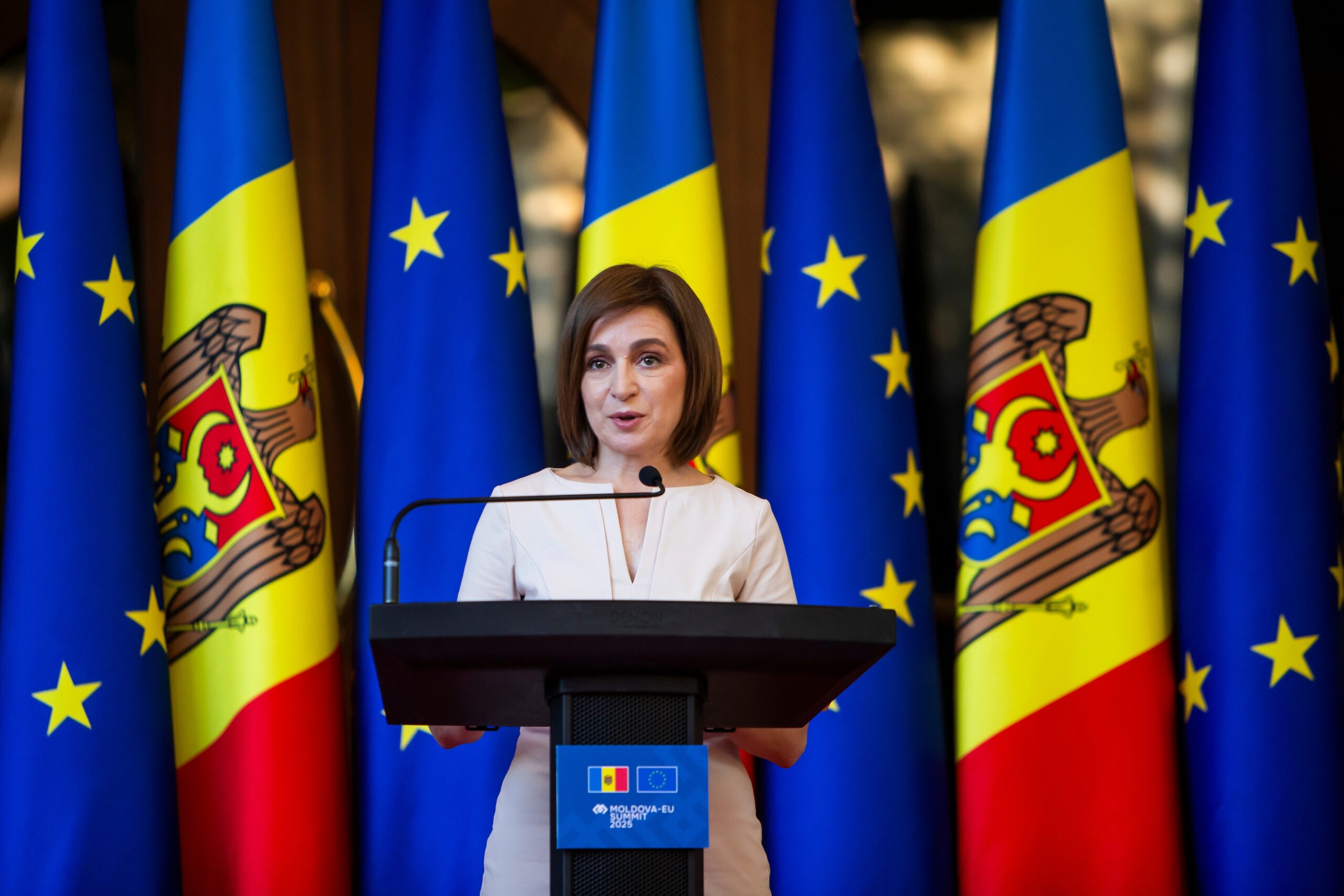
Photo: www. shutterstock.com
Moldova Progresses in EU Membership Talks Faster Than Expected
The European Commission is reallocating internal experts and administrative resources to keep up with the remarkably fast pace of reforms implemented by the Republic of Moldova. Following the 2020 election of President Maia Sandu and the establishment of a strong pro-European majority, Chișinău has accelerated its EU alignment. Deputy Prime Minister Cristina Gherasimov described the scale of reforms carried out over the past five years as “unprecedented,” driven by strong political will and public determination. EU Enlargement Commissioner Marta Kos even described Moldova as the “best performer in her class”.
However, the rapid progress in Moldova has created administrative pressure in Brussels. The accession process requires European institutions to thoroughly screen, evaluate, and verify national legislation across various sectors against EU standards, placing heavy strain on the European Commission’s capacity to assess progress as quickly as Chișinău delivers reforms.
Meanwhile, neighbouring Ukraine continues its own reform process under new Prime Minister Serhii Koretskyi, though its path remains complicated by Russia’s ongoing invasion. Historically, the accession journeys of Moldova and Ukraine have been politically “coupled” since both received candidate status in 2022. While Hungary previously delayed Ukraine’s negotiations, political changes in Budapest recently allowed for the opening of key negotiating clusters.
Despite the remaining challenges—including the need for further judicial reforms, anti-corruption measures, and political dynamics regarding EU coupling—Moldova’s fast progress has pushed European officials to adapt their administrative capacities to ensure Brussels itself does not become the problem in the country’s integration path.
Sources:
- Luca Bertuzzi, Euronews, “EU Commission scrambles to keep pace with Moldova’s accession push”https://www.euronews.com/2026/09/10/eu-commission-scrambles-to-keep-pace-with-moldovas-accession-push
- Luca Bertuzzi, Euronews, “EU’s enlargement risks becoming a victim of its own success”,https://www.euronews.com/2026/07/31/eus-enlargement-risks-becoming-a-victim-of-its-own-success
- Armen Georgian, France24, “‘Moldova is the best performer in my class’: EU Enlargement Commissioner Marta Kos”, https://www.france24.com/en/tv-shows/talking-europe/20260925-moldova-is-the-best-performer-in-my-class-eu-enlargement-commissioner-marta-kos
Russian Artillery Explodes on Moldovan Territory as the War Spills over Towards the EU Borders
During a large-scale Russian assault on Ukraine, five Russian aerial weapons crossed into Moldovan airspace and exploded on the country’s territory. According to Moldova’s officials, the incursion involved three missiles and two drones. Debris was discovered in several districts all over the country. Falling fragments caused one grass fire and damaged the window of a residence. Although no casualties were reported in Moldova, the same night’s attack altogether killed at least 8 civilians and injured 83 in Ukraine. The incident is not isolated, as Moldova recorded 39 airspace violations by September 2026, which is more than double the number of incidents in 2025, when throughout the whole year such a thing happened “only” 17 times. This trend suggests that spillover is becoming a structural feature of Russia’s air campaign, particularly as Moscow intensifies its strikes ahead of the winter season.
President Maia Sandu condemned the incident immediately, stating that Russia’s war is “dangerously reaching Moldova”. She also argued that Moscow is putting lives at risk across Europe and must be stopped. By stressing that the weapons exploded on Moldovan soil, Sandu presented the event not as a regrettable side effect of the war in Ukraine, but as a direct threat to the country and to Europe. Under international law, such incursions amount to violations of Moldova’s sovereignty and airspace, regardless of Moscow’s intended targets. Moldova’s geographic position makes this especially sensitive, as the country borders Romania, which is an EU and NATO member, so debris and drones landing in Moldovan villages now reach the edge of the European Union.
Chisinau has begun to respond by strengthening its air-defence capabilities. The country secured €120 million from the EU for medium-range air defence systems and is developing drone detection and interception capabilities. Sandu has also argued that stronger Ukrainian air defences reduce the threat of spillover to neighbouring states, linking Moldova’s own security directly to Ukrainian resilience. As of now, the damage has been limited. However, with Russian attacks growing in scale and Moldovan defences still limited, the likelihood of casualties in future incidents will increase, putting more pressure on both Chisinau and its European partners to respond.
Sources:
- Ulyana Krychkovska-Bogdanova, Ukrainska Prawda, “Five drones enter Moldovan airspace, leaving wreckage and damage – photos”, https://www.pravda.com.ua/eng/news/2026/10/03/8056292/
- Victor Jack, Politico, “Sandu slams Russia as attack debris hits Moldova in latest airspace violation”, https://www.politico.eu/article/maia-sandu-slams-russia-as-attack-debris-hits-moldova-in-latest-airspace-violation/
- Ben Aris, IntelliNews, “Missile War Monitor: Russian missiles, drones explode in Moldova, Zelenskiy vows more refinery strikes”, https://www.intellinews.com/missile-war-monitor-russian-missiles-drones-explode-in-moldova-zelenskiy-vows-more-refinery-strikes-473187/?source=russia
- Maria Kamińska, TVP World, “‘Russia’s war is dangerously reaching Moldova’: Five Russian weapons explode on Moldovan territory”, https://tvpworld.com/95735306/sandu-five-russian-weapons-violate-moldovan-airspace-and-explode-amid-strikes-on-ukraine
Contact us