

IN FOCUS: Ukraine & Moldova Brief
Review of August 2026
Petra Bošková, Anna Gúliková, Martin Lukáč, Martin Tancer
UKRAINE

Photo: Shutterstock.com
Russia Escalates Air Campaign Against Ukraine Ahead of the Winter Season
August 2026 brought another significant escalation in Russia’s air campaign against Ukraine. The end of the month demonstrated that Moscow is increasingly focusing on a combination of mass drone and missile attacks aimed not only at inflicting immediate damage, but also at gradually exhausting Ukraine’s air-defence capabilities, disrupting the functioning of the state, and placing pressure on the energy infrastructure ahead of the coming winter. This trend is unfolding alongside Ukraine’s continuing campaign of long-range strikes against Russian military and energy assets.
The most significant attack in the final days of August was the large-scale Russian strike campaign conducted on August 28 – 29. According to available information, Russia deployed more than 550 drones of various types over a period of more than 28 hours, alongside ballistic and anti-ship missiles. Kyiv and its surrounding areas were the primary targets.
The prolonged air-raid alerts suggest that Russia’s tactics were aimed not only at destroying specific targets, but also at exhausting Ukraine’s air-defence capabilities and disrupting the daily functioning of the capital. The attack also struck an ammunition depot on the western outskirts of Kyiv, triggering secondary explosions and causing dozens of casualties.
At the same time, the energy infrastructure is becoming an increasingly important strategic target. According to available information, Russia is preparing further large-scale attacks against Ukrainian power plants and other energy facilities. Their timing is significant given the approaching heating season. Drawing on the experience of previous winters, Moscow is once again seeking to exploit the vulnerability of Ukraine’s energy network in order to generate humanitarian and economic pressure. Attacks on the energy sector also provide a means of disrupting industrial production, transport, communications, and the country’s overall economic resilience.
The escalation of Russian attacks is taking place in parallel with Ukraine’s growing ability tostrike targets deep inside Russian territory. During August, Ukrainian forces intensified their campaign against Russian air bases, drone-launch sites, and energy infrastructure. Ukraine’slong-range strikes are intended to reduce Russia’s ability to conduct its air campaign while simultaneously increasing the economic costs of the war for Moscow. This development has created a form of strategic reciprocity: Russia seeks to weaken Ukraine’s energy and civilian infrastructure, while Ukraine targets the resources that enable Russia to continue its military operations.
Sources:
- CNBC, 2026. “Russia Launches Massive Strikes on Ukraine’ s Energy Infrastructure.” August 31, 2026. CNBC.https://www.cnbc.com/2026/08/31/russia-massive-strikes-ukraine-energy-infrastructure.html.
- Institute for the Study of War. 2026. “Russian Offensive Campaign Assessment, August 29, 2026.” August 29, 2026. Institute for the Study of War.https://understandingwar.org/research/russia-ukraine/russian-offensive-campaign-assessment-august-29-2026/.
- The Guardian. 2026. “Ukraine War Briefing: Russia Planning ‘Massive Strikes’ on Power Plants Days after Its Deadliest Attack of the Year.” August 31, 2026. The Guardian.https://www.theguardian.com/world/2026/aug/31/ukraine-war-briefing-russia-planning-massive-strikes-on-power-plants-days-after-its-deadliest-attack-of-the-year.
Another Corruption Scandal In Zelenskyy´s Surroundings
Ukraine’s National Anti-Corruption Bureau (NABU) launched Operation “Forrest Gump,” exposing yet another high-profile corruption scandal involving President Volodymyr Zelenskyy’s inner circle. Investigators uncovered a scheme to launder 150 million hryvnias (around 3 million USD) through the nationalised Sense Bank. The funds were allegedly used as bail for former Justice Minister Herman Halushchenko, who was arrested earlier in the related “Midas” corruption case. Key figures implicated include Deputy Head of the Presidential Office Iryna Mudra—whom Zelenskyy promptly dismissed—former lawmaker Maksym Mykytas, and parliamentary faction leader Davyd Arakhamia, who was caught on leaked tapes discussing the illicit operations.
This scandal delivers a crushing blow to Zelenskyy’s domestic credibility, reinforcing growing public anger that his administration tolerates wartime corruption and protects political insiders. Using a state-owned bank to launder illegal funds demonstrates how deeply ruling elites have captured key state institutions. Crucially, the leaked recordings reveal that government officials view independent anti-corruption bodies like NABU as external political enemies.
Zelenskyy faces mounting political disappointment, coming right on the heels of recent street protests over the controversial removal of reformist Defence Minister Mykhailo Fedorov. NABU is expected to press formal charges against higher-ranking figures, potentially including Arakhamia. Meanwhile, Western allies and international donors will inevitably step up pressure on Kyiv to safeguard independent investigators and push forward stalled reforms. How Zelenskyy navigates this crisis will determine whether he can regain public trust and secure ongoing Western backing.
Sources:
- Marcin Jedrysiak, Ośrodek Studiów Wschodnich, “Ukraina: kolejny skandal korupcyjny w otoczeniu prezydenta Zełenskiego”https://www.osw.waw.pl/pl/publikacje/analizy/2026-08-20/ukraina-kolejny-skandal-korupcyjny-w-otoczeniu-prezydenta-zelenskiego
-
Veronika Melkozerova, Milena Wälde, Politico, “Operation Forrest Gump: Anti-corruption raid heaps pressure on Zelenskyy”, https://www.politico.eu/article/volodymyr-zelenskyy-fires-top-aide-after-anti-corruption-investigators-search-office-iryna-mudra/
CIA Director’s Visit in Moscow Might Influence the Ukrainian Peace Talks
John Ratcliffe, the Director of the CIA, made an unannounced trip to Moscow in late August, making it his first publicly known visit to the Russian Federation as intelligence chief. Many sources describe this as the most direct US push so far to revive stalled negotiations between Kyiv and Moscow. During talks with SVR chief Sergey Naryshkin and FSB director Alexander Bortnikov, US representatives reportedly pushed for the trilateral summit between President Trump, Vladimir Putin and Volodymyr Zelenskyy, while giving Bortnikov a blunt assessment of Russia’s deteriorating position. Ratcliffe, ergo, urged Moscow to settle before its situation worsens further. Officials of the USA briefed Zelenskyy on this visit, and he thanked Washington for pushing what he called ‘a realistic vision of what needs to be done’.
The trip signals that the White House may be preparing to restart the diplomatic track that stalled earlier this year, when the peace talks mediated by envoys Steve Witkoff and Jared Kushner lost momentum after the war in Iran began. Ukrainian officials say Ratcliffe concluded Bortnikov could be a constructive channel back to negotiations. Zelenskyy’s chief of staff has even suggested formal US-mediated talks could resume as early as September. Trump has previously proposed the three-way summit; this idea was backed by Zelenskyy, however, Putin has yet to support it.
Whether Washington’s pressure will translate into real battlefield restraint remains doubtful. Ahead of Ratcliffe’s visit, US officials reportedly asked Kyiv to pause strikes on Moscow, St. Petersburg and parts of northern Russia until their delegation left Russian territories. Even though this request was partially honoured, within days fighting intensified again, as a Russian drone strike on an ammunition depot near Kyiv killed almost 40, while Ukraine kept up its campaign against Russian logistics and energy targets, including a strike which destroyed a vast Wildberries warehouse in Tambov region. Zelenskyy’s deputy chief of staff has separately warned that Moscow may be preparing a new offensive towards Kyiv and Chernihiv. Based on this development, many Ukrainian representatives remain sceptical that Putin is genuinely ready to negotiate rather than simply buy time. The upcoming weeks – and whether a Trump-Putin-Zelenskyy summit materialises – will show whether Ratcliffe’s Moscow trip marks a genuine diplomatic turning point or another false start in efforts to end the war.
Sources:
- Barak Ravid, Axios, ‘CIA director floated Trump-Putin-Zelensky summit during Moscow visit, sources say’, https://www.axios.com/2026/08/29/cia-director-ratcliffe-putin-zelensky-summit-war
- Frank Gardner, BBC News, ‘What we should make of CIA boss’s secret trip to Moscow’, https://www.bbc.com/news/articles/cx2z8l8xdg2o
- Harriette Boucher and Maira Butt, Independent, ‘Ukraine-Russia war latest: Moscow vows ‘massive strikes’ in retaliation to huge fires at ‘Amazon-style’ warehouses’, https://www.independent.co.uk/news/world/europe/ukraine-russia-war-live-putin-cia-chief-kyiv-strikes-b3041688.html
MOLDOVA
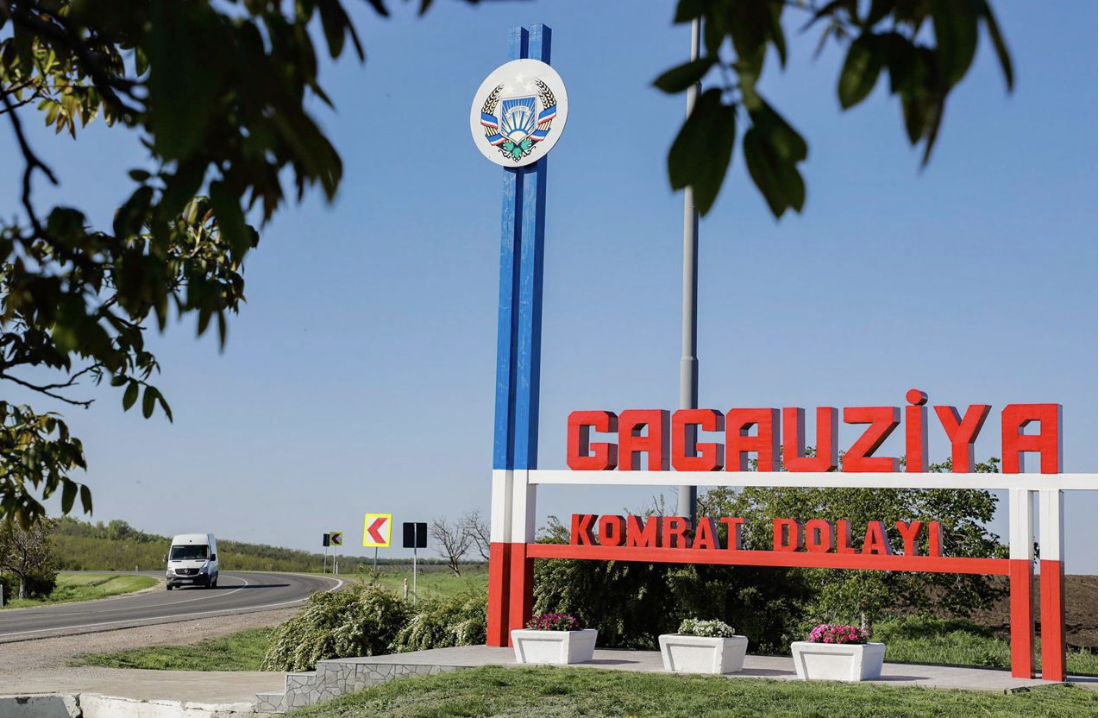
Photo: www. shutterstock.com
Gagauzian Elections to Take Place this November, Facing Pressure from the Current Assembly
Moldova’s autonomous region of Gagauzia is set to hold long-delayed elections for its regional assembly on November 15, after Chisinau’s Central Electoral Commission officially opened the pre-election period on August 28. This development follows a year-long institutional deadlock, as the mandate of Gagauzia’s People’s Assembly expired in November 2025, and the region has also lacked a sitting governor since Bashkan Evghenia Guțul received a seven-year prison sentence over illicit party financing linked to the outlawed pro-Russian Șor Party.
The path to the November vote has been anything but smooth. In July, Moldova’s Constitutional Court ruled that Gagauzia’s right to organise elections independently through its own Central Electoral Commission was unconstitutional, requiring the region to shift from its majoritarian system to a proportional model matching the rest of the country and placing the process under Chisinau’s oversight. When parliament’s ruling majority went on to reject opposition amendments seeking to drop the Romanian-language requirement and delay the vote pending a Venice Commission review, the Praesidium of Gagauzia’s own People’s Assembly responded by adopting a formal declaration contesting what it called a unilateral overhaul of the region’s electoral rules.
Following the ruling, Moldova’s parliament approved amendments to the Electoral Code, placing the process under the direct coordination of Chisinau’s central election authority, with a new regional Central Election Council of seven to eleven members. The November 15 vote will still use the existing majoritarian system, with a shift to proportional representation planned for future elections. The reform has also introduced new eligibility rules for Bashkan candidates, including ten years of local residency and Romanian-language proficiency — provisions opposition lawmakers argue exceed the scope of the court’s ruling and discriminate against Gagauzia’s population. The Party of Socialists has said it will challenge the language requirement at the Constitutional Court, the European Court of Human Rights and the European Commission, while regional authorities in Comrat had separately asked for the legislative vote to be postponed altogether. With campaigning set to begin on October 16, the coming weeks will test whether these disputes can be resolved in time, or whether Gagauzia’s elections face yet another setback.
Sources:
- Raisa Lozinschi-Hadei, Moldova1, ‘Moldova opens Gagauzia election race under new voting rules’, https://moldova1.md/p/84156
- Svetlana Rudenco, Logos Press, ‘Parliament approved new election rules for Gagauzia’, https://logos-pres.md/en/news/parliament-approved-new-election-rules-for-gagauzia/
- Liubomir Guțu, Moldova1, ‘Moldova sets Gagauzia regional vote for November 15 under revised code’https://moldova1.md/p/84063/moldova-sets-gagauzia-regional-vote-for-nov-15-under-revised-code
35th Independence Day Sends the Message of Unity and Strength
Moldova marked the 35th anniversary of the declaration of independence on August 27 2026. On this occasion, President Maia Sandu called on citizens to remain united, believe in their country, and continue building a free and strong state. The anniversary also had a significant security dimension, as it included a larger-scale military parade intended to demonstrate the strengthening of the country’s defence capabilities to the public.
At the beginning of her address, Sandu paid tribute to the generation of the national revival, which, in her view, took risks and made sacrifices to establish an independent state and secure freedom for future generations. “They fulfilled their duty – they created an independent state. We have a duty to nurture it,” the president stated. She also stressed that, after 35 years of independence, it was necessary to assess not only the country’s continuing problems but also the progress Moldova had made in protecting democracy and building a free society.
A significant part of her speech focused on the current threats to Moldovan statehood. These included propaganda aimed at fostering social division and distrust, the illegal presence of Russian troops, drones threatening the country’s peace and security, and the use of illicit funds by certain political actors seeking to weaken the state from within. Security concerns
were also reflected in the character of the celebrations themselves. Sandu stated that Moldova had recently invested in strengthening its defence system, primarily with the support of foreign partners but also through domestic resources. According to the president, these investments were driven by the fact that “peace is the most important thing” and that the safety of citizens was the country’s highest priority.
Another central theme of the address was Moldova’s European orientation. Sandu emphasised that independence did not mean uniformity and that Moldovans did not have to be identical in order to be free together. According to the president, the country’s future was defined by a common direction: the European Union. She thus presented European integration not merely as a political or economic project, but also as part of the protection of Moldova’s identity and sovereignty. As she concluded: “We can achieve great things only together.”
Sources:
- Aparatul Președintelui Republicii Moldova. „Președinta Maia Sandu, de Ziua Independenței: ‚Lucrurile mari le putem face doar împreună‘.“ Președinția Republicii Moldova. August 27, 2026.https://presedinte.md/rom/comunicate-de-presa/presedinta-maia-sandu-de-ziua-indepen dentei-lucrurile-mari-le-putem-face-doar-impreuna.
- Rudenco, Svetlana. 2026. “The President on the military parade: An opportunity to show how we have strengthened our defences.” LOGOS PRESS. August 8, 2026.https://logos-pres.md/en/news/the-president-on-the-military-parade-an-opportunity-to-show-how-we-have-strengthened-our-defenses/.
- Rudenco, Svetlana. 2026. “Military parades were held in Chisinau and Bălți to mark Independence Day.” LOGOS PRESS. August 27, 2026.https://logos-pres.md/en/news/military-parades-were-held-in-chisinau-and-balti-to-mark-independence-day/.
Taliban Officials Surprisingly Appear in Moldova
Three officials from the Agricultural Ministry of Afghanistan suddenly arrived in Chisinau on August 3 on board of a commercial airline, after they were granted a visa to enter Moldova. The visit triggered surprised reactions, because it was by no means an official invitation of the Moldovan government.
Since 2021, the Taliban, a hard-line Islamist group, has taken power in Afghanistan and has been under diplomatic isolation ever since. Moldova does not recognise the Taliban government as legitimate and complies with the sanctions imposed on it. This is why it was shocking to see Taliban representatives in Chisinau. Radio Free Europe wrote that the officials were invited by Vasile Sarban, the State Secretary of Moldova´s Ministry of Agriculture. Sarban said that he made the invitation at the request of Moldovan businesses, who wish to export to Afghanistan.
For Moldova, a country working hard to prove itself ready for EU membership, letting a Taliban delegation slip through the borders is damage to its image. It exposes a dangerous disconnect inside the government, where local business interests managed to completely blindside national foreign policy and international diplomatic norms. The new Prime Minister Vasile Tofan called this episode “embarrassing and unacceptable”, but the Taliban already managed to use this visit as a propaganda tool to show the world that its government is not completely isolated.
Sources:
- Zamira Eshanova, Ionut Benea,, Radio Free Europe / Radio Liberty, “Taliban Officials’ Visit To Moldova Triggers Political Storm”https://www.rferl.org/a/taliban-moldova-afghanistan-controversy/33821883.html
- Vlad Galusca, Ziarul de Gardă, “Taliban Delegation Visits Moldova; Government Proposes Major Tax Changes; Energy and Water Restrictions Continue” https://www.zdg.md/en/taliban-delegation-visits-moldova-government-proposes-major-tax-changes-energy-and-water-restrictions-continue/
Contact us