

IN FOCUS: Ukraine & Moldova Brief
Review of May 2026
Petra Bošková, Anna Gúliková, Igor Píš, Martin Tancer
UKRAINE
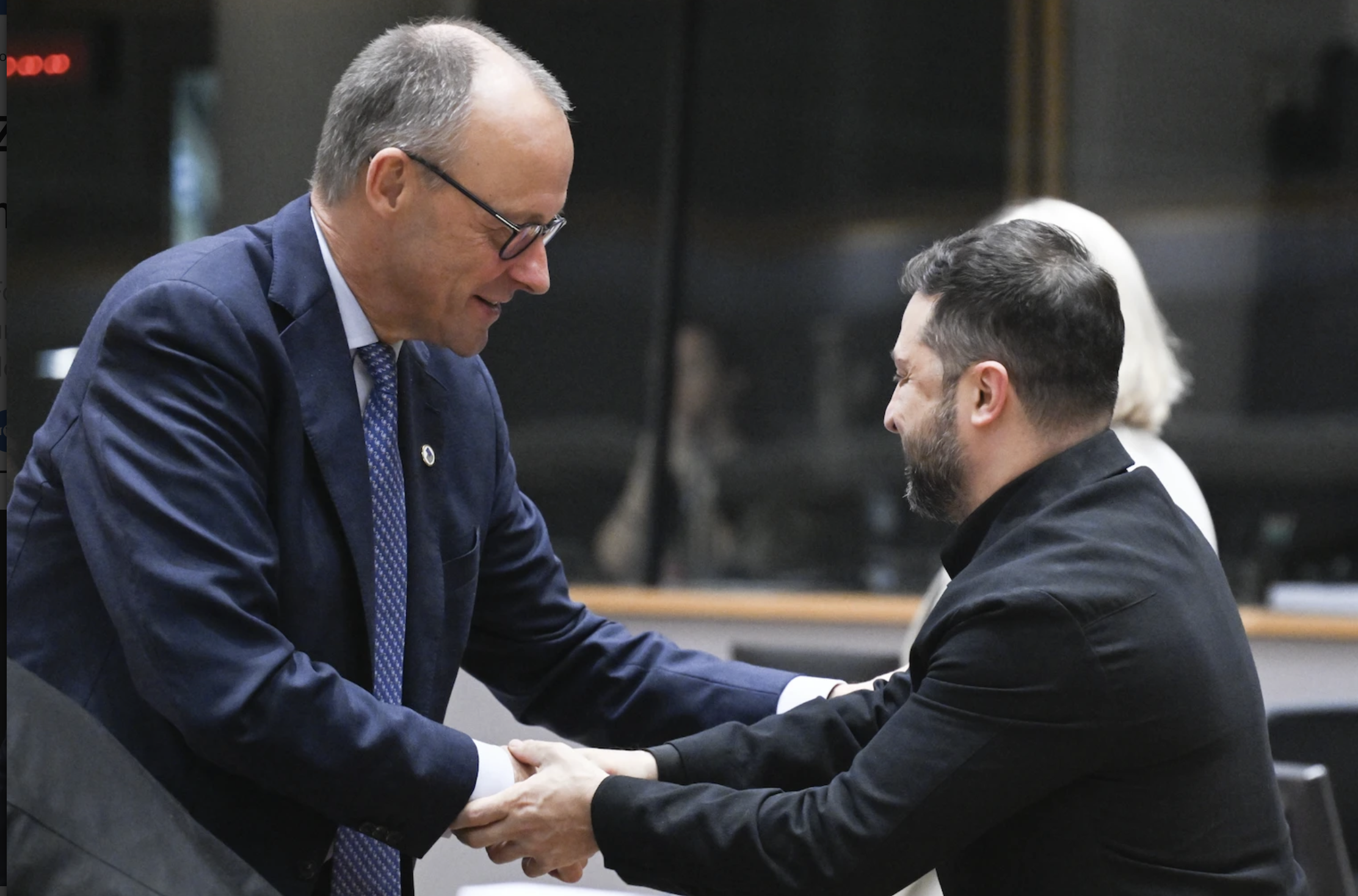
Photo: Shutterstock.com
Merz “Associate Membership” Proposal for Ukraine, Moldova and Western Balkans
German Chancellor Friedrich Merz has recently proposed a radical “associate membership” status for Ukraine, Moldova, and the Western Balkans to maintain momentum in their journey toward joining the European Union. In a letter to EU leaders dated May 18, 2026, Merz argued that the current enlargement process “takes much too long,” leading to understandable frustration among candidate nations.
The proposed status would grant Ukraine and other candidates immediate, substantial access to the bloc’s core institutions. This includes participation in EU summits and ministerial meetings, a seat in the college of EU Commissioners, and non-voting representation in the European Parliament. Crucially, the plan integrates a “substantial security guarantee” by invoking Article 42.7 of the EU treaties, allowing Ukraine to request mutual assistance from member states in the event of Russian attacks.
Merz emphasises that this “innovative solution” is not intended as “membership light” or a replacement for full integration. Instead, it serves as a bridge, offering benefits like access to the single market and EU-funded programs while the formal, merit-based accession process continues. To ensure accountability, the proposal includes a “snap-back mechanism” that would freeze associate status if a country backtracks on rule-of-law or fundamental rights reforms.
While Ukraine has previously expressed wariness toward any “ersatz membership,” the proposal aims to capitalise on a shifting political landscape, including the recent leadership change in Hungary. Merz has called for a dedicated task force to resolve the legal and political complexities of this status ahead of the June 18 meeting of EU leaders.
Sources:
- JORGE LIBOREIRO, Euronews, “Merz proposes ‘associate EU membership’ for Ukraine, with mutual assistance”, https://www.euronews.com/my-europe/2026/05/21/merz-proposes-associate-eu-membership-for-ukraine-with-mutual-assistance
- TIMOTHY JONES, DW, “Germany’s Merz pitches ‘associate’ EU membership for Ukraine”, https://www.dw.com/en/ukraine-eu-associate-membership-merz-european-union/a-77236052
- CHRIS POWERS, “Germany’s Merz proposes radical EU membership shakeup to give hope to Ukraine, Moldova, Western Balkans”, https://kyivindependent.com/germanys-merz-proposes-radical-shakeup-of-eu-membership-to-give-hope-to-ukraine-moldova-balkans/
Historical Conflicts Emerge Again Between Ukraine and Poland
Ukraine and Poland have a long and complicated common history, and the interpretation of certain events is often very different. Probably the most controversial issue is the question of Ukrainian nationalist fighters during the Second World War, symbolised mainly by their leader, Stepan Bandera. A conflict regarding the legacy of these units has now emerged again.
Two events happened at the end of May, which resonated in Polish society. Firstly, it was the exhumation and burial of Andriy Melnyk, a Ukrainian nationalist leader, in Kyiv. But it was only the second event that caused outrage in Poland – Ukrainian President Zelensky honoured a special forces unit of the Ukrainian Armed Forces by giving them the name “UPA Heroes”. UPA, or Ukrainian Insurgent Army, was a nationalist force that caused massive ethnic cleansing of Poles in Volhynia and Eastern Galicia during WW2. However, from the Ukrainian point of view, UPA is seen as a fighter for Ukrainian independence from Moscow, and Ukrainian Foreign Minister Andriy Sybiha said that “our military had absolutely no anti-Polish intentions”.
Nevertheless, the Polish side is not satisfied with this explanation and especially right-wing politicians took a very harsh stance on the topic, with President Karol Nawrocki suggesting taking away the highest Polish state award from Zelensky. The government of Donald Tusk also criticised the move, although it also warned that any conflict between Poland and Ukraine only benefits Moscow. This episode showed that historical questions are still one of the biggest obstacles in Polish-Ukrainian relations, and if unresolved may even pose a problem for the European integration of Ukraine.
Sources:
- Interfax-Ukraine, “Nawrocki proposes stripping Zelenskyy of Order of White Eagle”, https://en.interfax.com.ua/news/general/1172014.html
- Wojciech Kość, Politico, “Poland’s president snubs Zelenskyy over historical slight”, https://www.politico.eu/article/poland-president-karol-nawrocki-volodymyr-zelenskyy-historical-slight/
- UATV, “Sybiha Responds to Polish Criticism Over “Heroes of the UPA” Unit Name”, https://uatv.ua/en/sybiha-responds-to-polish-criticism-over-heroes-of-the-upa-unit-name/
Ukrainians Slowing the Russian Summer Offensive on Multiple Levels
Since the two-day ceasefire in the first half of May, Russian attacks on Ukrainian civilian and critical infrastructure have been escalating in intensity. This pattern is continuous, and Russian strikes are directed towards civilians, as well as the main targets of interest. However, the ceasefire itself was requested by the Russian President for the celebrations of May 9. This fact points towards the reality of Moscow being incapable of protecting its own territory, as many believe that Putin had to follow this path to secure order at the Victory Day celebrations. Ukraine has been showing its ability to attack Russian territory, not only in the bordering areas, but also further from its own territory, and the Kremlin is apparently aware of its own inability to defend itself.
Although the ceasefire stopped any possible strikes from Kyiv so that Moscow could keep its face, with Putin’s Economic Forum nearing in St. Petersburg, Ukrainians started targeting the area. These acts, first, show off the capabilities and dedication of the Ukrainian people and second of all, as the event designated to attract foreign investments is taking place in Petersburg, the situation lowers the Russian position as a global power. Ukrainian drone strikes in general target Moscow’s main sources of finance, such as oil terminals or military facilities. In this specific case, both types of facilities were successfully aimed at Kronstadt near Petersburg, as it is the centre of Russia’s Baltic Fleet.
Russia’s long-term strategy has been to push Ukrainian military capacities even further whenever the Kremlin feels pinned against a wall. Observing Russian attacks and their growing intensity, while considering Ukraine’s battlefield gains, the tide might be turning in the war. The combat performance of Russia is weakening, as is the official stance of the Kremlin. Dmitry Peskov, the chief spokesman of Putin, stated that the Kremlin is open to the peace talks and that as soon as Ukraine withdraws from Donbas, the war could come to an end. Another problem is being created because of the growing number of soldiers who die in battle. It is estimated that Russia loses more than 15.000 soldiers each month, but does not gain the same number back, even though it started mobilisation in the eastern parts of Ukraine. These conditions are not in favour of Moscow gaining some control over the negotiations with Kyiv.
Sources:
- Samuel Shafiro, Anna Thacker, Grace Mappes, Jennie Olmsted, Kateryna Shymkiv, Anjou Kang-Stryker, Frederick W. Kagan, Institute for the Study of War, “Russian Offensive Campaign Assessment, June 2, 2026”, https://understandingwar.org/research/russia-ukraine/russian-offensive-campaign-assessment-june-2-2026/
- Guy Faulconbridge and Andrew Osborn, Reuters, “Ukraine strikes St Petersburg oil terminal, naval base as Putin’s ‘Davos’ gets under way”, https://www.reuters.com/world/europe/ukrainian-drones-strike-oil-terminal-st-petersburg-putins-davos-gets-under-way-2026-06-03/
- Lara Jakes, The New York Times, “Russia Is Showing Signs of Weakness in Ukraine. So It Hits Harder.”, https://www.nytimes.com/2026/06/02/world/europe/ukraine-russia-war-strikes.html
MOLDOVA

Photo: Shutterstock.com
Moldova Accelerates European Integration through Strategic Economic Dialogue in Brussels
A recent working visit to Brussels by Moldovan Deputy Prime Minister Eugeniu Osmochescu and State Secretary Cristina Ceban has significantly advanced Moldova’s economic integration into the European Union. The delegation engaged in high-level discussions with various European Commission officials to refine economic priorities and review the implementation of structural reforms.
A central focus of the visit was the preparation for the EU–Moldova Investment Conference, scheduled to take place in Chișinău on June 4, 2026. This upcoming event aims to attract investment and strengthen Moldova’s energy security. During the meetings, European officials commended Moldova’s progress in reducing bureaucracy, digitalising public services, and harmonising investment legislation. Furthermore, technical negotiations have now been launched across all six accession clusters following the country’s positive recognition in the European Commission’s Enlargement Report.
The dialogue also addressed specific industrial and trade concerns, such as the implementation of the Deep and Comprehensive Free Trade Area (DCFTA). Osmochescu emphasised the need for predictable trade conditions for Moldova’s steel industry and requested tariff quota arrangements adapted to the nation’s export capacities. A strategic objective highlighted during the visit was the conclusion of the Agreement on Conformity Assessment and Acceptance of Industrial Products (ACAA), which is intended to facilitate broader access for Moldovan products to the EU market.
Other key topics included industrial cooperation in the defence sector and the success of the Moldova IT Park in attracting investment through its specialised tax regime. The visit concluded by reaffirming the EU’s continued support for Moldova’s development agenda, signalling a shared commitment to accelerating the country’s accession process and deepening economic resilience.
Sources:
- MARINA GRIDINA, moldovalive, “Working visit to Brussels: Republic of Moldova advances European economic integration agenda and prepares EU–Moldova Investment Conference”, https://moldovalive.md/working-visit-to-brussels-republic-of-moldova-advances-european-economic-integration-agenda-and-prepares-eu-moldova-investment-conference/
Russia Simplifies the Process of Gaining Its Citizenship in Transnistria
Russian President Vladimir Putin signed a new decree, which allows people residing in Transnistria to gain citizenship of the Russian Federation without having to fulfil the same criteria as other foreigners. They may now acquire a Russian passport without the usual requirements, like living in Russia for at least 5 years or proving that they are proficient in Russian. Although a simplified procedure for Transnistrian citizens already exists, it is only this new decree which allows everyone to gain Russian citizenship without any legal obstacles.
The reaction of Moldova and President Maia Sandu was highly critical. According to Sandu, this move may be tied to the Kremlin´s efforts to recruit more soldiers for the war in Ukraine. She also suggested that this is just another move by Putin to destabilise Moldova on its way to the European Union, which now seems to be speeding up. “Since the war in Ukraine began, most of the people from the region took their Moldovan citizenship because they felt safer having the citizenship of the Republic of Moldova and not the citizenship of Russia,” said Sandu while at a conference in Tallinn.
It will be interesting to watch the fate of Transnistria in the next few years. The small separatist state is already in a deep economic crisis, and talks about reintegration appear more often than ever in its 35-year-long history. Moldova sees these Russian moves as trying to build a wall between Moldova and Transnistria and hinder the whole reintegration process. Through this, Russia could also manage to slow down the European integration of Moldova.
Sources:
- Jakob Weizman, Politico, “Moldova leader pushes back on Putin offering passports to Transnistria residents”, https://www.politico.eu/article/moldova-president-pushes-back-against-vladimir-putin-passports-transnistrians/
- Olha Hlushchenko, Ukrainska Pravda, “Putin simplifies access to Russian citizenship in unrecognised Transnistria”, https://www.pravda.com.ua/eng/news/2026/05/16/8034918/
- Kyiv Post, “Putin Signs Decree Granting Fast-Track Russian Citizenship to Transnistria Residents”https://www.kyivpost.com/post/76256
Chances of Moldova Unifying with Romania Growing
Moldova’s Prime Minister, Eugen Osmochescu, stated that if the Moldovan accession to the EU is further postponed, the country might consider unification with Romania to secure its protection. Chisinau is pushing for opening its first membership negotiations cluster, as Russian hybrid operations are undermining public support for EU integration. Even though the EU accession treaty for Moldova as a sovereign country remains the main goal, according to the high representatives of the country, both Moldovan and Romanian politicians have used the narrative of possible unification of the two. Chisinau’s accession is tied to Kyiv’s, but due to the stagnating situation of peace negotiations between Ukraine and Russia, the Moldovan PM stated that it is the highest priority of the country to progress in its own accession talks, as the hybrid threat of Russia grows.
One of the main components of the possible unification would be the support from both Moldovan President Maia Sandu and her Romanian counterpart Nicusor Dan. In January of 2026, Sandu stated that she would vote for this step if the referendum with the question on whether the public would favour joining Romania and ergo joining the EU without the accession negotiations. It would drastically simplify Moldova’s path to becoming part of the European Union; however, the country would lose a significant part of its sovereignty, which could, in the future, cause conflicts. Another struggle would be the topic of Transnistrian autonomy, as if Moldova essentially became a European country, the government would have to either take over the Russia-occupied territory or at least partially separate from the region.
The relationship between Moldova and Romania has been specific ever since its independence from the Soviet Union in 1991, as most of the Moldovan citizens also hold the Romanian passport. Sandu herself voted for the current Romanian President, and Bucharest has been strongly supporting Moldovan accession to the EU. Presidents also share common ground on political matters in the areas of anti-corruption activism and pro-European stances in general. Romania’s position is similar to Sandu’s, and if it were that Moldovan citizens decide that they indeed are for unification, this act might succeed. Although the politicians’ opinions are in agreement, people remain divided on this matter, and the situation will rely on the democratic process if the counterparts make a deal and then orchestrate referendums.
Sources:
- Nicoletta Ionta, Euractiv, “Moldova’s ‘Plan B’ for EU accession is to join Romania, says deputy PM”, https://www.euractiv.com/news/moldovas-plan-b-for-eu-accession-is-to-join-romania-says-deputy-pm/
- Keno Verseck, Deutsche Welle, “Could Romania and Moldova reunite?”, https://www.dw.com/en/could-romania-and-moldova-reunite/a-77181648
- Antonia Kotseva, EUalive, “Romania stands ready: President Dan reaffirms position on potential unification with Moldova”, https://eualive.net/romania-stands-ready-president-dan-reaffirms-position-on-potential-unification-with-moldova/
Contact us