

Strategic Analysis Balkan Brief
Second half of October 2025
Petra Bošková, Ema Valachová, Nikol Privitšová, Terézia Hlačinová, Lea Bellušová, Igor Píš, Dominika Dragúňová, Ema Valachová, Henrieta Vengrínová

Photo: Shutterstock.com
Albania
Albanian ports enable illicit oil flows into Europe
An investigation by Balkan Insight on October 15, 2025, reports that Albania has emerged as a destination and transit point for illicit oil products originating primarily from Russia and Libya. The products arrived in Europe despite sanctions against Russia after the 2022 invasion of Ukraine. Albanian ports have thus started helping Russia sell oil through a network of schemes, and it has been revealed that the activity is concentrated at the privately operated terminal in Porto Romano, near Durrës, with additional incidents at the Port of Durrës.
The investigation reveals recurring methods used to evade controls. Cargoes are commonly misdeclared as “cement” or other industrial goods and supported by forged contracts. The vessels transporting these goods sail under flags of convenience and are registered to offshore entities. In some cases, modified fishing boats have been used to hide fuel in additional tanks. Bribes and weak inspections have allowed the smuggling to continue, undermining the sanctions regime.
Several cases from recent years illustrate the illicit activity on the Albanian coast. In January 2025, two vessels, Besartand Aya Zanoubya, arrived at Porto Romano with paperwork indicating cement but were found to be carrying roughly 600,000 litres of diesel. Earlier, in September 2022, Albanian authorities detained Queen Majeda after a voyage from Libya, with approximately 2,200–2,600 tonnes of marine fuel. Documents reportedly listed a well-known Albanian company as the recipient, however, the firm has denied any role in smuggling. According to official figures cited by the investigation, Albanian authorities have seized about 753,000 litres of illicit fuel since 2022, in addition to the Queen Majeda case.
Mostly low-quality oil, typically used for ships or heavy machinery, enters Albania. In this case, Russia is the primary source of the smuggled products, with Libya second. The article connects Libyan flows to networks linked to eastern Libyan authorities and notes that smuggling helps finance armed groups there. In Albania, low taxes and state subsidies, together with weak controls, make this trade lucrative and fuel the smuggling business in the country, despite the fact that Albania has adopted EU sanctions on Russia and Libya. Investigations and seizures continue, underscoring enforcement challenges.
Sources:
- Pryamim. (2025, October 15). Investigation: Albania became a transshipment point for smuggled oil from Russia. Прямий Онлайн. https://prm.ua/en/investigation-albania-became-a-transshipment-point-for-smuggled-oil-from-russia/
- Taylor-Braçe, A. (2023). Albanian authorities seize suspected contraband oil destined for Russia. Euractiv.com. https://www.euractiv.com/news/albanian-authorities-seize-suspected-contraband-oil-destined-for-russia/
- Velhan, O. (2025). Evading sanctions: Albania helping Russia sell oil through network of schemes. RBC-Ukraine. https://newsukraine.rbc.ua/news/–1760481521.html
- Vija, E. (2025, October 14). Albania Emerges as Destination Port for Illicit Oil from Russia and Libya. Balkan Insight. https://balkaninsight.com/2025/10/14/albania-emerges-as-destination-port-for-illicit-oil-from-russia-and-libya/
Albania Legalizes Lobbying: A Step Towards the European Model
In recent weeks, a significant legislative initiative has emerged in Albania. On October 25, 2025, the government led by Edi Rama opened public consultations on a draft law that, for the first time in the country, aims to comprehensively regulate lobbying activities. This initiative is not just a domestic policy but also stems from Albania’s efforts to join the European Union.
Back in July 2025, as part of the “Action against Economic Crime in Albania” (AEC-AL) program, which is part of the joint European Union and Council of Europe initiative “Horizontal Facility for the Western Balkans and Türkiye” (2023–2026), a meeting was held focused on strengthening the framework for combating corruption and preparing the lobbying law in Albania.
Representatives of Albanian institutions focused on the following points: 1) clearly defining lobbying, lobbyists, and related processes; 2) drawing a line between legitimate lobbying and unlawful influence; 3) clarifying the roles and responsibilities of lobbyists and public officials; and 4) ensuring harmonisation with existing legislation.
Lobbying itself does not constitute illegal activity; in fact, it is an integral part of public debate and advocacy in democratic countries. Its legalisation and a formal legal framework ensure transparency. The Albanian government states that the adoption of the law will help increase public trust in state institutions and democratic processes. The law is also expected to aid the fight against corruption and prevent conflicts of interest. By registering, all individuals and organisations engaged in lobbying will have to disclose whom they represent, what objectives they pursue, and what financial resources they use.
If the legislation is approved, Albania will move closer to European standards of transparency and public governance, taking another step toward membership in the European Union.
Sources:
- Lajme Nga Vendi, Kapitali, Albania like the US, the government legalizes lobbying, https://www.kapitali.al/english/lajme-nga-vendi/shqiperia-si-shba-te-qeveria-ligjeron-lobimin-i35924
- ECCD, Council of Europe, Albania takes key step toward transparent lobbying regulation, https://www.coe.int/en/web/corruption/-/b
- ECCD, Council of Europe, Action against economic crime in Albania, https://www.coe.int/en/web/tirana/action-against-economic-crime-in-albania
- Alfa Press, AlfaPress, Government moves towards legalizing lobbying, but keeps payment contracts secret,https://alfapress.al/english/politike/qeveria-drejt-legalizimit-te-lobimit-por-kontratat-e-pagesave-i-mban-se-i175433
- Albania Times, Albania Times, Government opens public consultation on “Lobbying Law”, https://albaniantimes.al/government-opens-public-consultation-on-lobbying-law/
- Ledina Elezi, SCAN, Albania, for the first time with a law on lobbying/ Regulates the activity of persons who want to influence public decision-making, https://scantv.al/english/lajme/shqiperia/shqiperia-per-here-te-pare-me-nje-ligj-per-lobimin-rregullohet-v-i27408
Bosnia and Herzegovina
A Warning to Brussels: Bosnia and Herzegovina’s Citizens Have Lost Patience
Bosnia and Herzegovina is going through a serious governance crisis marked by corruption and a loss of public trust. The recent case of former Security Minister Nenad Nešić, accused of taking bribes and released on bail of 700,000 EUR, showed how weak accountability is in the country. Many citizens believe that the political system serves powerful elites instead of ordinary people. Corruption is now seen as a normal part of politics, and real responsibility happens only when scandals become public.
The main reason for this problem lies in the complex system created by the Dayton Peace Agreement. It divided power along ethnic lines and made state institutions slow and difficult to manage. Political leaders use these weaknesses to block reforms and keep control over key parts of the state. As a result, real accountability is missing, and corruption scandals only make people more cynical, weakening both democracy and state stability. Bosnia and Herzegovina’s path toward the EU depends not only on adopting EU laws but also on building institutions that truly protect the rule of law. Without deep reforms, big corruption cases risk becoming nothing more than political theatre. If reform efforts stop, the EU may lose interest in supporting the country, and domestic leaders will have no reason to change. The negative effects are already clear: young people are leaving, trust in democracy is falling, and support for populist and radical groups is growing.
Reforms should bring visible benefits to citizens like better public services, protection of rights, and fair access to opportunities. International partners, especially the EU, should connect their support to real improvements in institutions, provide funding and technical help to independent courts and oversight bodies, and highlight successful examples of justice to rebuild public trust. Bosnia and Herzegovina now stands at a turning point. The Nešić case and growing public frustration show that the current political system fails to ensure accountability and trust.
Sources:
- Bassuener, K., & Gardos, T. (2025, October 17). Bosnians ‚most dissatisfied in the Balkans‘ with their politics – is Brussels listening?Balkan Insight. https://balkaninsight.com/2025/10/17/bosnians-most-dissatisfied-in-the-balkans-with-their-politics-is-brussels-listening/
- Balkan Insight. (2025, October 21). Bosnian former security minister pays €700,000 bail in corruption case. https://balkaninsight.com/2025/10/21/bosnian-former-security-minister-pays-e700000-bail-in-corruption-case/
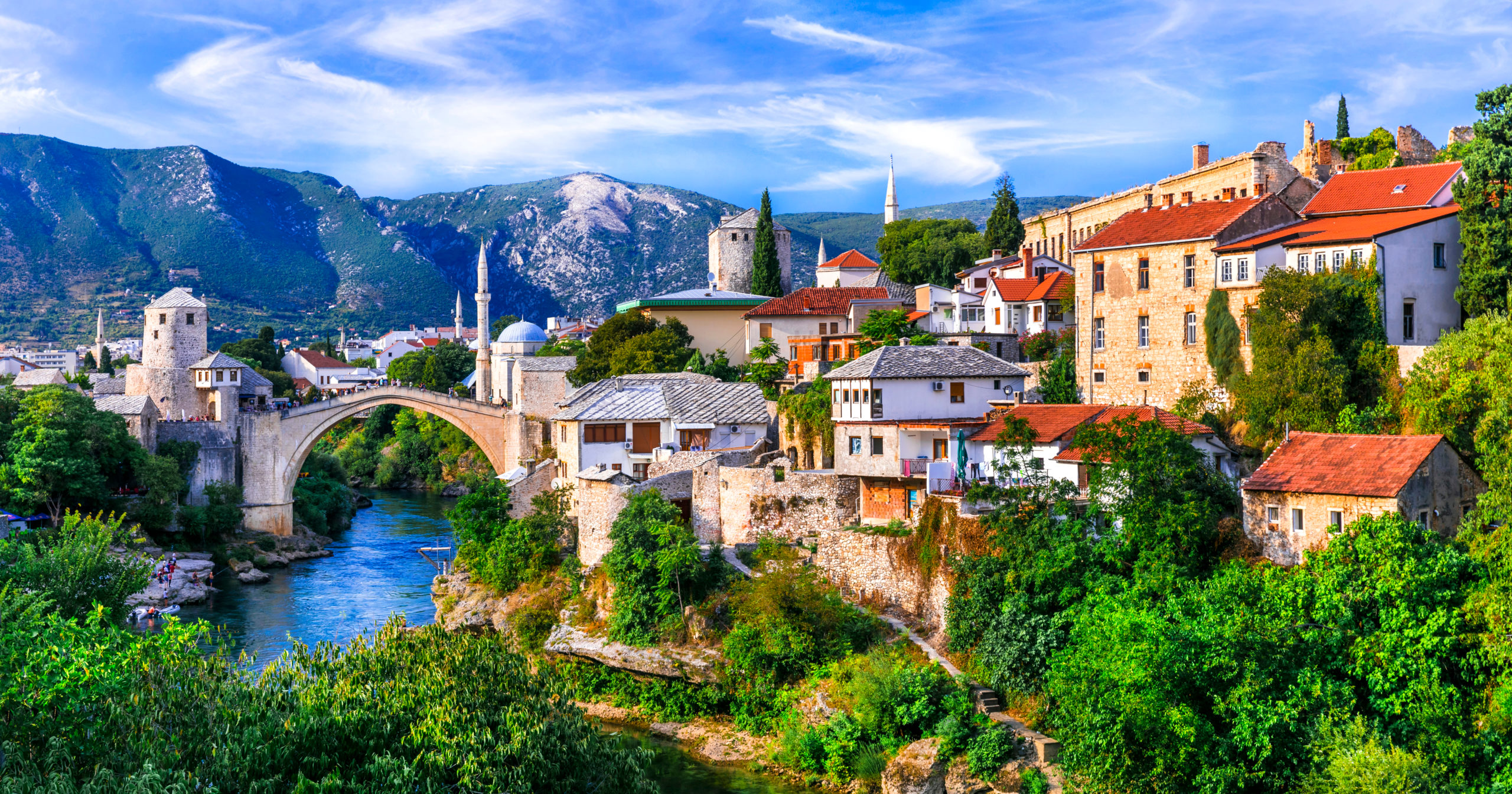
Photo: Shutterstock.com
Montenegro
Montenegro’s „2028 Ambition“: EU Membership Goal Declared „Truly Within Reach
As part of the Balkan tour, European Commission President Ursula von der Leyen visited Montenegro on October 10, where she emphasised the country’s progress toward European integration. During her visit, she highlighted that “the goal of Montenegro’s accession to the European Union is truly within reach,” acknowledging the government’s ongoing reform efforts and the country’s consistent commitment to EU values.
Montenegro has shown a strong willingness to proceed with EU accession talks and foster advancement in reforms. Prime Minister Milojko Spajić stated that the country is “strongly committed to the path to the EU”, demonstrating its future in a united Europe. Spajić has presented an ambitious goal of becoming “the 28th EU member state by 2028”. Von der Leyen acknowledged this goal, claiming that it is achievable as long as Montenegro “stays united and focused”.
Since von der Leyen’s last visit, Montenegro has closed four negotiating chapters in the accession talks, bringing it closer to the Union. While making fast progress, the country also faces immediate demands regarding rule-of-law reforms. Montenegro was the first country to undergo stricter EU accession demands, where the rule-of-law chapters are opened first and remain open until the very end. Von der Leyen emphasised the need for reforms in the domain of the rule of law and transparency in public procurement, while stressing the importance of completing vacant positions in the Constitutional Court by appointing four new judges. Discussions with President Milatović also focused on stronger institutions and fighting corruption.
Recently, the European Commission announced the release of funding for Montenegro as a part of the EU growth plan for the Western Balkans. This decision acknowledges the significant reforms that the country has undertaken to align with EU standards. Since the start of the growth plan, Montenegro has received over 18 million EUR, and if the country continues to implement reforms, it could access over 380 million EUR
Sources:
- European Western Balkans, “European Commission releases funds for Albania, Montenegro and North Macedonia”, https://europeanwesternbalkans.com/2025/10/10/test-of-kurtis-support-amid-institutional-crisis/
- European Western Balkans, “EU membership “within reach” for Montenegro, BiH to implement reforms”, https://europeanwesternbalkans.com/2025/10/14/eu-membership-within-reach-for-montenegro-bih-to-implement-reforms/
- JOVANA MAROVIĆ, European Western Balkans, “Who’s afraid of Montenegro in the EU?”, https://europeanwesternbalkans.com/2025/10/13/whos-afraid-of-montenegro-in-the-eu/
- PABLO RASMUSSEN, Euractiv, “Beyond participation trophies: The EU’s credibility crisis in the Western Balkans”, https://www.euractiv.com/opinion/beyond-participation-trophies-the-eus-credibility-crisis-in-the-western-balkans/
Kosovo
Tensions Persist in Northern Kosovo as New Local Authorities Face Identity and Governance Challenges
Following the recent local elections in northern Kosovo, which were held on October 12, 2025, questions have emerged over which decisions made by previous administrations could be reversed once Serb representatives resume participation in local institutions.
Some of the most sensitive disputes concern issues of identity — including street names, municipal symbols, and the transfer of municipal land to central authorities in Pristina. Analysts note that many local powers have already been shifted to the central government, raising doubts about how much real autonomy the new administrations will have.
In North Mitrovica, these tensions are particularly visible. The newly elected Serbian-led administration has announced plans to revoke decisions made under Albanian mayors, accusing them of acting against the interests of the local Serb population. The outgoing Albanian mayor, Erden Atiq, recently laid the foundation stone for a new school alongside ministers from Pristina — a move the Serb List condemned as illegal, claiming the land’s purpose had been changed without authorisation. Similar disputes have surrounded street renamings, the removal of “North Mitrovica” signs, and the construction of police facilities. The Serb List has vowed to annul all such decisions, arguing they undermine the rights and identity of the Serb community.
At the national level, debates continue over Kosovo’s international status and recognition. Acting Foreign Minister Donika Gërvalla claimed that the EU’s punitive measures against Kosovo were introduced under former EU High Representative Josep Borrell and former Special Envoy Miroslav Lajčák. She stressed that Kosovo’s ongoing diplomatic recognitions, now reportedly reaching 120 countries, are the result of collective efforts with partner and friendly states. Gërvalla also accused Borrell and Lajčák of bearing responsibility for the sanctions imposed after the injuries of KFOR soldiers in northern Kosovo.
While Gërvalla criticised Brussels’ approach, Albanian Prime Minister Edi Rama emphasised that Serbia’s non-recognition of Kosovo remains a core regional challenge. He argued that the Western Balkans must choose between remaining divided — “fueling tensions and harming their small economies” — or working together through cooperation and dialogue. Rama pointed out that Serbia’s stance toward Kosovo stands in direct contrast to Albania’s, underscoring the continuing political divide in the region, which is also evidenced by the fact that Serbia buried a general convicted of Kosovo war crimes against Kosovo Albanians with honours.
Sources:
- Kosovo Online/Klan Kosova, “Gervalla: Sanctions against Kosovo were imposed by Borrell and Lajcak,” https://www.kosovo-online.com/en/news/politics/gervalla-sanctions-against-kosovo-were-imposed-borrell-and-lajcak-30-10-2025
- Petar Rosic, Kosovo Online, “New local authorities and old decisions: What can the Serbs in the north change, and what will remain under Pristina’s control?,”
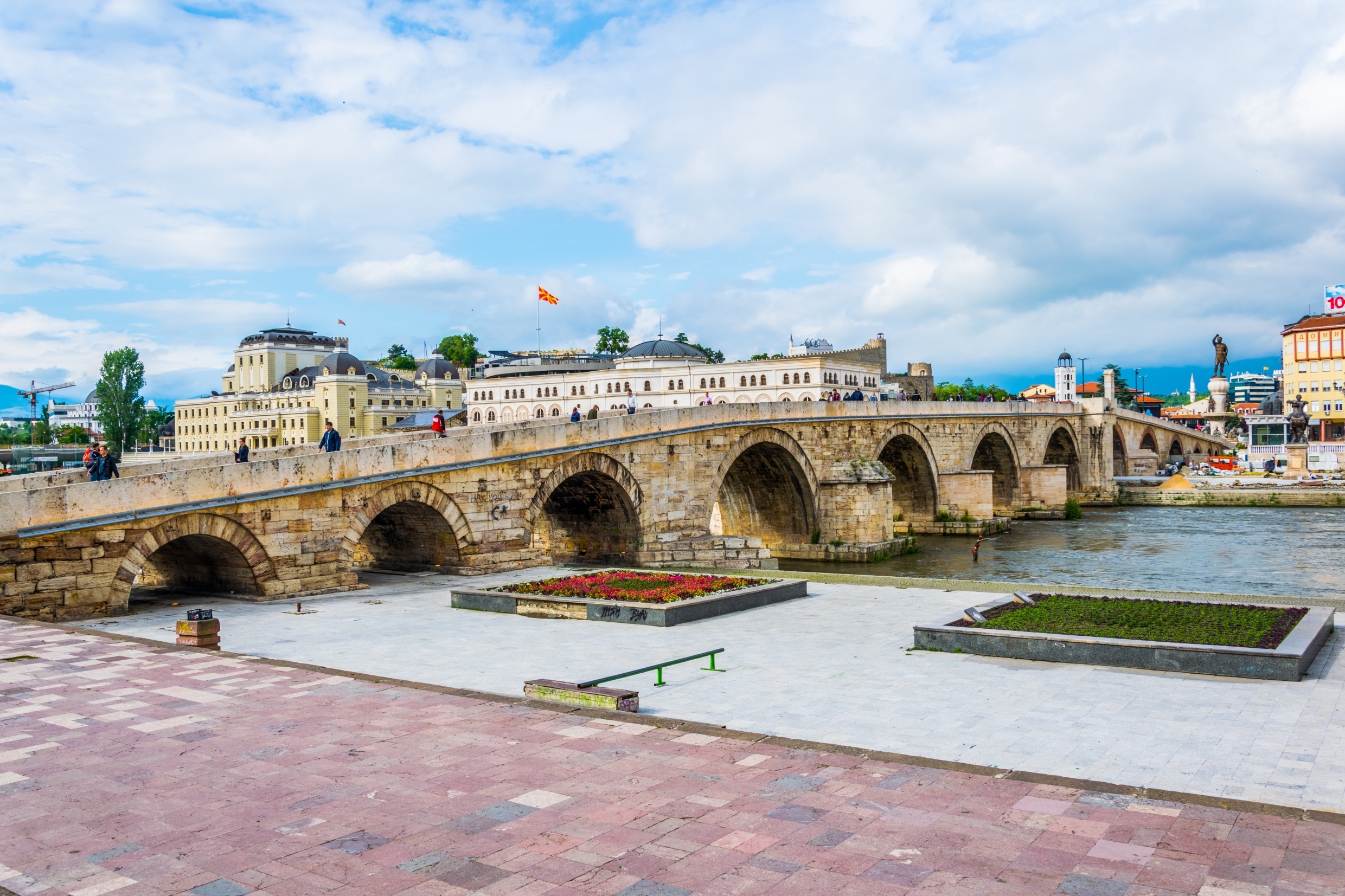
Photo: Shutterstock.com
Serbia
Shooting near the parliament in central Belgrade
On Wednesday, October 22, a shooting occurred in the pro-government tent camp known as “Caciland,” established near the Serbian Parliament in Belgrade in March 2025 to counter mass protests against President Aleksandar Vucic’s administration. The President described this assault as a terrorist act.
According to the Higher Prosecutor´s Office, the perpetrator was arrested shortly after the attack. Following the shooting, the tent caught fire, which officials also attributed to the same suspect. Initially identified only by the initials V.A., and his year of birth, the man reportedly pulled out an unauthorised firearm after a verbal dispute over political views. He fired several shots – one struck a person in the thigh, whereas another hit a nearby gas cylinder, triggering an explosion that ignited the tent.
The man was taken into custody for 48 hours on suspicion of attempted murder, illegal possession of a firearm arm and trafficking of weapons and explosives, as well as endangering public safety. Prime Minister Djuro Macut stated he was “deeply concerned about the serious and politically motivated incident”.
At the press conference held soon after, President Vucic publicly disclosed the attacker´s full name, date of birth and employment history. The President also drew attention to the fact that this kind of act could happen anytime, anywhere, mentioning Uzice, Valjveo, Novi Sad and Caciland, and called the incident “a matter of time”. The President suggested a connection between the attack and the year-long wave of protests sparked by the Novi Sad railway station tragedy on November 1, 2024, when the station´s concrete canopy collapsed, killing 16 people.
During the conference, police videos showed the attacker lying on the ground, expressing suicidal thoughts and anger over the city centre being occupied by tents of the ruling Serbian Progressive Party.
On October 22 2025, the day of the attack in Caciland, the European Parliament passed a resolution calling for an open investigation into the Novi Sad tragedy and condemning political polarisation and state repression in Serbia.
Sources:
- Katarina Baletic, 2025, Balkan Insight, One Injured in Shooting at Serbian Rulling Party Camp, https://balkaninsight.com/2025/10/22/one-injured-in-shooting-at-serbian-ruling-party-camp/
- Mallory Moench, 2024, BBC, Fourteen dead in Serbia railway station canopy collapse, https://www.bbc.com/news/articles/c9wrp7g05xro
North Macedonia
The ruling party in North Macedonia celebrates a landslide victory in local elections
On October 19, the North Macedonian ruling party VMRO-DPMNE achieved a landslide victory in the first round of the local elections. The winner of the previous parliamentary and presidential elections is now about to secure more than 30 municipalities after obtaining a majority of the votes. In total, VMRO-DPMNE came out first in 53 out of 81 municipalities, including the capital Skopje.
On the other hand, the opposition Social Democrats (SDSM) won only in eight mostly smaller towns and rural areas. They even faced a crushing defeat in Strumica, their usual stronghold. The leader of SDSM, Venko Filipce, admitted that the results were not what they had hoped for, but at the same time, he added that they were not bad. Other political parties or independent candidates secured leads in only five municipalities.
Regarding the Albanian-majority municipalities, the competition was much more nail-biting. The Albanian party VLEN won a total of five municipalities, similar to its political rival Democratic Union for Integration (DUI). However, VLEN had more reason to celebrate as it came first in four more Albanian-dominated municipalities, while the DUI had none.
The election process in North Macedonia was under the supervision of international observers from the OSCE, the Council of Europe and the European Parliament. In their shared statement, they agreed upon the overall fairness and democratic running of elections. But observers also pointed to numerous areas in need of reform, such as campaign financing or more equitable campaign opportunities in the media for all candidates. Many current issues have been a part of previous recommendations from past elections.
In the municipalities where no candidate received more than half of the votes, the second round was scheduled for November 2.
Sources:
- Sinisa Jakov Marusic, The Balkan Insight, “North Macedonia Ruling Party Celebrates Triumph in Local Elections“, https://balkaninsight.com/2025/10/20/north-macedonia-ruling-party-celebrates-triumph-in-local-elections/
- Sinisa Jakov Marusic, The Balkan Insight, “North Macedonia’s Ruling Party Eyes Landslide Win in Local Elections“, https://balkaninsight.com/2025/10/16/north-macedonias-ruling-party-eyes-landslide-win-in-local-elections/
- Katya Andrusz, OSCE, “North Macedonia’s local elections were competitive but adversely affected by legal shortcomings and political polarization: international observers“, https://www.osce.org/odihr/elections/599912
Contact us