

Strategic Analysis Caucasus Brief
Summer review of July & August 2025
Tomáš Baranec
Armenia
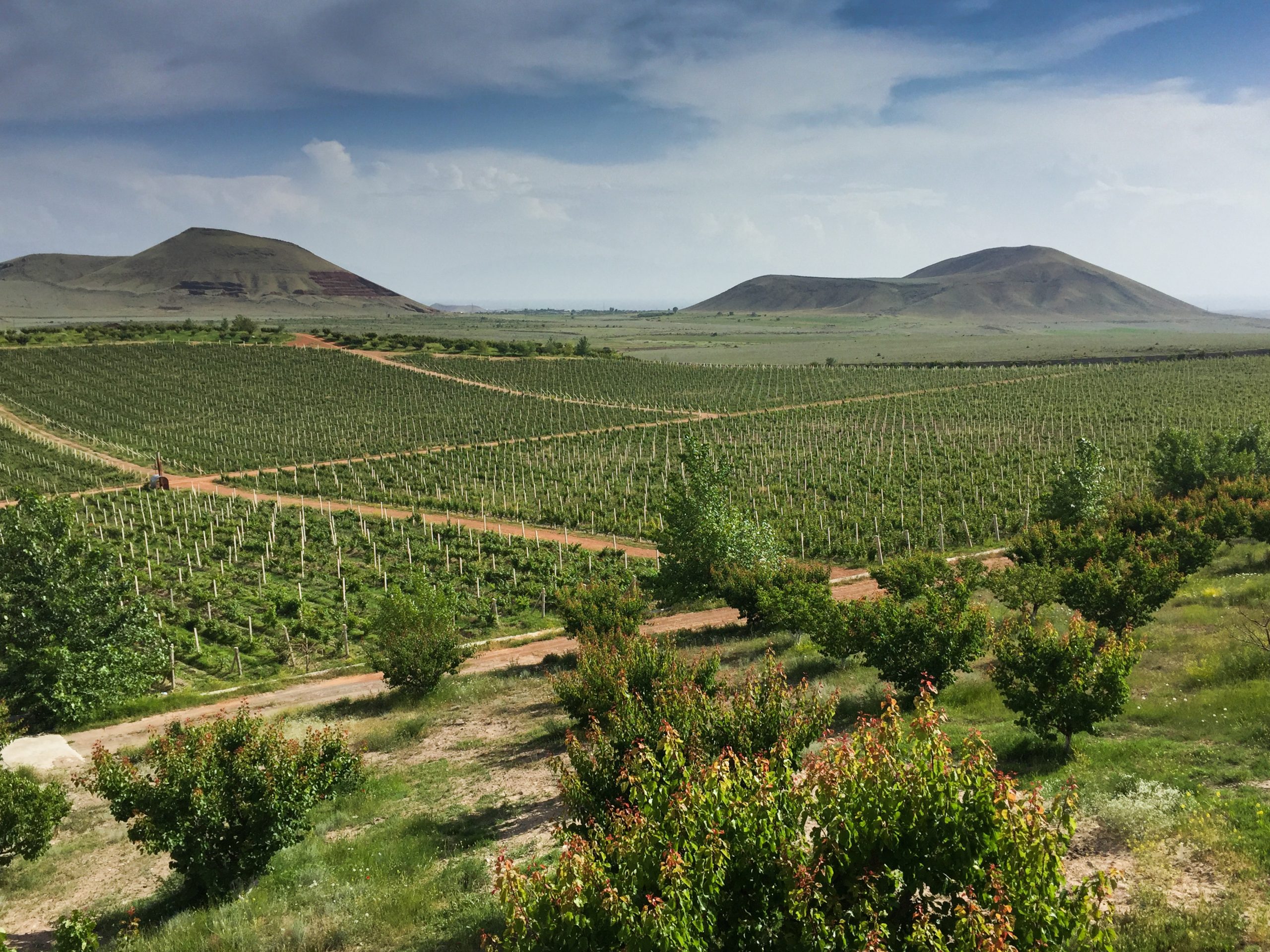
Vineyards, Aragatsotn province, Armenia. Photo: Elena Diego/ Shutterstock.com
The dispute between the State and Karpetyan continues
On August 11, the lawyers of detained Russian–Armenian tycoon Samvel Karapetyan announced that the Armenian Court of Criminal Appeals decided that Karapetyan’s arrest “was unlawful”. In turn, Armenian authorities vowed to appeal the decision. Karapetyan’s lawyer, Lianna Gasparyan, noted in her Facebook post that with the court’s verdict considering Karapetyan’s arrest “unlawful”, confirmed the tycoon was “illegally held in detention” for over nine hours on June 18. “Despite this, Samvel Karapetyan has remained in detention for 53 days now. His detention has not been lifted as of this moment, and most likely, under the current circumstances, a motion to extend it will be submitted”, Karapetyan’s legal team wrote in a separate Facebook post. The lawyers further noted that the Court of Criminal Appeals previously ruled that the authorities’ raid of his house was unlawful as well.
In an interview with state-run media Armenpress, the Armenian authorities dismissed Karapetyan’s lawyers’ claim that he is being illegally detained. Armenpress quoted the Prosecutor General’s Office as saying that Karapetyan was released following his initial arrest on June 18 and was later detained “on a different basis, which they claimed was recognised as lawful, including through the outcome of the subsequent appeal”. However, the authorities did not elaborate on the details of the case.
On August 15, Karapetyan’s detention was extended by two months. Karapetyan’s lawyer, Aram Vardevanyan, noted that the court recognised reasonable suspicion only for the first charge, related to alleged calls for a violent change of power, while dismissing the remaining charges—including money laundering, tax evasion, and customs duty evasion—as lacking sufficient grounds.
Meanwhile, the Armenian government has adopted a decision to allocate 3.25 million USD to the US law firm Arnold & Porter to represent Armenia at the Stockholm Arbitration Court in its legal battle against Karapetyan over the Electric Networks of Armenia (ENA). The Armenian parliament, on July 3, by a vote of 65-27, approved a government-backed bill to nationalise ENA.
Karapetyan, owner of the Tashir Group, was taken into custody on June 18 for a two-month period following searches at his Yerevan residence. He was initially charged with making public calls to seize power, and later faced multiple additional charges, including economic crimes such as money laundering. Armenia’s monopoly power grid, ENA, which Karapetyan owns, has been announced for nationalisation, with arbitration proceedings currently ongoing. On July 27, Tashir Group Vice President Narek Karapetyan claimed that Samvel Karapetyan will personally lead the new political force currently being formed under his name.
Sources:
- BARSEGHYAN Arshalyus, OC Media, “Armenian court rules Karapetyan’s arrest unlawful”, https://oc-media.org/armenian-court-rules-karapetyans-arrest-unlawful/
- Civilnet.org, „Prosecutors, appeals court clash over ruling on Samvel Karapetyan’s arrest”, https://www.civilnet.am/en/news/968618/prosecutors-appeals-court-clash-over-ruling-on-samvel-karapetyans-arrest/
- Civilnet.org, “Samvel Karapetyan to lead new political force, says nephew”, https://www.civilnet.am/en/news/965694/samvel-karapetyan-to-lead-new-political-force-says-nephew/
- Caucasus Watch, „Karapetyan Detention Extended as Legal Disputes and Political Interference Claims Intensify”, https://caucasuswatch.de/en/news/karapetyan-detention-extended-as-legal-disputes-and-political-interference-claims-intensify.html
- GHAZARYAN Armen, Hetq.am, „Armenia to Pay U.S. Law Firm $3.25 Million in Electricity Grid Arbitration Case”, https://hetq.am/en/article/176328
Pashinyan and Aliyev sign groundbreaking agreement in Washington
On August 8, Armenian Prime Minister Nikol Pashinyan and Azerbaijani President Ilham Aliyev signed a deal to create a so-called “Trump’s Route for International Peace and Prosperity” (TRIPP) linking Azerbaijan to its exclave Nakhchivan during upcoming talks in Washington. Aliyev and Pashinyan also initialled the comprehensive peace deal agreed by the two sides in March. Both leaders suggested that Trump should be nominated for a Nobel Peace Prize for his role in negotiating the deal, with Aliyev quipping that he hoped they would be invited to the ceremony.
None of the three leaders elaborated on how the route would function or how it would be overseen. “Armenia is also creating an exclusive partnership with the US to develop this corridor, which could extend to up to 99 years”, Trump said, adding it could be renewed. “We anticipate significant infrastructure development by American companies, they are very anxious to get in, they are gonna spend a lot of money”, Trump said. However, Trump and Pashinyan both stressed that the route would not affect Armenia’s sovereignty — a demand frequently echoed by Armenian officials, including Pashinyan, when discussing the nature of any potential route.
Armenian Prime Minister later clarified that the Armenia–US joint company formed under the TRIPP will manage the business operations of the new transit corridor, rather than exercise control over it. Speaking to reporters, he stressed that the company’s mandate is limited strictly to operational and commercial management. “The Armenia–United States company will not control that road but manage the road, meaning it will carry out the business management,” Pashinyan said.
He emphasised that the project embodies the principle of reciprocity enshrined in the Washington Declaration. “We’ve never said that we are going to obstruct the connection between the main part of Azerbaijan and the Nakhchivan Autonomous Republic. Azerbaijan’s benefit of having a connection, and Armenia’s benefit of intra-state and international—toward third countries—with reciprocal advantages are highlighted in the principles of the Washington declaration,” he added.
On August 15, Alexey Overchuk, Deputy Prime Minister of the Russian Federation, stated that Russia supports Armenia regarding the “Trump’s route” if it aligns with Armenia’s interests. Overchuk emphasised that Armenia is a strategic ally and that Russia would back any initiative considered beneficial by Yerevan. “We are considering this issue. Armenia is our strategic ally. If Armenia believes that something is good for them, then, of course, we support it,” he stated, adding that Russia supports peace processes in the South Caucasus that align with its national interests.
Sources:
- OC Media, “Aliyev, Pashinyan, and Trump agree on ‘Trump Route’ through Armenia to Nakhchivan”, https://oc-media.org/aliyev-pashinyan-and-trump-agree-trump-route-through-armenia-to-nakhchivan/
- Caucasus Watch, “Russia Supports Armenia on Trump Route While Coordinating with Azerbaijan to Unblock South Caucasus Transport”, https://caucasuswatch.de/en/news/russia-supports-armenia-on-trump-route-while-coordinating-with-azerbaijan-to-unblock-south-caucasus-transport.html
- Caucasus Watch, “Armenian PM Clarifies TRIPP Mandate, Addresses Constitutional Amendment Scenarios”, https://caucasuswatch.de/en/news/armenian-pm-clarifies-tripp-mandate-addresses-constitutional-amendment-scenarios.html
Armenian Prime Minister forced to publicly apologise amid growing conflict with church
World-renowned lawyer and international human rights advocate Robert Amsterdam, who is a close associate of the US President Donald Trump, arrived in Armenia on an urgent visit on August 11. Speaking with reporters upon arrival in Yerevan, Amsterdam noted that his primary mission is the protection of the church and Christians, who, in his opinion, are illegally deprived of their freedom.
According to him, the church plays a vital role in Armenia, not only in terms of religion, language, and people practising Christianity, but also beyond its borders. As News.am noted, the visit by a first-class international lawyer on a political matter to Armenia is unusual and is linked to several high-profile cases in the country: the case of the archbishops, the pressure against the Armenian Apostolic Church, and the detention of Russian-Armenian oligarch Samvel Karapetyan. Robert Amsterdam is renowned for representing a range of public and political figures and activists in several countries.
Meanwhile, Armenia’s Anti-Corruption Committee (ACC) has found Prime Minister Nikol Pashinyan in breach of ethics after reviewing public complaints that he used the equivalent of the F-word on social media and an opposition claim that he called a political opponent a “scumbag” during a parliamentary debate.
Pashinyan resorted to profanity in late May at the start of his controversial campaign aimed at deposing the church’s top clergy and Catholicos Garegin II in particular. “Monsignor, keep banging your uncle’s wife. What’s your problem with me?” he told an unnamed cleric in a social media post that sparked an uproar from opposition leaders, prominent public figures and many ordinary citizens.
The Committee found that, by using the word in his social media post, the prime minister “violated the principles of decency and respect; he must realise the special influence his words may have on the culture of public debate and the reputation of others.” Under Armenian legislation, the prime minister must provide “clarifications” on the government website regarding the breaches found by the ACC within three days after the publication of the findings.
Two days after being censured by a state ethics body, Pashinyan apologised for using offensive language to attack an opposition leader and a senior clergyman of the Armenian Apostolic Church. “Although I don’t quite agree with some of the assessments in the decisions [made by the Commission on the Prevention of Corruption,] I apologise to all of you,” Pashinyan wrote on Facebook. The Prime Minister made clear at the same time that while he regrets uttering those two words, he remains committed to “the political, spiritual, and moral principles associated with them.”
Sources:
- News.am, “Robert Amsterdam, famous lawyer from Trump’s circle, arrives in Armenia on urgent visit”, https://news.am/eng/news/898723.html
- BADALIAN Susan, Azatutyun.am, “Pashinian Found In Breach Of Ethics Over ‘Indecent’ Language”, https://www.azatutyun.am/a/33504285.html
- Azatutyun.am, “Pashinian ‘Sorry’ For Offensive Remarks”, https://www.azatutyun.am/a/33506359.html
Actual situation of Karabakh Armenians
Armenian Prime Minister Nikol Pashinyan said on August 19 that discussions on the return of Armenian and Azerbaijani refugees are dangerous and destructive for peace. According to Pashinyan, bilateral attempts to discuss these topics will not benefit the refugees themselves but will become a new source of tension between the states. The PM added that he has a shared understanding with the official Baku. “My perception is that all those people who disagree with this strategy, willy-nilly, find themselves in the logic of reviving the conflict. Many conflicts, including the Karabakh conflict, began with the raising of seemingly innocent and simple humanitarian and cultural issues, but we remember and, unfortunately, have all experienced firsthand what they ultimately turned into. Our vision of the future of our compatriots displaced from Karabakh is as follows: with our and the international community’s support, they should settle in the Republic of Armenia and live, create, and accomplish here as full citizens of the Republic of Armenia,” Pashinyan said.
Meanwhile, on August 22, the de facto Nagorno-Karabakh’s exiled leadership has appealed to countries making up the Organisation for Security and Cooperation to block Armenia’s and Azerbaijan’s joint efforts to disband its Minsk Group, formed in 1992 to deal with the Armenian-Azerbaijani conflict. It said the dissolution of the group would legitimise the “ethnic cleansing carried out by Azerbaijan in Nagorno-Karabakh” during the September 2023 offensive that restored Baku’s full control over the region and forced its entire population to flee to Armenia.
On July 31, Russia launched a “Russia Is With You” project under the auspices of Rossotrudnichestvo to provide humanitarian aid for refugees from Nagorno-Karabakh currently residing in Armenia. Approximately 140 tons of food and personal hygiene items will be distributed to thousands of Nagorno-Karabakh refugees. As the OC Media reported, the aid comes as Armenia and Russia continue to have disagreements regarding several issues; however, the relations have shown signs of improvement in recent months, marked by high-level contacts and visits from both sides. Previously, a freefall started as Armenia accused Russia and its Collective Security Treaty Organisation (CSTO) of inaction in the face of Azerbaijani attacks on Armenia in 2021 and 2022.
Sources:
- Arka.am, “Pashinyan says discussions on return of Armenian and Azerbaijani refugees are dangerous and destructive for peace”, https://arka.am/en/news/politics/pashinyan-says-discussions-on-return-of-armenian-and-azerbaijani-refugees-are-dangerous-and-destruct/
- SARIBEKIAN Gayane, Azatutyun.am, “Karabakh Armenians Plead Against OSCE Minsk Group’s Dissolution”, https://www.azatutyun.am/a/33510561.html
- BARSEGHYAN Arshaluys, OC Media, “Russia sends 140 tons of humanitarian aid to Nagorno-Karabakh Armenian refugees”, https://oc-media.org/russia-sends-140-tons-of-humanitarian-aid-to-nagorno-karabakh-armenian-refugees/
Armenia records steep decline in exports, key markets still dominant
Russia, the United Arab Emirates (UAE), and China remained Armenia’s primary export markets in the first half of 2025, even as overall exports saw a significant decline compared to last year, reported Caucasus Watch. According to official data released by the Statistical Committee, Armenia exported goods worth over 3.7 billion USD from January to June 2025, marking a 52.8% year-on-year drop.
Exports to Eurasian Economic Union (EAEU) member states totalled more than 1.4 billion USD, down by 5.2%. In contrast, exports to European Union countries showed slight growth of 1.8%, reaching 286.7 million USD. Russia remained Armenia’s largest export destination, with over 1.3 billion USD worth of goods exported — a 6.2% decrease from the same period last year. The UAE ranked second, with nearly 1.1 billion USD in exports, though this represents a sharp 70.3% decline. China came in third with over 288 million USD in Armenian exports, a drop of 59.6%.
Some smaller markets, however, experienced notable growth. Exports to Brazil surged more than 37 times, amounting to 2.7 million USD, while exports to Japan rose 2.7 times to 10.2 million USD. Austria also saw a significant increase, with Armenian exports reaching 5.4 million USD — a 2.6-fold rise.
In terms of product composition, precious and semi-precious stones, precious metals, and related items continued to dominate exports, accounting for nearly 1.3 billion USD, although this category registered a 77% decline. Machinery and equipment followed with 551 million USD, while finished food products ranked third with 550 million USD, showing a 31.9% increase compared to last year.
Source:
- Caucasus Watch, „Armenia Records Steep Decline in Exports, Key Markets Still Dominant”, https://caucasuswatch.de/en/news/armenia-records-steep-decline-in-exports-key-markets-still-dominant.html

Photo: Shutterstock.com
The Armenian government ordered to halt the seizure of the electric utility
On July 3, Armenia’s National Assembly adopted a legislative package granting the government and energy regulator sweeping new powers, effectively clearing the way for the nationalisation of the country’s sole electricity distributor, Electricity Networks of Armenia (ENA). The bill passed in its second reading with the backing of the ruling Civil Contract party and was opposed by two opposition factions.
The legislation amends Armenia’s laws on energy and regulatory oversight to introduce so-called “preventive measures”, allowing the head of the Public Services Regulatory Commission (PSRC) to initiate proceedings against licensed operators based on past violations—even those committed prior to the law’s enactment. In practical terms, the law empowers the regulator to demand management changes, restructure corporate governance, appoint a temporary administrator, or effectively force the company into state hands under the justification of protecting consumers or energy system reliability.
Critics argue that the changes were designed to facilitate the nationalisation of ENA, which Russian-Armenian businessman Samvel Karapetyan currently owns through a Cyprus-registered holding company. Prime Minister Nikol Pashinyan had signalled the move in mid-June, shortly after Karapetyan publicly supported the Armenian Apostolic Church, amid tensions between the Church and the government. “Either ENA compensates the people for the damage it caused, or it will be nationalised,” Pashinyan declared on June 18. Analysts and business advocates have voiced alarm that the rushed adoption of the law will further erode investor confidence, already shaken by a wave of international arbitration cases Armenia is facing over previous government actions. These include disputes over the Amulsar gold mine, the North–South highway, and the Zangezur Copper-Molybdenum Combine, with combined claims potentially exceeding 1 billion USD.
In late July, Karapetyan won an urgent arbitration case against the Armenian government regarding the ENA. Karapetyan’s lawyers also noted that the decision of the Arbitration Institute of the Stockholm Chamber of Commerce (SCC Arbitration Institute) is subject to “mandatory execution” by the Armenian authorities. The arbitration concluded that it was necessary to apply urgent measures of protection, since the actions of the Republic of Armenia “raise serious doubts about the compliance of the Republic of Armenia with the Agreement on the Reciprocal Protection of Investments in force between Armenia and Cyprus”, the statement read.
Pashinian’s Office disputed this claim when it reacted to the ruling later in the day. A statement released by it said the government’s decision to appoint Romanos Petrosian, a senior member of the ruling Civil Contract party, as ENA’s “interim manager” is beyond the “scope” of the ruling and will not be revoked. The statement did not comment on other aspects of the Arbitration Institute’s decision. It said vaguely that while the government respects the decision, “everyone is also obliged to be guided by the laws of the Republic of Armenia and international treaties that define the rules and procedures for the recognition and enforcement of arbitration awards.” Narek Karapetian responded by accusing the government of not complying with the ruling.
ENA is the largest of Karapetian’s Tashir Group companies in Armenia. The bulk of Karapetian’s business assets, estimated by Forbes magazine at 4 billion USD, are located in Russia, where the 59-year-old tycoon has lived since the early 1990s. Karapetian was initially prosecuted for allegedly calling for a violent overthrow of Pashinian’s government. He was also charged with tax evasion, fraud and money laundering after pledging to fight for regime change in Armenia and set up a new opposition group for that purpose. He denies all the accusations levelled against him.
Sources:
- CivilNet.am, „Armenian parliament approves law enabling nationalisation of electric grid”, https://www.civilnet.am/en/news/961355/armenian-parliament-approves-law-enabling-nationalization-of-electric-grid/
- BARSEGHYAN Arshalys, OC Media, “Russian–Armenian tycoon Karapetyan wins an arbitration case against Armenia”, https://oc-media.org/russian-armenian-tycoon-karapetyan-wins-an-arbitration-case-against-armenia/
- Azatutyun.am, “Armenian Government Ordered To Halt Seizure Of Electric Utility”, https://www.azatutyun.am/a/33481966.html
Yerevan considers banning Russian TV broadcasts
Armenian Speaker of Parliament Alen Simonyan stated on July 1 that authorities should seriously consider banning the broadcast of Russian television channels in Armenia. “We must very seriously discuss the suspension of the Russian television channel’s broadcast in the territory of Armenia,” he told reporters.
Simonyan stated that “some people” may be attempting to interfere in Armenian domestic affairs with funding from tycoon Samvel Karapetyan. “If there are channels that allow themselves to interfere in Armenia’s domestic affairs, perhaps we ought to respond likewise, by at least banning their entry into the homes of our society,” the Speaker said.
According to the OC Media, Simonyan made his statements in response to recent commentary featured on Russian state broadcasters regarding the ongoing dispute between Prime Minister Nikol Pashinyan and the Armenian Apostolic Church. Earlier, Russian Foreign Minister Sergei Lavrov called the dispute an internal affair of Armenia, but added that the “attacks on the canonical thousand-year-old Armenian Apostolic Church are a matter of grave concern”.
In response, Armenian Foreign Minister Ararat Mirzoyan urged Lavrov “to refrain from interfering in Armenia’s domestic affairs and internal politics”. Separately, Margarita Simonyan, the editor-in-chief of Russian state-run media outlet RT and one of the country’s most well-known propagandists, called Pashinyan the “antichrist’s anus”.
In mid-June, Kremlin propagandist Vladimir Solovyov called the Armenian government “corrupt, vile, worthless” and accused it of betraying “the history of Armenia”. He also called Pashinyan “Turkol” — a portmanteau of his first name, Nikol, and Turk — as an insult. The statements were made on his TV programme, aired on Russia 1.
Sources:
- ArmenPress, „Banning Russian TV broadcast must be seriously considered, says Armenian Speaker of Parliament”, https://armenpress.am/en/article/1223781
- KUENNING Alexandra, OC Media, “Armenian Parliamentary Speaker Simonyan suggests possible ban of Russian TV broadcasts”,https://oc-media.org/armenian-parliamentary-speaker-simonyan-suggests-possible-ban-of-russian-tv-broadcasts/

Photo: Shutterstock.com
Yerevan rejected the US lease over the road in Syunik over sovereignty concerns
On July 1, analyst Olesya Vartanyan published a piece in the Carnegie Russia-Eurasia Centre suggesting that the US had reportedly proposed an alternate solution to the so-called Zangezur corridor. “The administration [of US President Donald Trump] — eager to showcase its global conflict resolution efforts — has reportedly floated a new plan like the EU model but grounded in American strategic logic: US business participation as a stabilising force, akin to a recent deal on rare metals in Ukraine”, Vartanyan wrote.
The EU had previously proposed a similar solution, with independent foreign companies managing the route. In response to a query from Armenpress regarding this report, Armenian Foreign Ministry spokesperson Ani Badalyan stated that: “Various international partners regularly present their ideas on the normalisation of Armenia–Azerbaijan relations, including the unblocking of transport infrastructure between the two countries”.
Later on July 15, Thomas Barrack, the US ambassador to Turkey, sparked controversy with remarks made during a press briefing in New York, suggesting that Washington was considering taking control of a strategic road connecting mainland Azerbaijan to its Nakhichevan exclave under a 100-year lease as part of efforts to facilitate normalisation between Armenia and Azerbaijan.
During his speech, Barrack used language that many in Armenia found offensive, saying that “tribal points of view” are in the way of a successful settlement. “Azerbaijan and Armenia have been arguing over 32 km of road for over a decade. So, what happens if America comes and says: ‘OK, we’ll take it over. Give us the 32 km road on a hundred-year lease. And you can all share it,’” Barrack said, adding, “But these tribal points of view do not fade. E pluribus unum – what does that mean? It means ‘give up the masses for one’. It exists in America – it does not exist there. [There] it’s individual, family, tribe, and then the nation.” His comments drew immediate backlash in Armenia, where any concession of sovereign territory is considered a red line. While Barrack did not use the term “Zangezur corridor” — a phrase Yerevan rejects as irredentist — this marked the first on-record confirmation of the Trump administration’s reported plans to mediate the land dispute by leasing the route.
Armenian Prime Minister’s spokesperson Nazeli Baghdasaryan later dismissed the proposal. “Armenia has never discussed and is not discussing the transfer of control over its sovereign territory to any third party,” she told state news agency Armenpress. Shortly after, Pashinyan confirmed that Yerevan had received a US offer to unblock regional transit links through Armenia. Pashinyan noted that aside from the US offer, Armenia has received various proposals as well, underscoring that “any issue is discussed based on the principles of territorial integrity, sovereignty, and jurisdiction” of Armenia.
Armenia’s general position is that it is interested in and wants the transport infrastructure in the region to be unblocked, Pashinyan said. However, Pashinyan stressed that the outsourcing of such a route would not compromise Armenia’s sovereignty.
To unblock regional transit routes and links, Pashinyan suggested that Armenia was considering the establishment of a company which would attract investments for the development of infrastructure, which according to Pashinyan’s government proposed “Crossroads of Peace” project, includes not only roads and railways, but also the construction of pipelines, power transmission lines, and telecommunications cables, among other services. “It is an economy that must be managed, and an economy that must be created, which, according to our logic, should and can be the property of Armenia”, Pashinyan said. On June 24, Yerevan announced that it had rejected a US proposal to lease a land corridor as unacceptable.
Sources:
- VARTANYAN Olesya, Carnegie Russia-Eurasia Centre, “Why Armenia Is Seeking to Normalise Relations With Turkiye”, https://carnegieendowment.org/russia-eurasia/politika/2025/06/armenia-turkiye-rapprochement?lang=en&;center=russia-eurasia&ref=oc-media.org
- OSTILLER Nate, OC Media, “Armenia does not deny reports US proposed plan to connect Azerbaijan to Nakhchivan”, https://oc-media.org/armenia-does-not-deny-reports-us-proposed-plan-to-connect-azerbaijan-to-nakhchivan/
- Civilnet.org, „US envoy confirms plan to lease Armenian transit route amid peace efforts”, https://www.civilnet.am/en/news/963298/us-envoy-confirms-plan-to-lease-armenian-transit-route-amid-peace-efforts/
- BARSEGHYAN Arshalys, OC Media, “Pashinyan confirms Armenia received US proposal to unblock regional transit links”, https://oc-media.org/pashinyan-confirms-armenia-received-us-proposal-to-unblock-regional-transit-links/
- The Armenian Mirror-Spectator, “US Lease of Corridor For Azerbaijan ‘Unacceptable to Armenia’”, https://mirrorspectator.com/2025/07/31/us-lease-of-corridor-for-azerbaijan-unacceptable-to-armenia/
Armenian security forces engaged in foiling Holy Struggle’s alleged coup
On June 25, Armenian opposition activist and senior clergyman Archbishop Bagrat Galstanyan was detained as part of a sweeping crackdown on opposition figures. The arrests followed media reports of an alleged coup plot and searches at the homes of numerous opposition figures, including Igor Sargsyan, a member of the Supreme Body of the Armenian Revolutionary Federation, and town council members in Vagharshapat, home to the Mother See of the Armenian Apostolic Church.
The Investigative Committee said in a statement that “participants and leaders of the movement known as ‘Sacred Struggle’ planned to carry out terrorist acts and actions aimed at seizing power in the Republic of Armenia.” Two days later, Armenia’s National Security Service arrived at the Mother See of Holy Etchmiadzin to detain Archbishop Mikayel Ajapahian, the Primate of the Shirak Diocese. The outspoken Ajapahian rejected the accusations, describing what was happening as “absolutely illegal.” “I am not a threat to this country, the threat is sitting in the government,” Ajapahian said in Etchmiadzin in an apparent reference to Prime Minister Nikol Pashinian. “I have never hidden, and I am not going to hide now. I do not want to create the impression of hiding behind my brethren. They came after me, I will go,” he added. Catholicos of All Armenians Garegin II, the head of the Armenian Apostolic Church, was also on the site during the standoff with law-enforcement officers.
On July 4, Vahagn Chakhalyan, a leader of Armenia’s opposition “Will”, or “Kamq”, initiative and a former activist in Georgia’s predominantly ethnic Armenian-populated Samtskhe-Javakheti region, was detained in Armenia in connection with the same case. Georgia’s jailed ex-president Mikheil Saakashvili said on Facebook that Chakhalyan was an agent of Russian military intelligence and slammed the Georgian Dream government for its 2013 decision to release him from prison under an amnesty. “Chakhalyan was not doing Armenian work, neither in Georgia nor in Armenia. He was a GRU-recruited agent based in Akhalkalaki. Georgian Dream also served Russian interests by releasing him from prison,” Saakashvili wrote.
On July 4, the National Assembly (NA) of Armenia gave its consent, with a vote of 62 in favour, none against, to strip Artur Sargsyan, a member of the opposition “Armenia” Faction, of his parliamentary immunity and to launch public criminal prosecution against him. Earlier, the Prosecutor General demanded that the Parliament waive immunity for Artur Sargsyan to charge him with conspiracy to commit terrorism and seize power for participating in Holy Struggle’s alleged coup plot. At least 15 people were detained on charges of participating in the plot.
Sources:
- Civilnet.am, “Opposition activist, bishop Bagrat Galstanyan under arrest for alleged coup participation”, https://www.civilnet.am/en/news/959545/opposition-activist-bishop-bagrat-galstanyan-under-arrest-for-alleged-coup-participation/
- Civil.ge, “Georgia-Linked Activist Vahagn Chakhalyan Detained in Armenia”, https://civil.ge/archives/690623
- KAGHZVANTSIAN Satenik, ZARGARYAN Robert, KHULYAN Artak, Azatutyun.am, “Move To Arrest Another Armenian Archbishop Sparks Brawl As Church-State Standoff Escalates”, https://www.rferl.org/a/arrest-armenian-archbishop-church-state-standoff/33457137.htm
Azerbaijan
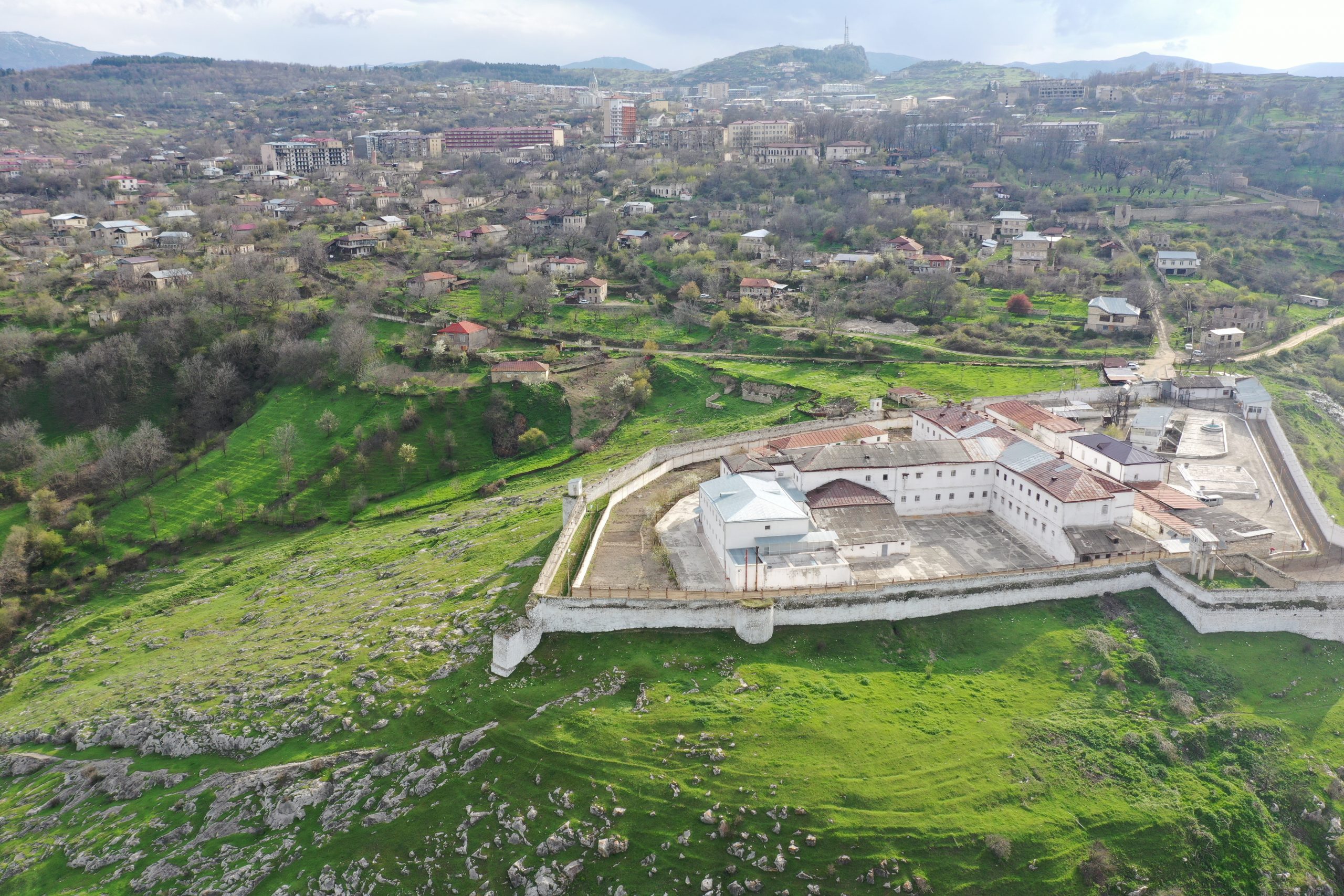
City of Shusha. Photo: Eva Mont/ Shutterstock.com
Development of relations with Russia in August 2025
Tensions between Azerbaijan and Russia escalated again in August 2025 following Russian military attacks on SOCAR’s energy infrastructure in Ukraine. Calls for the lifting of the arms embargo on Ukraine were heard from Baku, while calls for a “new special military operation” were heard from Moscow.
In early August, Russia conducted a series of strikes on Ukrainian energy infrastructure linked to Azerbaijan. During the attack overnight on August 8, Russian forces launched five Shahed drones at a SOCAR oil depot in Odesa Oblast, sparking a fire and damaging a diesel pipeline. Four SOCAR employees were seriously injured, according to news reports. Baku reacted by officially considering lifting its ban on supplying Ukraine with weapons from its arsenal.
Caliber.az, a pro-government outlet linked to the Ministry of Defence, said Russian forces had “systematically” struck Azerbaijani energy facilities in Ukraine in recent weeks, warning that such actions could trigger a policy reversal in Baku on weapons exports to Kyiv. In a video obtained by Turkiyegazetesi.com.tr, Russian State Duma Defence Committee member General Andrey Gurulyov openly threatened Azerbaijan with a “special military operation.” The footage, reportedly shared with other lawmakers, shows Gurulyov warning that halting imports from Azerbaijan would have little impact on Russia’s economy but could “change everything” for Baku.
Soon after Kremlin propagandist Vladimir Solovyov recently described the possible establishment of a NATO base on Azerbaijan’s Caspian coast as a “dangerous development.” He warned that such a move could prompt Moscow to launch another “special military operation” against Baku. “The current special operation may not be the last of our generation,” Solovyov said, reinforcing Gurulyov’s message that Russia is prepared for further military campaigns in the region.
Russian police have also arrested the head of the Azerbaijani diaspora in Yekaterinburg, Shahin Shikhlinski, as part of an investigation into the attempted murder of a police officer. Shikhlinski’s son, Mutvali, has also been arrested as part of the same investigation. An Azerbaijani activist in Russia told the Yekaterinburg-based news outlet E1.ru that Shahin Shikhlinski had been hiding in the Azerbaijani embassy in Moscow, but had agreed to surrender to authorities.
The charges stem from when Russian police previously apprehended Shahin Shikhlinski in June. During the fracas, Mutvali Shikhlinski allegedly backed his car into a police officer, causing him to hit his head on the asphalt. Shahin Shikhlinski was arrested at the time but then subsequently released.
On August 21, officers of the FSB detained Azerbaijani citizen Yadulla Ramiz oglu Rufullayev, allegedly recruited by the Security Service of Ukraine (SBU). The Russian security service claimed Rufullayev was trying to smuggle stolen documents pertaining to the Russian military-industrial complex out of the country.
Sources:
- EurAsia Daily, “The wanted Shykhlinski was detained when leaving the Azerbaijani embassy”,
https://eadaily.com/en/news/2025/08/02/the-wanted-shykhlinski-was-detained-when-leaving-the-azerbaijani-embassy - TASS, “FSB detains foreign national attempting to smuggle military-industrial complex documents”, https://tass.com/society/2005471
- GONCHROVA Olena, “The Kyiv Independent, Russian strikes on Azerbaijani energy sites in Ukraine may reportedly push Baku to arm Kyiv”, https://kyivindependent.com/russian-strikes-on-azerbaijani-energy-sites-in-ukraine-may-reportedly-push-baku-to-arm-kyiv/
- A. Turkey, “Russia-Azerbaijan Tensions Soar as Moscow Issues ‘Special Operation’ Threat”, https://www.paturkey.com/news/2025/russia-azerbaijan-tensions-soar-as-moscow-issues-special-operation-threat-22822/
Azerbaijan introduces new restrictions on NGOs and foreign media
On July 14, Azerbaijan introduced amendments to the Law on Non-Governmental Organisations (Public Associations and Funds) and the Law on Combating the Legalisation of Criminally Obtained Property and the Financing of Terrorism. The amendments restrict banking and other financial operations arising from contracts for the provision of services or execution of works funded by unregistered foreign financial sources. Additionally, providing services or undertaking work under unregistered contracts involving foreign financial sources, or receiving monetary or material assets in connection with such activities, will result in administrative liability, as per established procedures.
These new rules cut off key avenues for NGOs to receive and use foreign funds unless the source is officially registered and approved by the government. Failure to submit contracts for registration can result in fines of 1,500 to 2,500 AZN (755-1.256 EUR) for individuals, and 5,000 to 7,000 AZN (2.512-3.516 EUR) for legal entities. Providing services or receiving funds under unregistered contracts may result in fines of 2,500 to 5,000 AZN (1.256-2.512 EUR) for individuals and 8,000 to 15,000 AZN (4.019-7.536 EUR) for legal entities.
These measures are part of a broader trend of tightening government control over civil society and media in Azerbaijan — a trend that has accelerated in recent years. Notably, earlier legal changes, especially those introduced since 2014, have already made it significantly more difficult for NGOs, particularly those receiving foreign funding, to operate. Azerbaijani President Ilham Aliyev has approved legislation further restricting foreign funding of NGOs on July 31.
Sources:
- Free Voices Collective, “Azerbaijan Introduces New Restrictions on NGOs and Foreign Media”, https://freevoicescollective.org/azerbaijan-introduces-new-restrictions-on-ngos-and-foreign-media/
- FARHADOVA Aytan, OC Media, „Azerbaijan restricts banking operations related to foreign financial sources”, https://oc-media.org/azerbaijan-restricts-banking-operations-related-to-foreign-financial-sources/
Baku port director meets Chinese Ambassador to boost Middle Corridor trade
On August 15, Eldar Salakhov, the Director of Baku International Sea Trade Port LLC, met with Lu Mei, the Chinese Ambassador to Baku, to discuss expanding their bilateral partnership within the framework of the Middle Corridor, reported Caucasus Watch. According to the company, the Chinese delegation was provided with detailed information about the port’s infrastructure, recent achievements, and the volume of cargo transportation between Azerbaijan and China.
The discussions focused on strengthening cooperation and expanding opportunities within the Trans-Caspian International Transport Route (Middle Corridor). Salakhov emphasised the strategic role of the Baku port as a key transit hub of the Middle Corridor and underlined the importance of joint efforts to ensure more efficient and faster cargo flows from China to Europe. Ambassador Lu Mei spoke highly of the potential for Chinese companies to use the Middle Corridor and stressed the significance of maximising existing capacities to further develop trade and logistics ties.
Sources:
-
Caucasus Watch, “Baku Port Director Meets Chinese Ambassador to Boost Middle Corridor Trade”, https://caucasuswatch.de/en/news/baku-port-director-meets-chinese-ambassador-to-boost-middle-corridor-trade.html

Photo: Shutterstock.com
Azerbaijan warns rapid decline of Caspian Sea levels threatens ports
On August 26, Azerbaijan’s Deputy Minister of Ecology and Natural Resources Rauf Hajiyev voiced concern over the rapid decline of the Caspian Sea water level, which has a severe impact on port infrastructure and oil transportation, and poses a catastrophic risk to sturgeon and seal populations. Hajiyev noted that the level of the Caspian has fallen by almost one meter over the past five years, by 1.5 meters in the last decade, and by 2.5 meters in the past 30 years, local Media.az agency reported.
The impact has already been felt in Azerbaijan’s capital, where ships face increasing difficulty manoeuvring in Baku port. This is reducing cargo capacity and driving up logistics costs, Hajiyev said.
The reasons behind the decline remain contested. Russia attributes the trend to climate change, while Azerbaijan also points to dams built along the Volga River, which provides 80 per cent of the Caspian’s inflow. The two countries formed a joint working group earlier this year and are preparing a shared program to monitor and mitigate the crisis.
Source:
- Xinhua, “Azerbaijan concerned over rapid decline of Caspian Sea water level”, https://english.news.cn/europe/20250826/27b3d9c4b73c43839f4758255993cd20/c.html
Pashinyan and Aliyev held peace talks in Abu Dhabi
Armenian Prime Minister Nikol Pashinyan and Azerbaijani President Ilham Aliyev held direct peace talks in Abu Dhabi on July 10. Their meeting appeared to last around five hours, following which Azerbaijan and Armenia’s respective foreign ministries published identical statements, which did not offer many details as to what the delegations discussed. Both statements said that Armenia and Azerbaijan “confirmed that bilateral negotiations represent the most efficient format to address all issues concerning the normalisation process”.
Pashinyan and Aliyev also reportedly instructed their respective border delimitation state commissions to continue work on delineating the Armenia–Azerbaijan border. Azerbaijani pro-government media outlet APA reported that the meeting was held in a “very constructive atmosphere”, and that the two countries also discussed opening a corridor connecting Azerbaijan to its exclave of Nakhchivan through Armenia and initiating the peace agreement.
Russian state news agency TASS cited a source as saying that the meeting aimed at “resolving contradictions surrounding the peace treaty in order to sign it by the end of the year”, reported Reuters.
Source:
- Reuters, “Armenia and Azerbaijan hold substantive talks, no big breakthrough”, https://www.reuters.com/world/middle-east/armenia-azerbaijan-hold-substantive-talks-no-big-breakthrough-2025-07-10/
Georgia
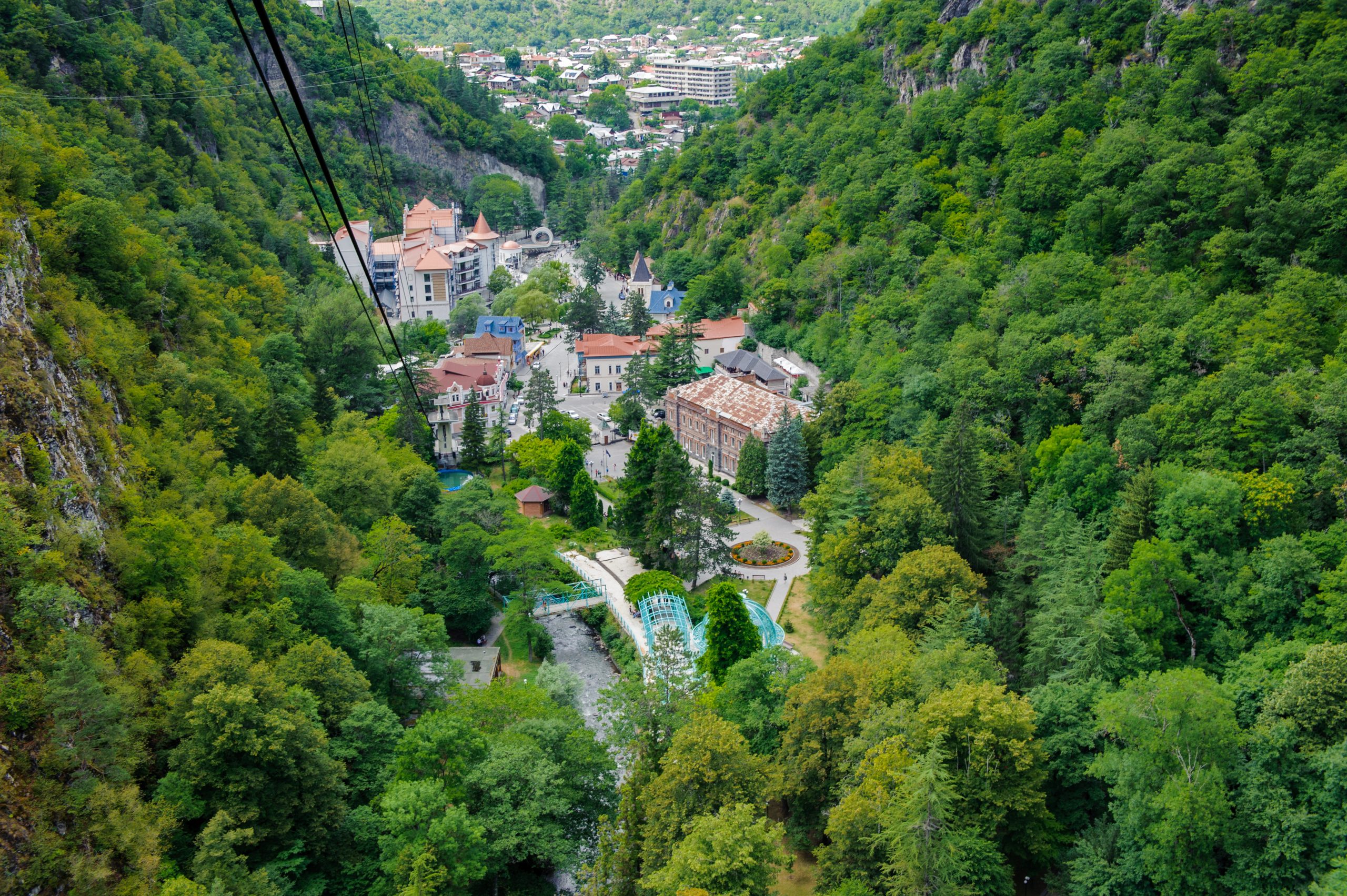
Borjomi, spa town in Georgia. Photo: Anton Ivanov/ Shutterstock.com
Georgian courts have issued several verdicts regarding anti-government protesters
In August 2025, Georgian courts sentenced four protesters to long prison terms and acquitted one. At the same time, Georgian authorities detained and charged two other participants in anti-government protests. On August 8, the Tbilisi City Court sentenced protesters Davit Lomidze and Temur Zasokhashvili to four and a half years each, accusing them of throwing Molotov cocktails at police. According to RFE/RL, the ministry claimed the Molotov cocktail damaged a water cannon used by police to disperse protesters. Both Zasokhashvili and Lomidze denied the charges.
On August 15, protester and musician Davit Khomeriki was sentenced to four years and six months in prison on charges of plotting an explosion. Prosecutors alleged that Khomeriki carried bottles with inflammable substances in his bag, preparing a Molotov cocktail attack. At the same time, the defence maintained his innocence and contested both the evidence and its sufficiency to support the charge of plotting a crime. “We are all facing a sad reality, where the truth is punished and justice is hard to find,” Khomeriki told the court during his closing remarks on August 15, according to the live blog by RFE/RL Georgian Service. “They are afraid of our unity, because the truth is on the people’s side.”
In August 2022, Protester Archil Museliantsi was sentenced to four years in prison after a court found him guilty of damaging property, marking the 14th jail verdict issued against demonstrators detained during pro-EU and anti-Georgian Dream protests since November 2024. Prosecutors claimed Museliantsi damaged the power source of a CCTV camera mounted on a pole outside parliament by setting fire to it, which would have made it impossible to identify protesters’ faces at the rally. “I know they will convict me, they will carry out this task,” Museliantsi wrote in a letter before the verdict was announced, according to RFE/RL’s live reporting. “As for my future imprisonment, it does not pain me, because on the other side stands the country and its future. Even if I am sentenced to six years, I am ready to serve this unjust punishment, because for me, the homeland is dignity.”
In the case of another detained protester, Dato Abramov, the Tbilisi City Court found him not guilty of a drug crime, and he was released from the courtroom. The decision was made by Judge Tamar Mchedlishvili, who said that law enforcement could have conducted a video recording or presented a neutral witness, which would have made the case indisputable.
After the verdict, Abramov addressed supporters outside the courtroom, stating: “There are far too many innocent people locked up. First and foremost, we need to fix this situation, friends. We will save you and help absolutely everyone! I’m with you and I’m very happy.”
On August 16, Georgian police detained two more anti-government protesters on criminal charges in Tbilisi. Mindia Shervashidze and Tornike Toshkhua are accused of “group violence” against a ruling party supporter, who, according to activists, staged a provocation during a protest. According to the official statement, both protesters were jailed in relation to an incident that occurred on August 1 on Tbilisi’s Rustaveli Avenue, outside parliament, the traditional site of daily anti-government demonstrations.
The statement was accompanied by a video showing a person being pushed and kicked by two individuals, who, according to the Interior Ministry, were Shervashidze and Toshkhua. The second part of the video showed the two being taken into a police station. Both detainees face up to two years in prison if found guilty.
Sources:
- GVADZABIA Mikheil, OC Media, “Georgia sentences two more protesters to 4.5 years in prison”, https://oc-media.org/georgia-sentences-two-more-protesters-to-4-5-years-in-prison/
- GVADZABIA Mikheil, OC Media, “Two more Georgian protesters detained, facing up to two years in prison”, https://oc-media.org/two-more-georgian-protesters-detained-facing-up-to-two-years-in-prison/
- Civil.ge, “Protester Davit Khomeriki Sentenced to 4.5 Years on Charges of Plotting Explosion”, https://civil.ge/archives/696783
- Civil.ge, “Protester Archil Museliantsi Jailed for Four Years As Court Rules He Damaged CCTV Camera”, https://civil.ge/archives/697681
- RAMADZE Mariam, Georgia Today, „Tbilisi Court acquits Tedo Abramov in drug case, prosecutors to appeal”, https://georgiatoday.ge/tbilisi-court-acquits-tedo-abramov-in-drug-case-prosecutors-to-appeal/

Photo: Shutterstock.com
Comments by Georgian government officials regarding the Russo-Georgian war have stirred up passions
On the 17th anniversary of the August 2008 War, Georgian Prime Minister Irakli Kobakhidze again claimed that the war was provoked by then-President Mikheil Saakashvili — this time saying the “deep state” had ordered him to do so. Kobakhidze has refused to clarify who or what the “deep state” is, having been using the term regularly to refer to shadowy forces allegedly trying to destabilise Georgia. “Ask Trump who the deep state is”, he told journalists while smirking, referring to the US President Donald Trump, whom Georgian Dream often cites as a source of legitimacy for its messaging and policies.
Defence Minister Irakli Chikovani echoed Kobakhidze’s sentiment, stating that “unfortunately, Georgia had a treacherous and adventurous government”. A journalist reminded Chikovani several times that he himself had been a member of the UNM government and had held various foreign affairs positions. In response, Chikovani confirmed that he was a diplomat at the time but emphasised that he acted “in the best interests of the country”.
Reiterating his accusations that the former United National Movement government is responsible for triggering the 2008 Russo-Georgian war, Kobakhidze later said the “treason” by UNM still doesn’t justify the Russian occupation of 20% of Georgia’s territory. “Russia has occupied 20 per cent of our territories. This is one of our most important national challenges, and, accordingly, the peaceful restoration of Georgia’s territorial integrity is our important national task,” Kobakhidze told journalists on August 11 at the memorial to the soldiers who died in the battle at Shindisi village of Gori municipality during the August War. “Of course, no treason by Saakashvili and the [United] National Movement can justify or will ever justify the occupation that was carried out by the Russian Federation.” Kobakhidze also repeated his claims that in 2008, UNM didn’t “represent” the Georgian state, since it had stayed in power through “fraud.”
Meanwhile, David Razmadze, Chairman of the Gori Municipal Council, expressed gratitude for the arrival of Russian forces in Gori during the August 2008 war, claiming they acted as “peacekeepers” amid looting by supporters of then-President Mikheil Saakashvili. “They came here as peacekeepers, and thank God they did, because Misha’s thugs were looting the entire city. They even stole a priest’s car. If the Russians hadn’t come, who knows how much more damage they would have caused,” claimed Razmadze in an interview with The New York Times.
Razmadze later denied he made such remarks. “This is slander. I never said anything positive about Russia. I never used the phrase ‘Saakashvili’s thugs.’ What I said was that Saakashvili’s government abandoned the city,” Razmadze told TV Pirveli. He further alleged that the journalist who interviewed him was biased: “The man who interviewed me turned out to be an advocate for Saakashvili. I don’t even know if he truly represented The New York Times. I doubt it—he was sent. If my teammates stand by me, of course, I will sue.”
When asked about his position on the August 2008 war, Razmadze clarified that he does not directly blame former President Mikheil Saakashvili for starting it, but accuses him of “facilitating” Russia’s aggression. “How can I blame Saakashvili? The Russians started it. I accuse him of facilitating. Saakashvili contributed to the annexation of Georgian territories,” he said.
Sources:
-
GVADZABIA Mikheil, OC Media, “Kobakhidze accuses Saakashvili and ‘deep state’ of provoking August 2008 War”, https://oc-media.org/kobakhidze-accuses-saakashvili-and-deep-state-of-provoking-august-2008-war/
-
Civil.ge, “Kobakhidze: UNM ‘Treason’ in August War Doesn’t Justify Russian Occupation”, https://civil.ge/archives/696579
-
Georgia Today, “Gori Council Chairman praises Russian troops, blames Saakashvili for 2008 War in NYT interview”, https://georgiatoday.ge/gori-council-chairman-praises-russian-troops-blames-saakashvili-for-2008-war-in-nyt-interview/
-
Georgia Today, “Gori Council Chairman denies praising Russia, says NYT misrepresented his words”, https://georgiatoday.ge/gori-council-chairman-denies-praising-russia-says-nyt-misrepresented-his-words/
Georgia sets October 4 as the date for local elections
Georgian President Mikheil Kavelashvili has set October 4 as the official date for Georgia’s local elections, issuing a decree on August 1 that formally launches the campaign for the partially boycotted municipal vote. Seventeen political parties have registered with the Central Election Commission (CEC) to run in the partially boycotted municipal elections set for October 4, less than half of the number of political forces (43) that signed up to take part in the previous 2021 local vote.
Among those registered are the ruling Georgian Dream party, the Lelo/Strong Georgia coalition, the For Georgia party led by ex-Prime Minister Giorgi Gakharia, the Girchi party led by Iago Khvichia, and two main ultra-conservative forces – the nativist Alliance of Patriots of Georgia and Conservatives for Georgia, a party that emerged from the far-right and violent Alt-Info group.
Nine opposition parties, including United National Movement/Unity and the Coalition for Change – two of the groups that cleared the 5% threshold in last year’s disputed parliamentary elections – are boycotting the vote, while two other major forces – Lelo/Strong Georgia and Gakharia’s For Georgia – are determined to run.
Sources:
- Civil.ge, „Kavelashvili Schedules Local Elections for October 4”, https://civil.ge/archives/695900
- Civil.ge, “17 Parties Register for Local Elections”, https://civil.ge/archives/696559
Photo: Shutterstock.com
First Georgian NGOs targeted by FARA-like law
Six of Georgia’s large civil society organisations have stated they have been formally targeted under the country’s newly enacted version of the US Foreign Agents Registration Act (FARA)—a law that critics have warned could be used to silence independent watchdogs.
The groups announced on August 15 that they had received inspection notices from the Anti-Corruption Bureau, marking the first time the legislation, which came into effect at the end of May, has been applied against them. According to their joint statement, the Bureau’s letters, dated August 11, accuse the organisations of violating the so-called “Foreign Agents Registration Act,” threatening criminal charges and demanding an explanation for their refusal to register as “agents.”
The recipients include the Civil Society Foundation (formerly the Open Society Georgia Foundation), Sapari, Transparency International – Georgia, the Media Development Foundation, the International Society for Fair Elections and Democracy (ISFED), and the Social Justice Center. A letter dated August 8, reviewed by Civil.ge, cites earlier inspections of these groups by the Anti-Corruption Bureau. In June, eight NGOs—including the six now targeted—received court orders compelling them to provide sensitive data about their beneficiaries. Those orders were based not on the Georgian FARA-like law, but on other legal grounds: the Law on Political Associations, the Law on Grants, and the Law on Combating Corruption. The organisations refused to release confidential client information.
By the end of August 2025, the number of targeted NGOs rose to ten, affecting also the Institute for Development of Freedom of Information (IDFI), Democracy Defenders, Georgian Democracy Initiative (GDI) and Economic Policy Research Centre (EPRC).
The Expert Council on NGO Law, a body of the Conference of INGOs of the Council of Europe, said in its August 25 opinion that the Georgian Dream–adopted Foreign Agents Registration Act (FARA) would cause “grave and unjustified” damage to civil society if implemented, calling for its repeal.
Sources:
-
Civil.ge, “2024 | Chronicle of Repression”, https://civil.ge/archives/611538
PACE delegates warn to push for Georgia’s expulsion from CoE over “Authoritarian Course”
A group of members of the Parliamentary Assembly of the Council of Europe (PACE) said Georgia’s “path of repression and disengagement” violates the country’s obligations as a Council of Europe member, warning they may challenge the delegation’s credentials and push for Georgia’s expulsion proceedings from the CoE.
“If Georgia makes no progress in reversing its authoritarian course, we will challenge the credentials of the Georgian delegation on substantive grounds and call for the Assembly and the Committee of Ministers to begin the expulsion process of Georgia for serious violations of the basic principles of the Council of Europe mentioned in Article 3 of its Statute,” 51 PACE members said in an August 19 joint statement titled “Authoritarian backliding in Georgia.”
The statement recalled PACE’s conditional ratification of the Georgian delegation’s credentials earlier this year, which required Georgia to release “political prisoners” and call new parliamentary elections. “Instead, the situation has worsened dramatically,” the statement said, citing the jailings of opposition leaders and the criminal prosecution of activists and journalists, which they said are “politically motivated.”
On January 29, hours after the resolution ratifying the delegation’s credentials was adopted, Tea Tsulukiani, the delegation head, announced Georgia’s suspension of work in the Assembly. PACE President Theodoros Rousopoulos responded that, since the delegation’s credentials have been ratified, participation in the Assembly is an obligation, not a choice.
Prime Minister Irakli Kobakhidze criticised the statement, calling it “utter absurdity.” He emphasised that Georgia had already suspended its participation in PACE on its own initiative, rendering the demand to suspend its status moot. Kobakhidze said European politicians involved were “completely detached from reality.” Georgia has been a member of the Council of Europe since 1999.
Sources:
- Civil.ge, „PACE Delegates Warn to Push for Georgia’s Expulsion from CoE over ‘Authoritarian Course’”, https://civil.ge/archives/697569
- Georgia Today, “PM Kobakhidze: European bureaucracy has fallen into absurdity”, https://georgiatoday.ge/pm-kobakhidze-european-bureaucracy-has-fallen-into-absurdity/
Contact us