

Strategic Analysis Caucasus Brief
Review of November 2025
Tomáš Baranec
Armenia
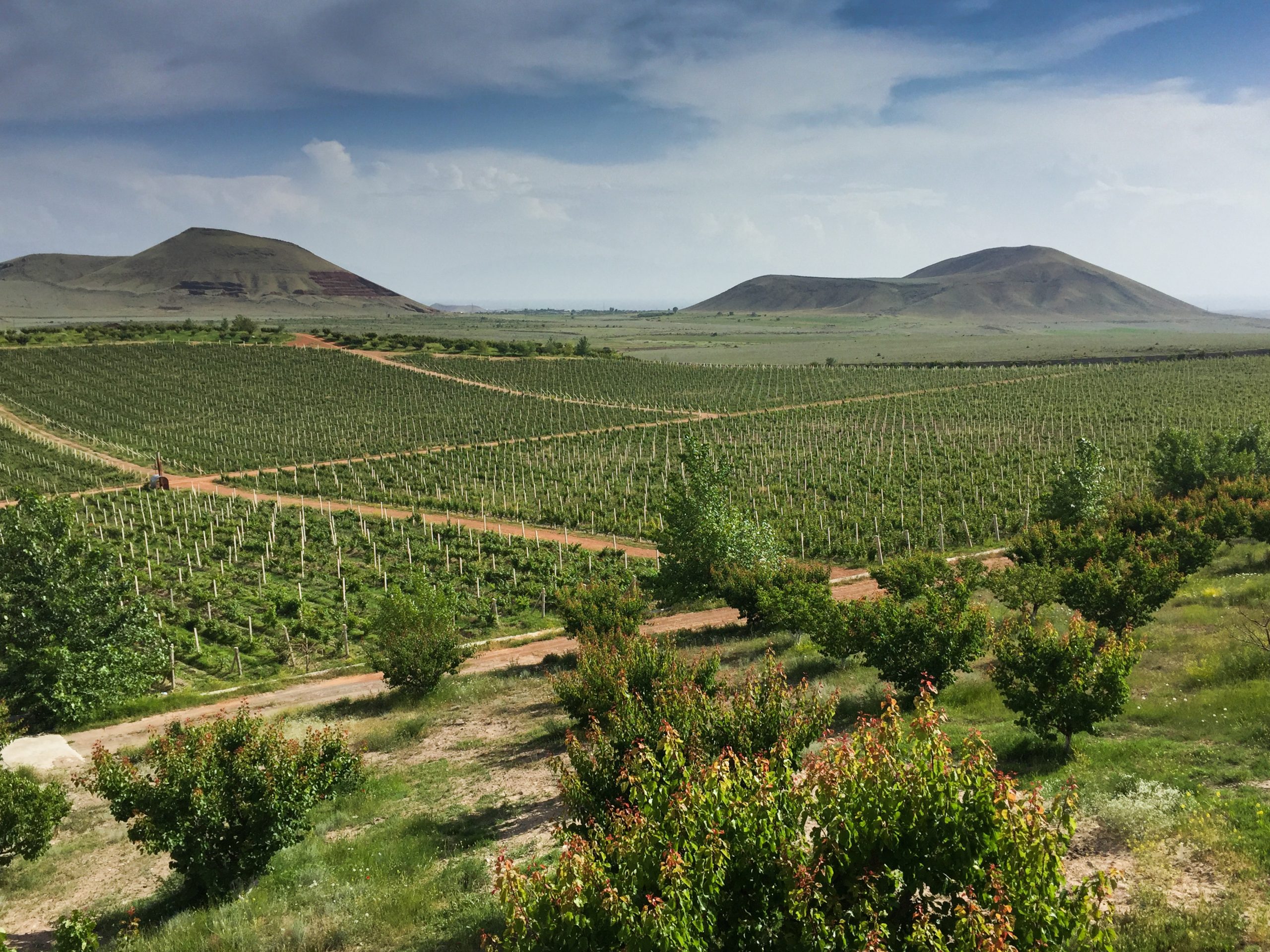
Vineyards, Aragatsotn province, Armenia. Photo: Elena Diego/ Shutterstock.com
Armenia’s regulator moves to strip Karapetyan’s firm of power grid licence
Armenia’s Public Services Regulatory Commission (PSRC) voted on November 14 to revoke the operating license of Electric Networks of Armenia (ENA), the country’s leading power distributor owned by the Russia-based Tashir Group. Four commissioners voted in favour, and one voted against, formally ending the company’s right to operate the national low-voltage grid.
ENA’s lawyer, Aram Orbelyan, argued that the proceedings violated constitutional safeguards and were enabled by what he called “hasty” legislative amendments adopted earlier this year. He insisted that regulators had failed to present evidence of the company’s systematic wrongdoing. The atmosphere grew heated at several moments, including when government-appointed temporary manager Romanos Petrosyan accused ENA’s former acting director of using “offensive” language.
One of the key unresolved issues is compensation. Under recently adopted laws, the Government must attempt to negotiate a voluntary sale of ENA. If those talks fail, authorities may declare the takeover a matter of public interest, which would allow expropriation — but only with fair compensation, as required by Armenia’s Constitution.
Tashir Group has already initiated international arbitration, seeking hundreds of millions of dollars in compensation over what it describes as unlawful interference in its investment in Armenia’s power sector.
The license revocation marks a new escalation in the broader confrontation between the Government and ENA’s owner, billionaire Samvel Karapetyan. Karapetyan, one of the wealthiest Armenians in Russia, was detained earlier this year on separate charges of large-scale fraud. The Tashir Group founder, whose conglomerate spans construction, retail, real estate, and energy, acquired ENA in 2015 and has long been regarded as one of the most influential diaspora investors in Armenia.
Karapetyan was arrested after he made public statements siding with the church leadership in its rivalry with the Prime Minister Pashinyan. Following his arrest, Karapetyan’s nephew, Narek Karapetyan, announced intentions to run in the upcoming 2026 parliamentary elections. In mid-November, a Yerevan court extended the pre-trial detention period of Samvel Karapetyan until at least January 18.
Sources:
- OC Media, “Armenia’s regulator moves to strip Karapetyan’s firm of power grid licence”, https://oc-media.org/armenias-regulator-moves-to-strip-karapetyans-firm-of-power-grid-licence/
- Civilnet.am, “Armenia’s regulator revokes electric grid operator ENA’s license”, https://www.civilnet.am/en/news/986968/armenias-regulator-revokes-electric-grid-operator-enas-license/
- OC Media, “Armenian–Russian tycoon Karapetyan to remain in pre-trial detention for two more months”, https://oc-media.org/armenian-russian-tycoon-karapetyan-to-remain-in-pre-trial-detention-for-two-more-months/
First cargo in decades arrives in Armenia via Azerbaijan
At 00:15 on November 4, fifteen wagons carrying 1,048.8 tonnes of wheat were cleared to Dalarik station in Armenia, transiting Russia-Azerbaijan-Georgia, according to Azerbaijan Railways and APA. Russia’s Transport Ministry said the initial shipment — organised by Russian Railways from Dimitrovgrad in the Ulyanovsk region, and exceeding 1,000 tonnes has been delivered, and work is underway to route other cargo categories along the same line. The ministry added that by the end of January 2026, a further 132 wagons of wheat are planned for Armenia via Azerbaijan, describing this as the first such railway movement since the 1990s, according to its official statement, as cited by BNE Intellinews.
This marked a first cargo shipment to Armenia via Azerbaijan in decades. The deliveries follow a recent announcement by Azerbaijani President Ilham Aliyev that Baku would lift its long-standing ban on the transit of goods to Armenia.
The office of Armenian Prime Minister Nikol Pashinyan called the development significant in the context of “strengthening mutual trust and promoting the peace agenda.” “The lifting of restrictions on cargo transportation to Armenia is an important step by Azerbaijan toward restoring regional communications and promoting economic cooperation,” the statement said. “It is one of the practical implementations of the agreements reached in Washington, contributing to the institutionalisation of the peace established between Armenia and Azerbaijan,” it added, referring to the August 8 agreements brokered by US President Donald Trump at the White House.
Sources:
- AGA Cavid, BNE Intellinews, “First Russian wheat train reaches Armenia via Azerbaijan as Baku-Tbilisi route reopens after decades”, https://www.intellinews.com/first-russian-wheat-train-reaches-armenia-via-azerbaijan-as-baku-tbilisi-route-reopens-after-decades-409995/
- Azatutzun.am, “First Cargo In Decades Arrives In Armenia Via Azerbaijan”, https://www.azatutyun.am/a/33582803.html
EU hands visa liberalisation plan to Armenia
More than a year after launching official talks on visa liberalisation with the European Union, Armenia has received an action plan from Brussels outlining the steps the country must take to qualify for visa-free travel. Armenia’s Minister of Internal Affairs, Arpine Sargsyan, met on November 5 with Johannes Luchner, Deputy Director-General for Migration and Home Affairs of the European Commission, who visited Yerevan to present the plan to the Armenian side.
According to Sargsyan, the action plan serves as a strategic framework for reforms in citizen mobility and public security. It represents a “key stage in strengthening trust and cooperation” between Armenia and the EU. The Armenian Ministry of Internal Affairs has released a brief overview of the EU-Armenia Visa Liberalisation Action Plan later that day. The plan includes 74 benchmarks, divided into four main directions:
- Document security, including a biometric system,
- Comprehensive management of borders, migration, and asylum,
- Public order and security, including combating organised crime, trafficking, drug trafficking, and corruption,
- Foreign relations and fundamental rights
Sources:
- Armenpress.am, “Armenian authorities publish EU Visa Liberalisation Action Plan overview”, https://armenpress.am/en/article/1234338
- Azatutyun.am, “EU Hands Visa Liberalisation Plan To Armenia”, https://www.azatutyun.am/a/33582059.html
Photo: Shutterstock.com
Pashinyan’s Civil Contract wins by a landslide in Etchmiadzin council vote after merging electoral communities
In mid-November, Armenia’s ruling Civil Contract party won the local council elections in Armenia’s religious centre of Vagharshapat, also known as Etchmiadzin. The vote, held on November 16 across the newly consolidated Vagharshapat community in Armavir Province, saw Civil Contract candidate Argishti Mekhakyan receive 48.51% of ballots cast. With all 47 precincts counted, Civil Contract received 15,298 votes (48.6%), ahead of the opposition “Victory” Alliance, which garnered 10,051 votes (31.8%). The national-democratic “Mother Armenia” party finished a distant third with 1,692 votes (5.4%), narrowly surpassing the electoral threshold. Turnout reached 45.1%.
Civil Contract is expected to secure 19 of the 33 council seats, allowing the governing party to form an administration without coalition partners. The “Victory” Alliance is set to take 12 seats, while “Mother Armenia,” having crossed the threshold, is expected to receive the remaining two. The November 16 vote was the first municipal election after the Government’s June 20 decision to merge the Khoy community — comprising 17 villages — into the Vagharshapat municipality, following the resignation of Vagharshapat mayor Diana Gasparyan in July.
At the time, political analysts warned that the consolidation would have significant electoral implications. Gohar Meloyan, executive director of the International Centre for Parliamentary Development, described the merger as the election’s “Achilles’ heel”, noting that it fundamentally altered the voting landscape. Preliminary analyses appear to confirm the political impact.
In the original Vagharshapat territory alone, the combined opposition forces won 19,182 votes, with Civil Contract receiving 7,975 votes (41.5%) and the “Victory” Alliance 7,499 votes (39%). With the addition of Khoy’s 22 precincts, the ruling party’s share rose to 48.5%, while the opposition fell to 31.9% — a swing that effectively secured Civil Contract’s dominant position in the final tally. The shift was especially pronounced in the Khoy area, where Mekhakyan, who previously served as Khoy’s mayor, maintains substantial local influence.
The merger also altered the political configuration, with parties crossing the threshold. Without the Khoy precincts, as later analyses showed, five parties would have entered the council — not three — potentially neutralising Civil Contract’s ability to form a unilateral majority and opening space for coalition bargaining.
Observation groups and party proxies reported several alleged violations throughout the day, according to OC Media. At several polling stations, opposition members accused Civil Contract representatives of possessing voter lists or directing citizens to vote for Mekhakyan. Civil Contract proxies denied the allegations, saying they had only recorded voter flow.
There were also reports of alleged double voting, attempts to vote on behalf of other citizens, and disputes between proxies. Daniel Ioannisyan of the Independent Observer alliance said their monitors had visited around 40 polling stations by midday on Sunday. They recorded “three procedural cases, two disputes, three cases of organised voter transport, one deliberate open vote, one threat, one case of inaction by a commission chair, four cases of significant errors in the voter register and one instance of the temporary removal of a voting coupon”.
Observers also noted significant discrepancies in turnout in the settlements of Tsaghkalanj, Haytagh, and Arshaluys, where participation was reportedly five times higher than in 2021.
Sources:
-
OC Media, „Pashinyan’s Civil Contract wins by a landslide in Etchmiadzin council vote”, https://oc-media.org/pashinyans-civil-contract-wins-by-a-landslide-in-etchmiadzin-council-vote/
-
Armenian Weekly, “Vagharshapat municipal election results present ‘a warning and an opportunity’”, https://armenianweekly.com/2025/11/20/vagharshapat-municipal-election-results-present-a-warning-and-an-opportunity/
A group of senior clergy sides with Pashinyan against Catholicos Karekin II
On November 27, the Armenian Prime Minister Nikol Pashinyan met a group of senior bishops of the Armenian Apostolic Church. The meeting was organised as tensions escalated over a contentious statement circulated by pro-government media and attributed to more than a dozen high-ranking clerics, OC Media reported.
In a public statement, a group of high-ranking clergy expressed deep concern that His Holiness Karekin II, Catholicos of All Armenians, is attempting to conceal and suppress the investigation into the actions of Archbishop Arshak Khachatryan, Chancellor of the Mother See, following the circulation of video evidence allegedly depicting him in inappropriate conduct online.
The statement was shared on Facebook by Arayik Harutyunyan, Chief of Staff to the Prime Minister of Armenia, who also published the full text provided by the bishops. According to the statement, on November 5 of this year, Catholicos Karekin II established a special commission to examine the “inappropriate videos circulating online allegedly involving Archbishop Arshak Khachatryan” and to present its conclusions. On November 25, the Investigative Committee released the examination results, confirming that the videos in question were authentic and attributable to Archbishop Arshak Khachatryan.
However, according to the statement’s signatories, Catholicos later “dismissed the forensic conclusion issued by the very commission he himself had created.” More than a month has passed since the videos were first circulated, and the bishops describe the Catholicos’s stance as “deeply perplexing and extremely troubling,” given the highly sensitive nature of an issue that threatens to damage the Church’s moral and spiritual authority.
Meanwhile, none of the bishops said to have signed the statement have publicly confirmed it. The Mother See dismissed the document as a text written “with distortions”, insisting that several claims “do not correspond to reality” and that clarifications would follow once internal discussions were complete. Some of the clerics whose names appear on the document have distanced themselves from it. The head of the German Diocese, Serovbe Isakhanyan, said he was unaware of the statement and stressed that he was not demanding the Catholicos’ resignation.
Archbishop Arshak Khachatryan himself said he could not verify the authenticity of either the statement or the alleged forensic examination, noting that he had received no official information. He suggested the controversy stemmed from his outspoken criticism of the Government, adding that he had no intention of stepping down.
Sources:
- OC Media, “A group of senior clergy sides with Pashinyan against Catholicos Karekin II”, https://oc-media.org/a-group-of-senior-clergy-sides-with-pashinyan-against-catholicos-karekin-ii/
- Massis Post, “Senior Clergy Accuse Catholicos Karekin II of Betraying His Oath; Bishops Meet with Prime Minister Pashinyan”, https://massispost.com/2025/11/senior-clergy-accuse-catholicos-karekin-ii-of-betraying-his-oath-bishops-meet-with-prime-minister-pashinyan/
Azerbaijan
City of Shusha. Photo: Eva Mont/ Shutterstock.com
Azerbaijani police raid the home of a leading opposition figure amid coup attempt probe
On November 29, Azerbaijani authorities conducted a search at the home of Ali Karimli, the leader of one of the country’s main opposition parties, amid a widening probe into a suspected coup attempt to oust President Ilham Aliyev. An Azerbaijani government source told Reuters the move on Karimli, who has led the Azerbaijani Popular Front Party (APFP) since 2000, was linked to an ongoing criminal case against Ramiz Mehdiyev, a longtime ally of former President Heydar Aliyev, who led Azerbaijan until shortly before his death in 2003.
Two APFP members, Faiq Amirli and Mammad Ibrahim, were detained on Saturday (November 29), Karimli’s deputy, Seymour Hazi, told Reuters. The government source said the authorities believed Karimli was being financed by Mehdiyev, who joined the Government of Heydar Aliyev as head of the presidential administration during the first years of its tenure in 1994. Last month, a Baku court placed Mehdiyev, 87, under four months of house arrest after charging him with crimes including attempts to seize power.
The party, on the other hand, believes that Karimli’s interviews with leading international media outlets and his invitations to global political forums are causing concern for the ruling regime. “Today’s detention should be seen as an attempt by the authorities to destroy the last independent political force in Azerbaijan and completely suppress the people’s struggle for democracy and freedom,” the statement continued.
As “Caucasian Knot” reported, in November, PFPA members Farid Guliyev and Valishan Hasanov were arrested administratively. Both opposition figures had recently been driving party leader Ali Karimli around in their cars. Popular Front Party of Azerbaijan member Faig Nagiyev has been sentenced to 30 days of administrative arrest. The party indicated that such persecution began on November 2, when three activists were subjected to defamation, calling it politically motivated.
Sources:
- Reuters, “Azerbaijani police raid home of leading opposition figure amid coup attempt probe”, https://www.reuters.com/world/asia-pacific/azerbaijani-police-raid-home-leading-opposition-figure-amid-coup-attempt-probe-2025-11-29/
- Caucasian Knot, “The Popular Front Party called the detention of Ali Kerimli politically motivated”, https://www.eng.kavkaz-uzel.eu/articles/69940
Aliyev renews call for “return of Azerbaijanis” to Armenia
On November 3, Azerbaijani president Ilham Aliyev once again called for the return of Azerbaijanis to Armenia and repeated revisionist claims about Armenian history and territory. “Armenia should not be afraid of Azerbaijanis returning. I said it before that we should return not on tanks but on cars,” Aliyev said in his speech at the Azerbaijani Academy of Sciences, adding that Armenians were “settled in Karabakh by Tsarist Russia from Iran and Eastern Anatolia” and that “the place names of the territories of Armenia on Russian maps of the 20th century are mainly Azerbaijani.”
He also claimed that “there is no lake called Lake Sevan on those maps, but there is Lake Gokcha”.
While the Turkic name “Gokcha” was indeed used in some historical sources, the name Sevan is much older and is believed to be of Urartian origin, first attested in the 8th century BC. Medieval Armenian sources refer to the lake as the Sea of Gegham, after a mountain chain adjacent to it, wrote Civilnet.am.
In recent years, such revisionism has evolved into the state-backed concept of “Western Azerbaijan,” a term Azerbaijani officials use not for the Iranian province of that name, but for the Republic of Armenia. Several organisations describing themselves as “communities of Western Azerbaijani refugees” have been created with government support, alongside a dedicated television channel and efforts to assign Azerbaijani-language names to towns and regions across Armenia.
Leaked documents reviewed by OC Media reveal that, in early November, the international rollout of the “Western Azerbaijan” narrative was coordinated and funded by Azerbaijan’s Presidential Administration. The documents show that the Presidential Administration directly financed and supervised the campaign — organising conferences, hiring communications consultants, and producing messaging materials. The names, dates, and contracts in the files align with publicly available records.
At the centre of the effort was a high-profile international conference, held in Baku from 5–6 December 2023, titled “Ensuring the Safe and Dignified Return of Azerbaijanis Expelled from Armenia: Global Context and Just Solution”. Azerbaijani state funds — over 109,000 AZN (65,000 USD) — covered hotel accommodations, audiovisual production, branding, and the creation of a digital platform to distribute pro-return content.
Sources:
-
PRACHT Alexander, Civilnet.am, “Aliyev renews call for ‘return of Azerbaijanis’ to Armenia, doubles down on historical revisionism”, https://www.civilnet.am/en/news/983913/aliyev-renews-call-for-return-of-azerbaijanis-to-armenia-doubles-down-on-historical-revisionism/
-
CABÄCK Rasmus, OC Media, “EXCLUSIVE: Azerbaijan’s ‘Western Azerbaijan’ campaign exposed in leaked documents”, https://oc-media.org/exclusive-azerbaijans-western-azerbaijan-campaign-exposed-in-leaked-documents/
Georgia
Shutterstock.com
Relations between Tbilisi and Brussels hit rock bottom in November
On October 30, the Euronest Parliamentary Assembly passed a resolution calling Georgia’s 2024 parliamentary elections fraudulent and accusing the ruling Georgian Dream party of acting as self-declared authorities. It also condemned the violent suppression of peaceful protests in Tbilisi, calling for the immediate release of all political prisoners. European lawmakers warned that if these issues were not addressed, Georgia could face consequences, including the suspension of its visa-free regime with the Schengen Zone.
In anticipation of Euronest’s position, Georgia boycotted the session in Yerevan by refusing to send its parliamentary delegation to the Armenian capital. Tbilisi had previously stated that “certain members of the European Parliament were engaging in hostile rhetoric and actions, which contradicted the principles of partnership and mutual respect.” In particular, Georgia condemned the participation of some European Parliament members in opposition protests in Tbilisi.
Tbilisi has strongly criticised the resolution, while Georgia’s Deputy Parliament Speaker Nino Tsilosani also blamed Armenian lawmakers for their stance during the vote, claiming that they effectively went against Armenia’s official position by supporting the resolution. The Speaker of the Georgian Parliament, Shalva PAPUASHVILI, later announced that the ruling Georgian Dream party would boycott future sessions of the Euronest Parliamentary Assembly.
Meanwhile, on November 4, the European Commission adopted its annual Enlargement Package. Regarding Georgia, the Commission noted that following the European Council’s 2024 conclusion that its EU accession process had been de facto halted, the situation had “sharply deteriorated”. The report cited serious democratic backsliding, including the erosion of the rule of law and severe restrictions on fundamental rights.
The Commission urged the Georgian authorities to “urgently reverse their democratic backsliding” and take “comprehensive and tangible efforts” to address outstanding concerns through cross-party cooperation and civic engagement. In light of Georgia’s continued regression, the Commission stated that Georgia remained “a candidate country in name only” and called on the Government to demonstrate a firm commitment to return to the EU accession path.
The Georgian Foreign Ministry noted that the report included groundless negative assessments of Georgia and fueled political speculation, which the ministry described as regrettably biased. The Georgian side highlighted that the report ignored key events during the municipal elections on October 4, 2025, failing to recognise assaults on state institutions and the violence used by protesters.
The next day, on November 6, Georgian Foreign Minister Maka Bochorishvili accused Ukraine of trying to block Georgia’s path toward joining the European Union, claiming Kyiv led “campaigns” against her country’s EU candidate status. “Georgia’s integration into the EU was met with a negative attitude from Ukraine – to prevent us from obtaining candidate status,” Bochorishvili said in remarks published by Georgia Online. “We saw campaigns in 2022–2023 in which Ukraine, in various forms, acted against our European integration.”
Sources:
-
ASLANIAN Karlen, Azatutyun.am, “Tbilisi Slams Euronest’s ‘Anti-Georgian’ Resolution, Blames Armenian Lawmakers”, https://www.azatutyun.am/a/33580816.html
-
Caucasus Watch, “EU Commission on Georgia: ‘Candidate Country in Name Only‘”, https://caucasuswatch.de/en/news/eu-commission-on-georgia-candidate-country-in-name-only.html
-
ORLOVA Alisa, Kyivpost.com, “‘Ukraine Acted Against Us’: Georgia’s Foreign Minister Accuses Kyiv of Trying to Block EU Integration”, https://www.kyivpost.com/post/63781
GD to end voting for Georgians abroad
The ruling Georgian Dream party will end voting for Georgians abroad, a move the Parliament Speaker, Shalva Papuashvili, said will “strengthen election resilience” against foreign interference. At the same time, critics fear it will effectively disenfranchise the diaspora. During a November 17 briefing, Shalva Papuashvili announced a significant overhaul of the country’s Electoral Code, including a change that would require voting in parliamentary elections, like in local elections, to take place only inside Georgia’s borders.
Papuashvili claimed the change is constitutional with respect to the state’s obligation to guarantee the free expression of the voter’s will, which, he said, “also implies that this will must be expressed free from external interference.” Claiming that elections worldwide have become “increasingly vulnerable to external interference,” and referring to votes in the US and EU member states, Papuashvili said Georgia’s 2024 general elections “clearly showed how open and blatant foreign informational and political pressure on voters can be.” “In this regard, there are, of course, particularly high risks of influence on non-resident citizens, who are under the impact of a foreign jurisdiction and political environment where the Georgian state cannot prevent interference,” he said.
As Civil.ge reported, during the parliamentary elections in October 2024, the vast majority of emigrants who were able to vote backed opposition parties, with official CEC results showing Georgian Dream winning only 13.5% of the emigrant vote. Observers noted that turnout could have been significantly higher had polling stations been located closer to voters’ places of residence, rather than requiring them to travel hundreds of kilometres to cast a ballot.
Papuashvili later added that the pressure on immigrants may increase in the future. “We declare that we cannot take responsibility for the free expression of will by our citizens outside the jurisdiction of the state. This is our obligation under the Constitution. We witnessed great interest in interfering in Georgia’s elections. We witnessed ambassadors and leaders of different countries grossly interfering in the 2024 parliamentary elections.
“Pressure on immigrants may increase in the future, than we observed last year when a chair of the Bundestag Committee tried to influence the will of voters on the territory of Germany. To free immigrants from that pressure, we proposed the amendment because no one in a foreign jurisdiction attempted to use immigrants as a tool against Georgia by pressuring them,” he said.
According to the European Platform for Democratic Elections (EPDE), abolishing the possibility of voting from abroad in parliamentary elections would seriously undermine the principle of universal suffrage. “Georgian citizens residing abroad have enjoyed this right for many years. Given the geographical mobility in modern societies, depriving citizens abroad of the opportunity to participate in elections is yet another step against inclusive democracy and harms the principle of universal suffrage”, wrote EPDE in its statement.
Sources:
-
Civil.ge, “GD to End Voting for Georgians Abroad”, https://civil.ge/archives/710933
-
EPDE, “Georgia | ISFED: Abolishing the Possibility of Voting from Abroad in Parliamentary Elections Would Seriously Undermine the Principle of Universal Suffrage”, https://epde.org/?news=georgia-isfed-abolishing-the-possibility-of-voting-from-abroad-in-parliamentary-elections-would-seriously-undermine-the-principle-of-universal-suffrage
-
Georgian Public Broadcaster, “Speaker alerts of great interest in interfering in Georgia’s elections; government cannot take responsibility for free expression of will by our citizens outside state jurisdiction”, https://1tv.ge/lang/en/news/speaker-alerts-of-great-interest-in-interfering-in-georgias-elections-government-cannot-take-responsibility-for-free-expression-of-will-by-our-citizens-outside-state-jurisdction/
Photo: Shutterstock.com
Former GD representatives detained for corruption
In November 2025, Georgian authorities detained a former Georgian Dream municipal council member from Shida Kartli, Levan Gamrekeli, and Levan Kupatashvili, the former deputy head of the Infrastructure Ministry’s Roads Department. The Prosecutor General’s Office announced Gamrekeli’s arrest — along with that of two of his associates, Paata Nozadze and Roman Metivishvili — on charges of large-scale theft committed by a group on November 11. If found guilty, they could face up to 10 years in prison.
According to the investigation, Gamrekeli, who served as Deputy Chair of the Kashuri municipal council, together with his two associates, “secretly took possession” of pipelines in the region. According to independent media outlet Netgazeti, Gamrekeli represented Georgian Dream in the municipal council from 2017–2025, reported OC Media.
Kupatashvili has been arrested, while three managers from an Azerbaijani company and one international expert have been charged in absentia over corrupt deals allegedly leading to the 2023 bridge collapse on a Western Georgian highway. The cases centre on a bridge along the Samtredia-Grigoleti highway in Western Georgia, which collapsed in February 2023, with the Roads Department initially attributing it to flooding from the rising Rioni River. By December, investigators had established that the bridge was built with defects, of poor quality, and not in accordance with project specifications. The prosecutors said on November 10 that the collapse caused more than 16 million GEL (5.9 million USD) in damage to the state budget.
In 2018, the Roads Department contracted the Azerbaijani construction company Akkord to build an 11.5-kilometre section of the Samtredia–Grigoleti highway, including several bridge crossings. A consortium of four international companies was hired to provide supervision, while daily on-site oversight was assigned to the Roads Department.
The supervision, however, was never actually carried out, prosecutors argue, as “not a single authorised expert from the supervisory company was present in Georgia,” which was also allegedly known to the Roads Department. Despite their absence from Georgia, investigators allege that international experts “still approved falsified acts of completed work prepared by representatives of the construction company,” which were also signed by Levan Kupatashvili.
Based on these false reports, authorities say, Kupatashvili facilitated payment of 1.17 million GEL (370.357 EUR) to the absent international expert, while the construction company fraudulently appropriated 3.86 million GEL (1.232.000 EUR) “through unperformed and poorly performed work,” which ultimately led to the collapse of the bridge, according to Kapanadze. Subsequent restoration work cost an additional 12 million GEL (3.831.000 EUR).
Sources:
-
BARDOUKA Yousef, OC Media, “Former Georgian Dream municipal council member detained for embezzlement”, https://oc-media.org/former-georgian-dream-municipal-council-member-detained-for-embezzlement/
-
Civil.ge, Ex-Official Arrested, Contractors, Expert Charged in Absentia Over 2023 Bridge Collapse, https://civil.ge/archives/710127
GD to abolish the Anti-Corruption Bureau and the South Ossetia government in exile
According to a statement by Shalva Papuashvili, the Speaker of the Parliament of Georgia, the Anti-Corruption Bureau will be dissolved as of March 2, 2026. During a recent briefing in Parliament, Papuashvili explained that the Anti-Corruption Bureau’s functions will be fully transferred to the State Audit Office of Georgia (SAO). “The second key aspect involves reviewing and consolidating institutional models that have existed for years, often in a fragmented or externally imposed form. We aim to strengthen the constitutional framework of the governance system and optimise the utilisation of state resources. Currently, the Anti-Corruption Bureau primarily collects and monitors declarations from officials, political parties, and non-governmental organisations.
The Anti-Corruption Bureau was created in 2022 as part of the fourth recommendation issued by the European Commission for Georgia to obtain EU candidate status. Its head, Razhden Kuprashvili, was appointed by then-Prime Minister Irakli Gharibashvili in a process widely criticised by local civil society groups and international bodies for lacking safeguards for independence. Razhden Kuprashvili has remained in the post since and is broadly seen as loyal to the ruling party. The Venice Commission has repeatedly warned that the Bureau’s institutional design did not ensure a sufficient degree of independence.
The Anti-Corruption Bureau has recently targeted dozens of CSOs with repeated inspection requests issued under several controversial laws. Civil society organisations say the Bureau has been weaponised by the ruling party to pressure civic groups while remaining blind to holding those in power accountable. Meanwhile, as reported by OC Media, Georgia has announced it will abolish the Administration of South Ossetia, a body created in 2006 to rival the South Ossetian government. Representatives of the ruling party criticised it as a legacy of the former ruling United National Movement (UNM), saying its creation had been “imposed” on Georgia by “external forces”.
Georgian Parliamentary Speaker Shalva Papuashvili criticised the UNM for backing the “alternative government of South Ossetia”, saying that by doing so, they “indirectly legitimised the separatist elections in the Tskhinvali [Tskhinval] region, which was a clear and grave betrayal of Georgia’s state interests”. “Today, it is already clear that this decision taken by the Saakashvili regime, which led to the escalation of the situation in the Tskhinvali region and to war, was part of a geopolitical game played by external forces, in which Georgia was assigned the role of a sacrificial pawn”, Papuashvili said. Meanwhile, the Prime Minister Irakli Kobakhidze cited the creation of the South Ossetian Administration as a factor behind the Government’s constitutional lawsuit against the opposition.
The administration, which then-President Mikheil Saakashvili supported, was established in 2006 after the People of South Ossetia for Peace movement, a group opposed to South Ossetia’s independence from Georgia, organised “alternative” presidential elections in South Ossetia in areas both controlled and not controlled by the central Government.
The “alternative” vote took place in parallel with the presidential elections in South Ossetia, which saw President Eduard Kokoity retain power. Dmitry Sanakoev emerged as the winner of the alternative elections. Following the elections, in April 2007, Georgia announced the creation of a temporary Administration of South Ossetia, appointing Sanakoev as its head in May of that year. The administration oversaw areas of South Ossetia that were at the time still under Tbilisi’s control, before losing much of its relevance following the 2008 August War.
Sources:
-
Gbc.ge, “Anti-Corruption Bureau to be disbanded; its functions transferred to State Audit Office”, https://www.gbc.ge/en/news/politics-news/anti-corruption-bureau-to-be-disbanded-its-functions-transferred-to-state-audit-office
-
Civil.ge, „Anti-Corruption Bureau to Be Abolished in 2026, Audit Office to Absorb Its Functions”, https://civil.ge/archives/710935
-
BARDOUKA Yousef, OC Media, “Georgia to abolish South Ossetia government in exile”, https://oc-media.org/georgia-to-abolish-south-ossetia-government-in-exile/
Contact us