

The Invisible Bridge Across the Dniester: Pragmatism, Development Aid, and the Quiet Reintegration of Transnistria
Igor Píš
As we enter the year 2026, we see Transnistria as an isolated Russian stronghold in the east of Moldova. The situation had stood still like this ever since the Moldovan-Transnistrian war in the 1990s, where the Russian-speaking majority of Moldova separated itself from the rest of the country. Currently, the region stands at a crossroads, shaped by a new reality from the previous year.
The energy crisis of early 2025, where Russian gas transit through Ukraine was halted, has shattered the region’s decades-long reliance on Russian subsidised energy. This crisis has forced Tiraspol into an unprecedented level of cooperation with the central government in Chișinău, because both were affected by this event. The region was largely producing electricity both for itself and Moldova with a power plant that ran on Russian gas. With the region being suddenly dependent on electricity and gas supplied through Moldova’s state-run Energocom and stabilised by the European Union’s emergency financial support, the “frozen” conflict comes to the hard reality of survival.
Still, Tiraspol is decorated with large Lenin busts and red stars, resembling the Soviet past of the region, but today this decoration seems to be more and more irrelevant. Official trade statistics show that today the main scope of Transnistria has shifted towards the West, with exports to the EU hovering around 83% of the total number in 2024 and 71% in 2025. This dependency on the European market is facilitated mainly by the collapse of exports to Ukrainian and Russian markets due to the closure of borders between the Transnistrian region and Ukraine at the start of the war in February 2022. This has led to an export re-orientation and with the help of the Deep and Comprehensive Free Trade Area (DCFTA), it has integrated Transnistrian agents into the EU’s economic orbit long before any formal political settlement.
At the heart of this hidden transformation lies an “invisible bridge”, which represents a network of pragmatic economic and social cooperation strategically enabled by institutions like the United Nations Development Programme (UNDP). Through the implementation of the EU Confidence Building Measures (EU-CBM) and AdTrade, the UNDP has been assisting in resolving shared development problems, overcoming political stalemate, and helping businesses in meeting international standards, further boosting trade.

Photo: Shutterstock.com
EU Referendum – A shift towards the West?
In 2024, an important referendum took place in Moldova, the constitutional referendum on European integration. This referendum showed some surprising results. In Transnistria, 31,02% of eligible voters opted for “YES”. While this number might not seem like much, it’s important to note that we’re talking about a region with a hammer and sickle in its flag and a Russian military base within its territory. This significant pro-European minority emerged even after years of the region’s historical alignment with Moscow and a strong presence of pro-Russian narratives from every possible side. This result signals a shifting internal landscape, where a sizeable portion of the population sees its future increasingly tied to the EU. It also reflects a growing pragmatic stance that contrasts with the official political stance of the de facto government in Tiraspol. In the autonomous part of Gagauzia, for instance, the results did not look as favourable for the EU, with only 5,16% opting for “YES”, as stated in the results of the Moldovan CEC.
The contrast between referendum results in Transnistria and Gagauzia suggests a slight correlation with EU market export figures. In Gagauzia, exports to EU countries reached their highest level in 2023 with 52,2%, while in Transnistria we’re looking at more than 80%. (Invest Moldova, 2025) Transnistria’s industrial sector is already more deeply integrated into the European market than any other region in Moldova. This reality has likely fostered a more European-oriented outlook among the population who rely on these trade links for their livelihoods.
By 2026, this shift in public sentiment might have been further cemented by a growing “tiredness of isolation”. The severe energy crisis in 2025 made the costs of isolation increasingly higher, while the visible benefits of EU-funded projects, such as those managed under EU-CBM, offered a concrete alternative. As UNDP-led initiatives (funded by the EU) continue to help modernise social infrastructure, healthcare, or cultural heritage sites in Transnistria, the local narrative is gradually shifting toward the improved living conditions and stability offered by Moldova and its European path.

Source: CEC Moldova, 2024
The role of UNDP: Building Trust in the Shadows
UNDP’s role in slowly building trust and fostering cooperation between both banks of the Dniester is undeniable. UNDP employs a strategic framework, rooted in a “Track 3 approach” to peacebuilding. Unlike “Track 1” (high-level political negotiations), which often remain stalled by geopolitical deadlock, the Track 3 methodology tries to build trust from the bottom up. This means engaging with local authorities, NGOs and the business community. By focusing on these stakeholders, the EU-CBM programme focuses on resolving common development problems and helping to build cooperation despite political or ideological divisions at the same time.
The strategy focuses strictly on sectors where communities on both banks share a common interest. In the field of healthcare, this has led to the modernisation of vital facilities or support for perinatal centres, ensuring that mothers and infants on both sides of the river receive a comparable quality of care. Similarly, the preservation of shared cultural heritage serves as another powerful tool for de-escalation. One of the most prominent cultural projects was the restoration of the Bender fortress on the left bank. During the 5th phase of EU-CBM (2019-2024), over 80 community development and social infrastructure projects were implemented. These projects improved the lives of thousands of residents on both banks, despite the political situation.
These projects focused on mutually beneficial cooperation generate a positive momentum and establish a baseline of trust in case a formal political settlement eventually opens. If a settlement comes into effect, the technical and social infrastructure for reintegration will already be in place.
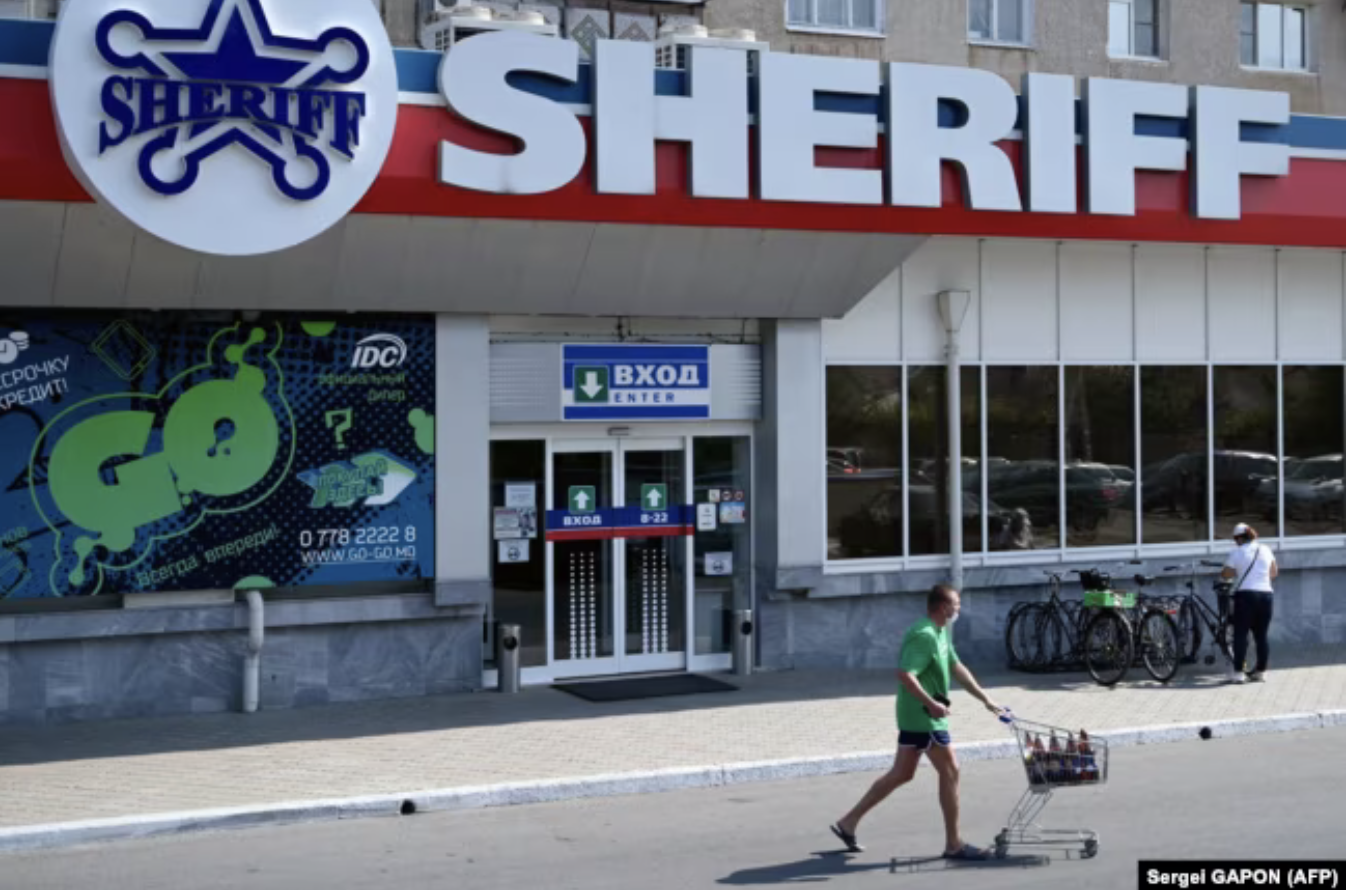
Photo: Shutterstock.com
Sheriff Holding
If we want to analyse Transnistria from any angle, whether it’s business, agriculture, communication or even day to day lives of ordinary people, we cannot miss talking about Sheriff. The holding acts as the undisputed economic engine of Transnistria and maintains a great presence in supermarkets, telecommunications and fuel distribution. This conglomerate, functioning as a “state within a state,” found itself in a position of a key stakeholder in Moldova’s European integration. As the region’s economic model is becoming more and more unsustainable, the holding changed its priorities, moving away from political ideology and focusing on its own commercial survival, recognising its extremely important access to the Western markets.
As we previously stated, exports from Transnistria to the EU are at their all-time high. This demonstrates how important the Deep and Comprehensive Trade Area (DCFTA) really is, especially for economic agents just like those from the Sheriff Holding. The DCFTA is no longer an abstract policy, but a lifeline that “forces” even the Sheriff into pragmatic compliance with the Republic of Moldova’s regulatory requirements.
The “DCFTA factor” has essentially pulled the Transnistrian business elite into the Moldovan legal and regulatory orbit through the requirement of EU certification and Moldovan customs stamps. To benefit from EU trade, these entities had to adapt their activities to align with the national normative framework, which transposes EU regulations. Technical alignment serves here as a form of “reintegration in the shadows”, where market access gradually outweighs political resistance and the region begins to comply with the constitutional authorities in Chișinău.
Ultimately, the survival instincts of Victor Gushan’s (Sheriff) empire demonstrate a clear preference for economic benefits and stability over historical political loyalty to Moscow. As the Transnistrian region faces the dangers of becoming a deserted military outpost with virtually no economy, the pragmatic path of reintegration offers a way to ensure long-term growth. This dramatic shift suggests that the business elite of the region might become the main driver of a formal settlement, especially if they are already de facto participating in Moldova’s path to the EU.
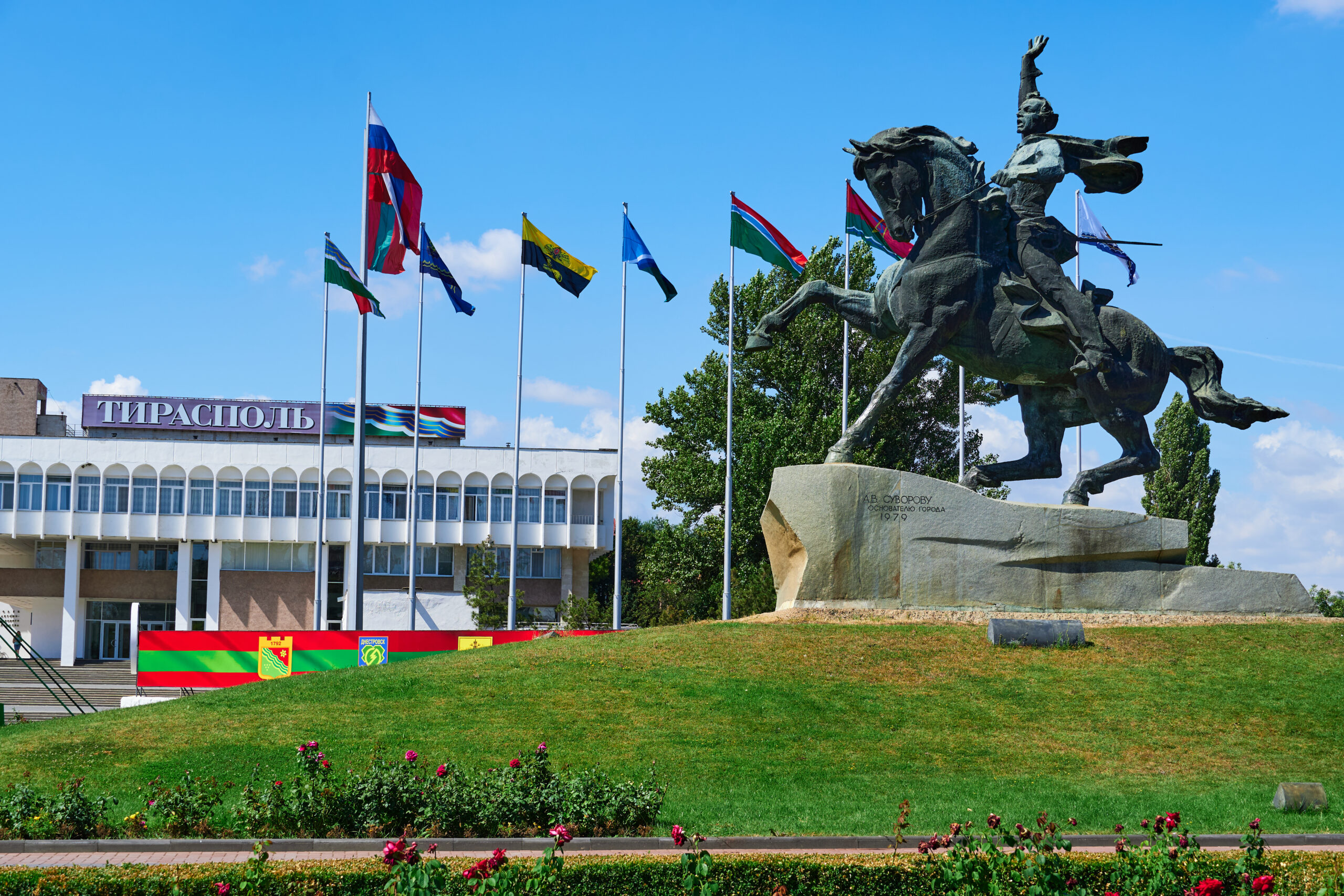
Photo: Shutterstock.com
SMEs and “AdTrade”
While the Sheriff drives the macro-economic statistic of the region, the true “invisible bridge” is tested on micro, small and medium enterprises (MSMEs). UNDP’s AdTrade (Advanced Cross-River Capacities for Trade) project specifically addresses these enterprises, recognising that growth comes from the bottom up. By providing targeted investments in human capital, market intelligence and marketing support, the programme enables small local businesses to bypass political isolation and access opportunities coming from the DCFTA.
The AdTrade initiative acts as a technical catalyst that prepares Transnistrian SMEs for the European market. Enterprises range from traditional agriculture to emerging IT and are provided with tools to modernise their production processes and meet international standards. This bottom-up economic integration slowly creates a pro-European middle class on the left bank, by linking small entrepreneurs with the West rather than relying on political subsidies or monopolistic structures.
Furthermore, the 6th phase of the EU-CBM programme complements this by fostering inclusive economic development through shared business platforms, which enable entrepreneurs from both banks to collaborate on sustainable and “smart” development solutions. Collaboration between entrepreneurs from both sides effectively neutralises the political border between the regions through shared economic interests.
Cracks in the Bridge: Security Risks and Political Resistance
Despite the deepening economic integration, the “Invisible bridge”, which we were trying to present, still has some cracks, needing repair and remains structurally vulnerable to significant security risks. Probably the most obvious obstacle is the presence of the Russian military and a massive ammunition depot in Cobasna. This site, which houses thousands of tonnes of Soviet-era military equipment, serves as a lever for Moscow to maintain its influence over the region. (Cheban E., 2025) As long as these military assets remain outside of international or Moldovan control, they continue to function as a tool for destabilisation, casting a shadow on the technical and economic trust built by international development programmes.
Other than military risks, the region is at severe risk of economic and demographic collapse if the reintegration process fails to reach a political conclusion. Analyses suggest that if reintegration loses momentum and stalls, the left bank will face continued massive depopulation. (Cheban E., 2025) Regaining control over such an “empty” piece of land would be way more complicated, painful and costly for Chișinău in the long run.
The third “crack in the bridge” is present in the form of an ongoing hybrid threat, which is an intense information war. It is no secret that disinformation campaigns aimed at undermining pro-European sentiments are constantly being deployed. These efforts try to cast shadows not only on the Moldovan government but on international organisations like the EU and UNDP too.
Conclusion
The “invisible bridge” across the Dniester River has evolved from a theoretical framework into a functional necessity for the Transnistrian region’s survival. Boosted by an energy crisis in early 2025 and economic shifts towards the EU, the region has become de facto integrated into Moldova’s economic space. This transformation, fuelled by the pragmatism of the local elites, suggests that an era of isolation and political games slowly comes to an end and is replaced by an unavoidable alignment with the EU.
The role of organisations like the UNDP and programmes such as EU-CMB and AdTrade is critical in this process. By focusing on “non-contentious” sectors like healthcare, environmental protection and cultural heritage, these interventions steadily build trust. This bottom-up approach ensures that if a unified Moldova becomes a reality, the social and technical infrastructure will already be tested and refined.
Ultimately, the future of the Transnistrian region within Moldova’s European trajectory depends on the ability of Chișinău and the international community to consolidate these technical gains into a permanent political settlement. While a rising pro-European sentiment begins to emerge in Transnistria, the presence of security risks, dangerous connections to Moscow and disinformation campaigns remain a potent threat. The “invisible bridge” has provided the region with links to the West, but the challenge for the coming years is to make sure this path remains open, preventing the region from regressing into a deserted military outpost and instead securing its place in a prosperous, integrated and peaceful Europe.
________________________________________________________________________________
Igor Píš is an Intern at the Strategic Analysis Young Leaders Programme
Disclaimer: Views presented here are those of the author solely and do not necessarily reflect the views of the Strategic Analysis.
Sources:
UNDP, United Nations Development Programme, “Project Document: Advanced cross-river capacities for trade/AdTrade”, https://www.undp.org/moldova/projects/advanced-cross-river-capacities-trade
UNDP, United Nations Development Programme, “European Union Confidence Building Measures Programme, Phase 6 (2023-2027)”, https://www.undp.org/moldova/projects/support-confidence-building-measures-programme-vi
GOV.MD, Government of the Republic of Moldova, “Economic agents from the Transnistrian region continue to export predominantly to the European Union market”, https://gov.md/en/comunicate-de-presa-bpr/economic-agents-transnistrian-region-continue-export-predominantly-european
UNDP, United Nations Development Programme, “European Union Confidence Building Measures Programme (EU CBM V) Final Report (2019-2024)”, https://www.undp.org/sites/g/files/zskgke326/files/2025-02/eu-cbm5_final-narrative-report.pdf
GOV.MD, Government of the Republic of Moldova, “Exports from the Transnistrian region of the Republic of Moldova to the Member States of the European Union reached the 83% threshold in 2024”, https://www.gov.md/en/comunicate-de-presa-bpr/exports-transnistrian-region-republic-moldova-member-states-european-union
EVGENY CHEBAN, Carnegie Russia Eurasia Center, “Moldova’s Window to Reintegrate Breakaway Transnistria Is Closing”, https://carnegieendowment.org/russia-eurasia/politika/2025/10/moldova-transnistria-crisis
EC, European Commission, “Republic of Moldova 2025 Report”, https://enlargement.ec.europa.eu/moldova-report-2025_en
Contact us